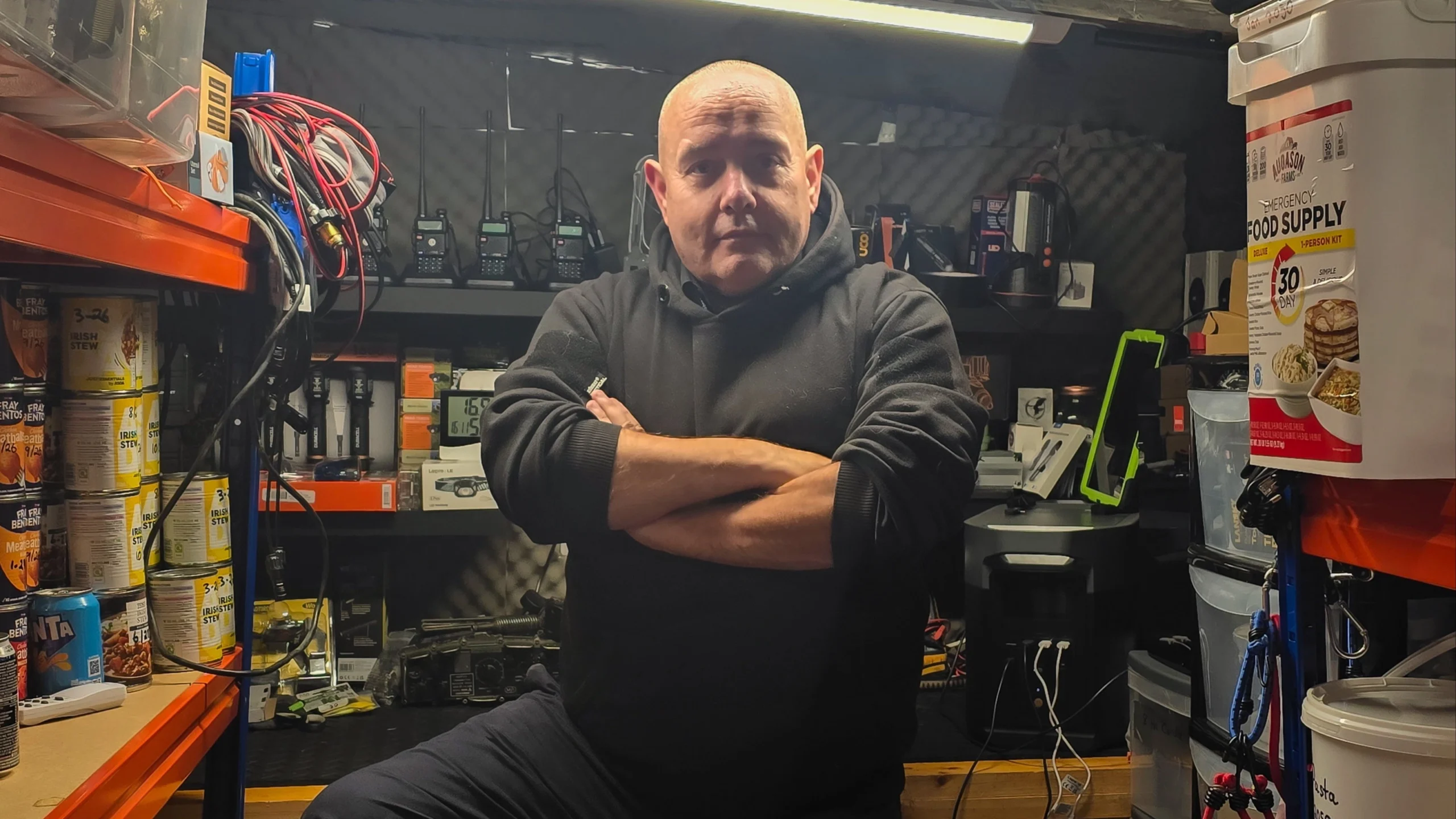
With talk of global catastrophe and AI predictions of the possibility of World War three, one savvy dad has a ‘disaster shelter’ which is built to sustain him for a quarter of a century.
Dad Brian Forbes has spent £6,000 this year preparing for disaster and has rammed a home shelter full of hundreds of tins, power banks and night vision goggles to last 25 years.
It comes after artificial intelligence shared its assessment of how worried Brits should be about the possibility of WW3 amid increasing concerns about the threats posed to the UK.
Both the head of MI5, Sir Ken McCallum, and the head of the Army, General Sir Roly Walker, have shared stark warnings over the last week about the dangers confronting the UK.
Brits have been alerted to the ‘extreme jeopardy in the world at the moment’, and that they will ‘need to play a part’ in protecting the nation.
But Brian is certainly well equipped and is part of a group of people who have been preparing for disaster scenarios, from war to environmental catastrophe for the last 16 years.
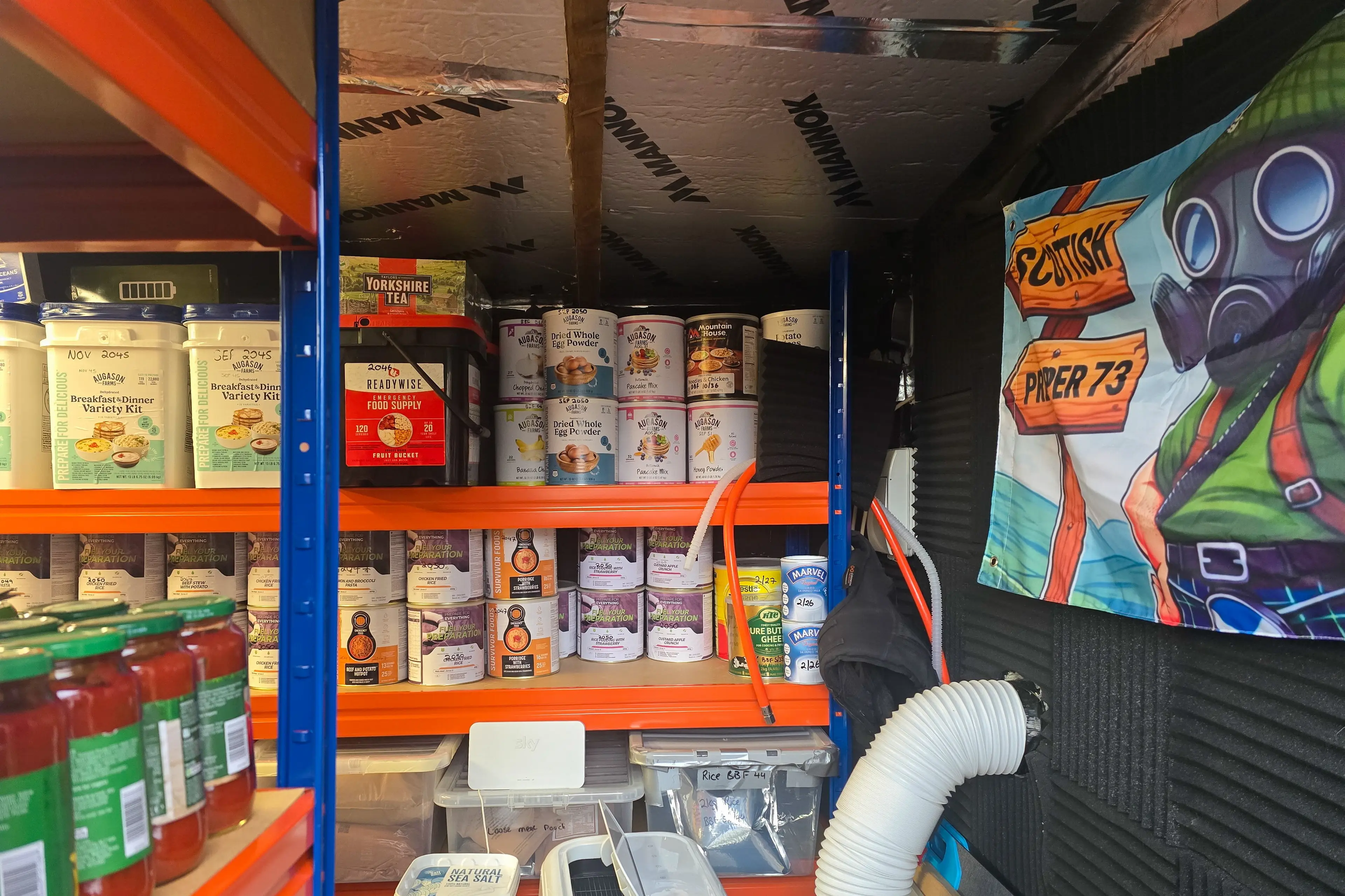
Brian has stocked the shelter full of produce (SWNS)
The ‘prepping’ community movement has gained traction in recent years. The UK Preppers Club, an online group for the community, has now reached over 16,000 members.
It was just last month that Brits were also told by the Government to stock up on certain essential items, especially with weather events also due to cause adverse conditions and sparking production fears.
“We have a lot of risk”
Brian, an engineer surveyor, has built a small shelter full of medical, food, and communication supplies in his home between Glasgow and Sterling, Scotland.
This means he is already fully equipped for disaster scenarios, but says his main worry is a crumbling power grid. Brian’s wife, Donna, 51, is on board with the lifestyle which has cost him £6,000 in 2026.
Brian said: “The spending has gone up this year, because I perceive the risk as higher. We have a lot of risk, like a crumbling power grid and water shortages. 40,000 people were on bottled water for a month this year.
“These are things you can prep for.I’ve probably spent around £6,000 so far this year. I’ve spent around £2,500 on freeze dry foods, £2,000 on power banks, £500 on a new generator.”
Brian first started prepping in 2010, after Scotland experienced a particularly bad winter.
He explained: “The roads were gridlocked up here, people were sleeping in cars overnight, they had to be rescued by police.
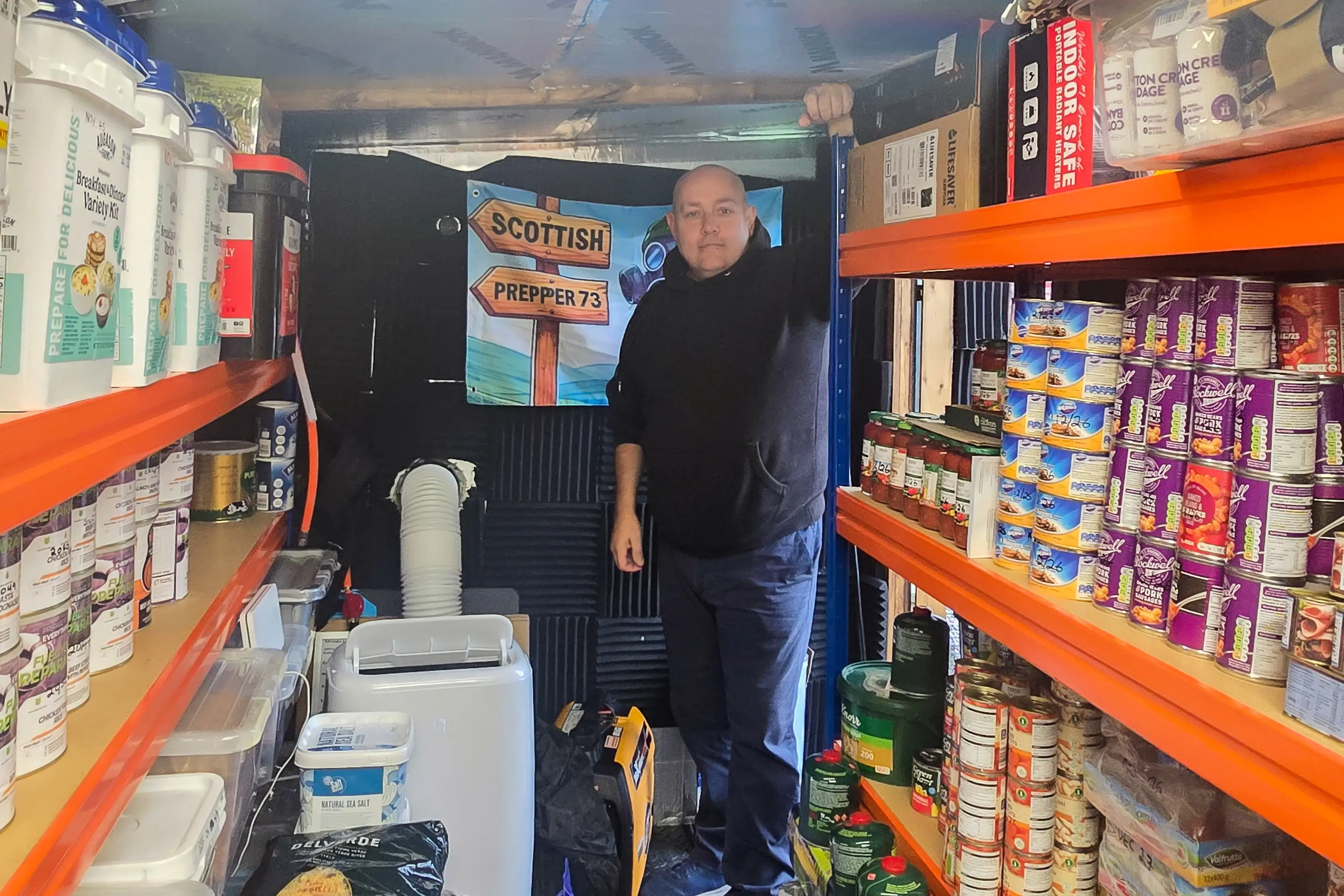
Brian in his shed stocked full (SWNS)
“In the highlands that’s not an unusual occurrence. But here, we weren’t prepared. Shops weren’t making deliveries, kids weren’t going to school.
“My children were young at the time and things were running out, like milk, cereal bread.
“I had to walk a mile to the local supermarket, and most of the staff hadn’t turned up. There was one person at the till, and queues down all three aisles of the shop.
“People were getting pretty animated. Tempers were fraying. I felt bad that my kids didn’t have a lot in the house. I decided from then it would be a good idea to stock up on unplanned emergency.”
Brian’s tactic was to add to his supplies little and often after Covid hit. During the pandemic he explained how they had three-months worth of food in the house meaning they were able to avoid shop queues and bulk buying.
He said the Covid-19 pandemic reinforced his belief that he needed to prep, and now, his main worry is a crumbling power grid.
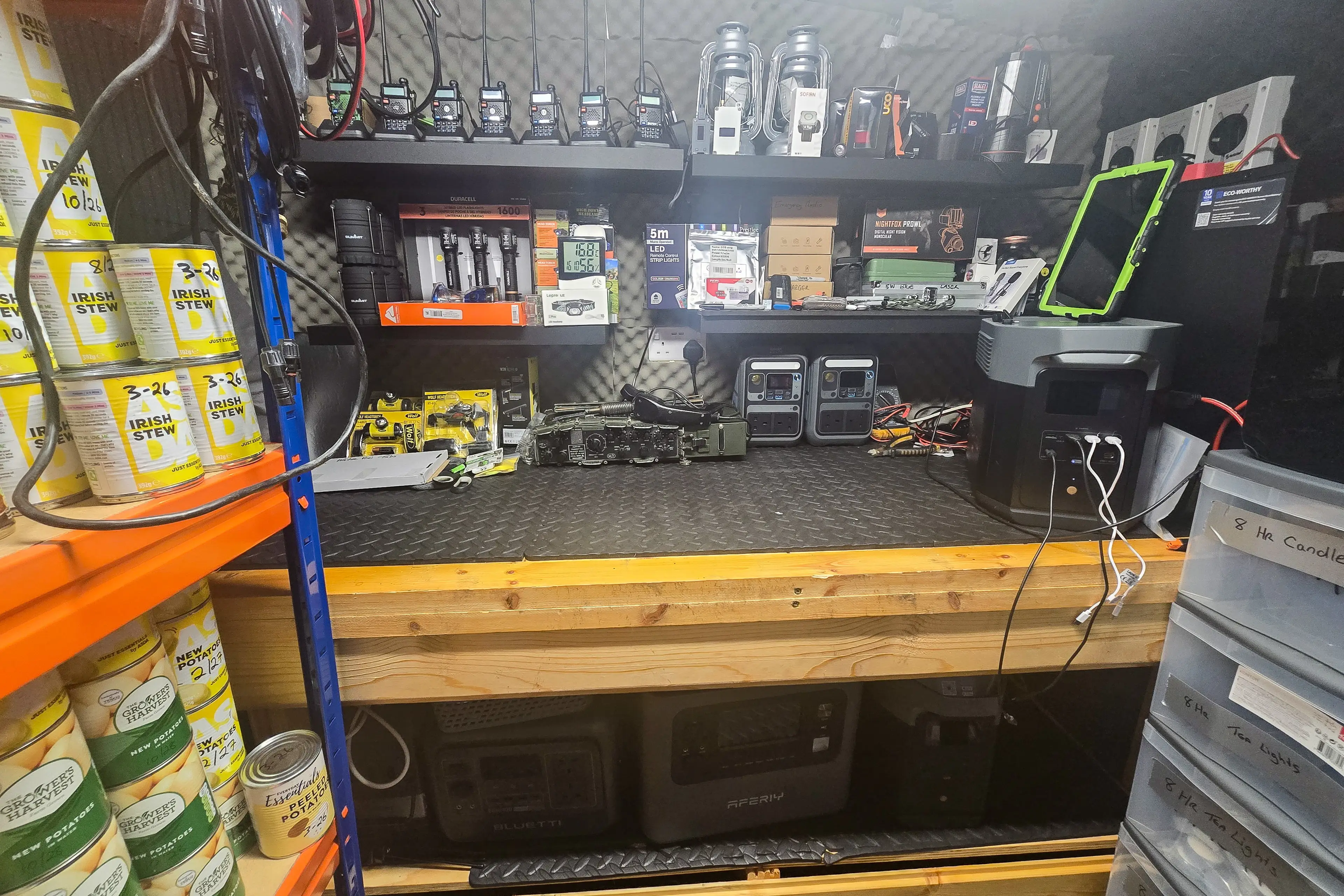
The sheds are full of varied supplies for all scenarios (SWNS)
He said: “With electric cars and lorries and heat pumps, the UK power grid is under particular stress. I don’t see a fix in the near future.
“There is conflict all over the world and there has been since I was born. Other countries’ problems can be our problems too.
“Now we’re seeing an increase in fuel, and a bad crop yield because of the weather we’ve had.
“But as far as bombs dropping from the sky any time soon, I can’t prep for things I cant do anything about. I think a zombie apocalypse and tinfoil hats are just non sensical.”
Brian builds two sheds to prepare
Brian, who analyses risk for his job, said that the amount he spends on prepping varies year by year, but 2026 was one of the most expensive years.
Last year, Brian built himself a a workshop in the garden to store his emergency supplies. “It cost around £5,000 to build the sheds,” he said.
“I built two sheds. One is 14 ft by 12 ft and it is packed. It has it’s own solar panels, air conditioning, and power supply.
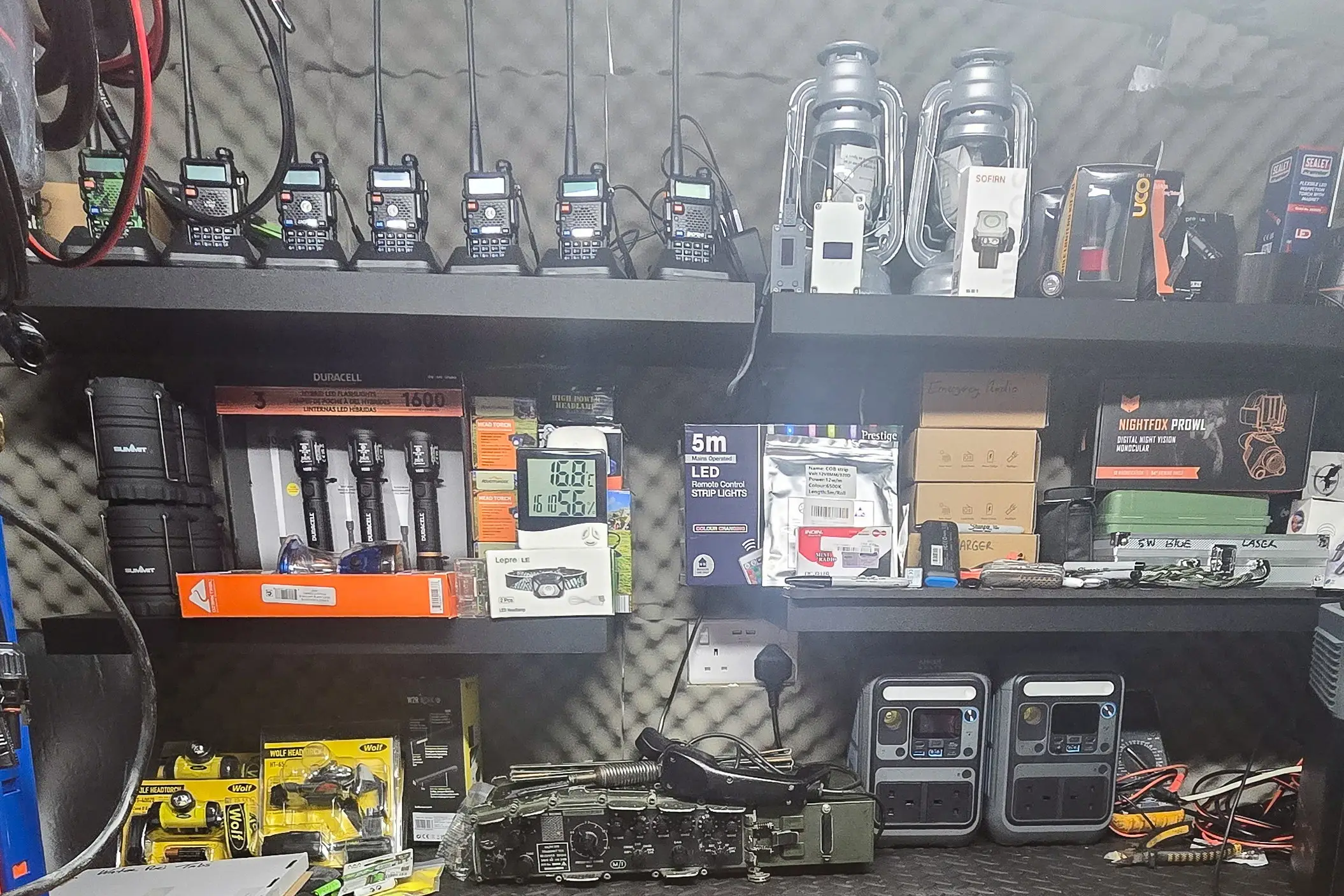
There is food as well as electrical items (SWNS)
“It’s packed full of food tins, army ration 24-hour meal-in-a-bags, and then rice, pasta, flour that all should last up to 25 years.
“It’s not a bunker. I wish I had bunker money. But it’s got everything we might need. Night vision goggles, high frequency radio, walkie talkies, power banks, food.”
Alongside food and water, Brian has invested in specialist equipment he believes will help him and his family survive disaster.
This includes high frequency radios, eight walkie talkies, wind up radios, battery operated FM radios, lanterns, headtorches, 12 power banks, and night vision goggles.
He said: “The goggles aren’t for hunting people, obviously. They’re just for power cuts in general. It means you don’t have to walk around with a torch.”
“It’s really good in the prepping community to have your wife or partner on board. At best, generally they don’t actively block it, at worst it can cause conflict or arguments.”
His children however, are less understanding, as the dad explained: “They think dad’s nuts, dads crazy, he’s lost his marbles.
“They go to great lengths to tell me why I’m wrong – I may well be wrong but it’s ultimately my money and time.
“I do no harm to anyone else. I only need to be right once.
“Whether they think I’m right or wrong, I have a responsibility to care for them and I take that pretty seriously.”
Leave a Reply