Tag: Techcrunch

  • How to send a message via satellite on iPhone

    Apple’s satellite features were originally designed for emergencies, allowing iPhone users to contact emergency services when cellular and Wi-Fi coverage is unavailable. With recent versions of iOS, Apple has expanded those capabilities to include sending and receiving messages via satellite. This makes it possible to stay in touch with friends and family from remote locations where traditional networks do not reach, such as hiking trails, rural areas or offshore locations.

    Messaging via satellite is built directly into the iPhone and works automatically when no cellular or Wi-Fi signal is available. While it is not intended to replace regular messaging, it can be a useful backup when coverage drops.

    How to send a message via satellite

    Before you can get started, you’ll need to turn on iMessage before you’re off the grid. It’s also important to set up an emergency contact as well as members of your Family Sharing group prior to your departure. This will enable them to message you via SMS without the need to message them first.     To send a message via satellite, open the Messages app when no cellular or Wi-Fi signal is available. If the feature is supported in the current location, the app will display a prompt indicating that satellite messaging is available.

    Selecting the option to connect via satellite launches a guided connection screen. Your iPhone will provide real-time instructions to help maintain alignment with the satellite. Once connected, a text message can be typed and sent, although delivery may take longer than usual.

    The iPhone will notify you when the message has been sent successfully. Replies from the recipient will also be delivered via satellite, as long as the connection remains active.

    What you need before you can send satellite messages

    Sending messages via satellite requires a compatible iPhone model and the correct software version. The feature is supported on iPhone models with satellite hardware, beginning with iPhone 14 and later. The device must be running a version of iOS (iOS 18 or higher) that supports satellite messaging, which Apple has continued to refine through recent iOS updates.

    The feature also depends on location and availability. Satellite messaging is currently supported in select regions, including the United States and parts of Canada, with expanded support rolling out gradually. The iPhone must be outdoors with a clear view of the sky, as trees, buildings and terrain can interfere with the satellite connection.

    Satellite messaging is not designed for continuous conversations. Messages are compressed and sent at a slower pace than standard texts, and delivery times can vary depending on conditions and satellite positioning.

    How satellite messaging works on iPhone

    When an iPhone loses access to cellular and Wi-Fi networks, the system automatically detects that only satellite connectivity is available. Instead of failing to send, the Messages app prompts the user to connect to a satellite.

    On-screen instructions guide the user to position the phone correctly. This typically involves holding the device up and following directional prompts to align it with an overhead satellite. The phone uses built-in sensors to help maintain the connection while the message is being sent.

    Messages sent via satellite are text-only and use a reduced data format to ensure they can be transmitted reliably. Images, videos, audio messages and large attachments are not supported.

    Who can receive satellite messages?

    Satellite messages can be sent to contacts using iMessage or standard SMS, depending on the recipient’s device and settings. If the recipient is using an Apple device with iMessage enabled, the message will be delivered through Apple’s messaging system. If not, the message will be sent as a standard text.

    Recipients do not need a satellite-capable device to receive messages. From their perspective, the message appears similar to a regular text, though delivery times may be longer.

    Tips for getting a reliable connection

    A clear view of the sky is essential for satellite messaging to work properly. Open areas with minimal obstructions offer the best results. Movement, heavy foliage and nearby structures can interrupt the connection.

    Because satellite bandwidth is limited, keeping messages short improves reliability and delivery speed. The iPhone may prompt the user to edit longer messages to fit within satellite constraints.

    Battery life is also a consideration. Maintaining a satellite connection uses more power than standard messaging, so it helps to conserve battery when relying on satellite features for extended periods.

    Limitations to keep in mind

    Satellite messaging is designed for occasional use when other networks are unavailable. It does not support group messages, media attachments or read receipts in the same way as standard messaging.

    Delivery times can range from under a minute to several minutes, depending on environmental conditions and satellite availability. The feature should not be relied upon for time-sensitive communication unless no other option is available.

    Apple has also noted that satellite features may be offered free for a limited period, with potential pricing or subscription requirements introduced in the future depending on region and carrier arrangements.

    When satellite messaging can be useful

    Messaging via satellite can be helpful for travelers, hikers and anyone spending time in remote areas where coverage is unreliable. It offers a way to check in, share basic updates or request non-emergency assistance when traditional networks are unavailable.

    While it is not a replacement for emergency services, it complements Apple’s existing emergency satellite features by providing an additional communication option when users are off the grid.

    As Apple continues to expand satellite support, messaging via satellite is likely to become a more familiar part of the iPhone experience, particularly for users who regularly venture beyond the reach of cellular networks.

  • Get 10 percent off at Squarespace — and see how easy it is to build a website with Blueprint AI

    UX/UI designers discussing and brainstorming on wireframes for a website and mobile app prototype, surrounded by sketches of user flow and design tools, in the concept of website and mobile application design concept.

    Streamline your web design with Blueprint AI. (seksan Mongkhonkhamsao via Getty Images)

    One of the most important aspects of starting a new business, or expanding an existing one, is building a website. Whether you’re building a home for your online portfolio or setting up a home base for a new small business, a web presence that you own and operate lets you tell the story on your own terms. There are tons of website builders out there, but Squarespace is the only one that offers Blueprint AI, an artificial intelligence system that simplifies the process from start to finish, letting even beginners design, build, and finalize a site ease. And if you start now, you’ll save 10 percent off with code ENGADGET10. Have a website up and running in no time while saving money and time to build it.

    Image for the mini product module

    What is Blueprint AI?

    Blueprint AI helps you design a website from the ground up using Squarespace, with custom website templates that can be personalized to your business. Follow the easy-to-use interactive builder process from scratch, even choosing from bespoke adaptive templates for inspiration. All you need to do is answer a few questions about your business, industry, and goals, and using machine learning, Blueprint AI will provide the direction to to get your website mapped out and ready to go.

    In just a few minutes, you can get a professionally curated starter website to match your business needs, tone, and brand personality. You can then edit bit by bit until it’s to your liking for finalization, with the option to make refinements at any time later using the Fluid Engine drag-and-drop editor. Preview elements before you decide on them and apply once they’re just right. Choose color palettes, additional pages, homepage sections and layouts, and even integrate commerce tools.

    SEO-friendly copy can even be built based on your instruction, offering the possibility of improved site ranking and traffic from the jump. The system optimizes your site for intuitive navigation, and the sites are optimized for viewing on both desktop computers and mobile devices.

    Blueprint AI can be useful for any business or personal application, including (but not limited to) photography, consulting, education, real estate, technology, marketing, construction and maintenance, health, weddings and music and audio. It’s available for both UX language and content output in seven languages, including English, French, German, Spanish, Portuguese, Italian, and Japanese.

    How to start using Squarespace with Blueprint AI

    Visit the Squarespace website from a desktop computer and start your journey with 10% off right now. Select a plan (Basic, Core, Plus, and Advanced levels are available) and Blueprint AI trial and choose either the builder or templates to get started. By leveraging the AI assistant, you can have a website ready to go within minutes. Of course, you can also slow down and refine it to your heart’s content, personalizing images, graphics and color schemes.

    For small businesses looking to kickstart and an online presence, Squarespace with Blueprint AI is a quick and simple way to get it done. AI assists in the process from start to finish, gathering your background information, image and text prompts, and building a curated website with a look and feel that matches your brand. Once it’s ready, you can promote, refine, and focus on the task at hand – not teaching yourself coding.

    Image for the mini product module

    Editors’ note: This story was posted earlier and has been updated with the most recent discount offer.

  • Apple’s first event of the year will reportedly bring at least five products over a ‘three-day blitz’

    Apple’s first event of the year will reportedly bring at least five products over a ‘three-day blitz’

    Ready your wallets if you’ve been thinking about upgrading your Apple products. According to Bloomberg‘s Mark Gurman, Apple will announce “at least five products,” starting on Monday, March 2, and extending to its scheduled “experience” on Wednesday, March 4.

    There’s a long list of potential options that Apple could announce next month, but Gurman is confident in a few. According to the report, Apple is “very likely” to reveal the low-cost MacBook, especially considering the event logo’s choice of colors that could reference the new laptop colors. Gurman also predicted that Apple could announce the iPhone 17e, since its predecessor was launched last spring, and an iPad Air that’s updated with the M4 chip. Previous rumors point to Apple getting ready to drop the upgraded MacBook Pro, which will likely get M5 Pro and Max chips, and the new MacBook Air with the base M5 chip. If that wasn’t enough, Apple could even debut the refreshed Mac Studio and a new Apple Studio Display since the two desktop-oriented options were already expected to be released in the first half of the year.

    There hasn’t been any confirmation from Apple directly, but it may have left behind some hints for this “three-day blitz” of product announcements. Going off Apple’s wording, the March 4 event will be an “Apple Experience” with locations in New York, London and Shanghai, which doesn’t sound like the typical format of an event with keynote addresses that’s paired with a livestream. Gurman also noted that Apple usually announces its new products on Tuesday, unlike the official Wednesday timing.

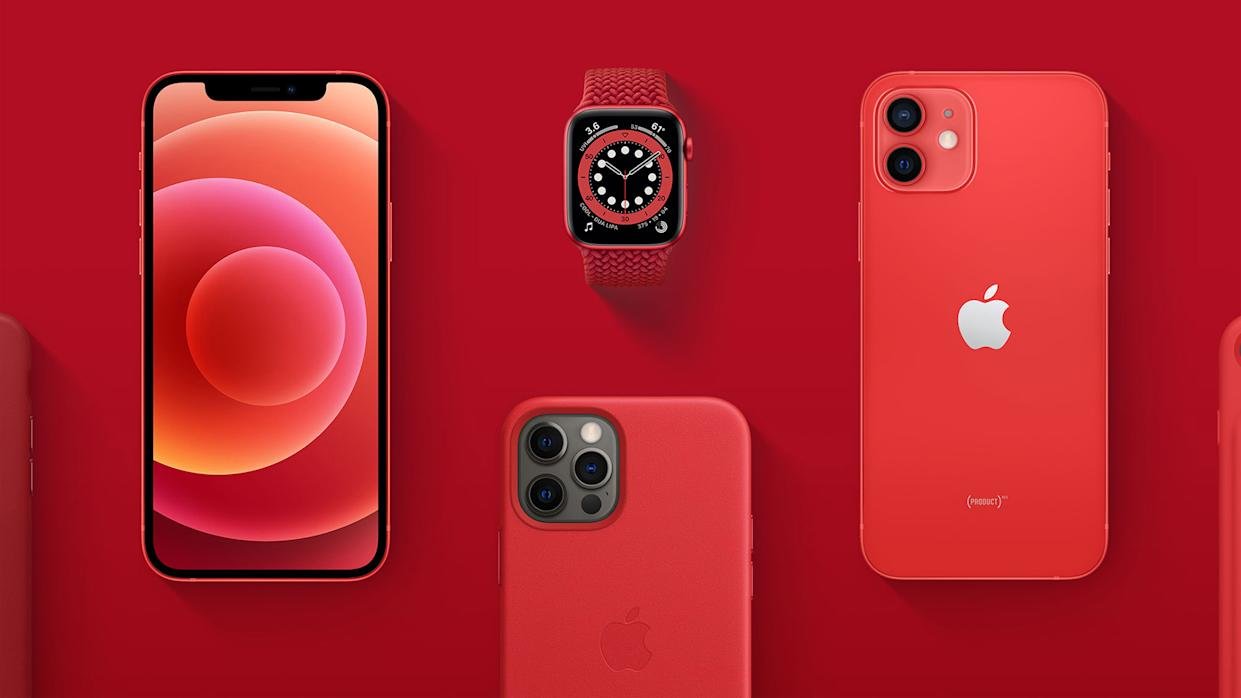
  • Apple is reportedly considering red as the next premium color for its iPhones

    Apple is reportedly considering red as the next premium color for its iPhones

    First, we got iPhones in Hermès orange, and now we might get them in Louboutin red. According to Bloomberg‘s Mark Gurman, Apple is already mulling over what the next premium colorway will be for its iPhone Pro models. While we’re not expecting iPhone 18 announcements until later this year, Gurman reported that “red is the new flagship color in testing for the next iPhone Pros.”

    Gurman added that there were rumors of purple and brown shades, but predicted that these could just be different shades of the main red option. Red is definitely a departure from Apple’s usual palette of more modest tones, but the company could be trying to continue the momentum of its flashier Cosmic Orange option that has been boosting sales in China. The bold orange option has been informally rebranded as Hermès orange among fans and is becoming somewhat of a status symbol in Chinese markets. With red as a potential frontrunner for the next iPhone Pro colors, Apple could capture even more sales in China, especially since the color is seen as lucky in Chinese culture.

    It’s not the first time Apple has offered red iPhones, though. Previously, Apple manufactured iPhones in deep red hues in collaboration with Product Red, with the last available models being the iPhone SE, iPhone 14 and iPhone 14 Plus. On the other hand, Gurman reported that Apple will play it much safer when it comes to the rumored foldable iPhone, sticking with its basic tones.

  • 2026 Olympics: How to watch the Winter Games Closing Ceremony today

    The 2026 Winter Olympics come to an end this weekend. This year’s Closing Ceremony theme is “Beauty in Action.” The event will feature appearances from musician and DJ Gabry Ponte, actress Benedetta Porcaroli, and ballet dancer Roberto Bolle. Alfredo Accatino, the ceremony’s artistic director, has promised the ceremony will “begin with lots of colors and end with a party.”

    The ceremony will kick off today at 2:30PM ET on NBC and Peacock. An encore broadcast will air on NBC at 9PM Here’s everything you need to know to watch the 2026 Milan Cortina Olympics Closing Ceremony. (And as we close out the Winter Games, here’s a look at the final medal count, too.)

    How to watch the Closing Ceremony at the 2026 Winter Olympics

    Image for the mini product module
    Image for the mini product module
    Image for the mini product module

    Date: Sunday, Feb. 22

    Time: Airs live at 2:30PM ET; primetime re-air at 9PM ET

    Location: Verona Arena, Verona, Italy

    TV channel: NBC

    Streaming: Peacock, DirecTV, NBC.com and more

    Olympics Closing Ceremony start time

    The ceremony will kick off at 2:30 PM ET on Sunday afternoon. An encore broadcast will also air on NBC at 9PM ET/PT.

    How to watch the Closing Ceremony live for free

    There are a couple of ways to watch the 2026 Milan Cortina Winter Olympics Closing Ceremony on Sunday, Feb. 22. You can tune in live Sunday afternoon on NBC or stream live on Peacock, or catch the encore broadcast on NBC, which is available with DirecTV, Hulu + Live TV, and more.

    Image for the small product module
  • Samsung is adding Perplexity to Galaxy AI for its upcoming S26 series

    Samsung is adding Perplexity to Galaxy AI for its upcoming S26 series

    Samsung’s next flagship devices will offer Perplexity as part of an expansion to support multiple AI agents in Galaxy AI. Perplexity’s AI agent will work with apps including Samsung Notes, Clock, Gallery, Reminder and Calendar, according to the announcement. And, some third-party apps will support it, though Samsung hasn’t yet said which. The news comes just a few days before Samsung’s Galaxy Unpacked event, so we can expect to find out more about that integration and how it fits in with Samsung’s revamped Bixby very soon.

    What we know so far is that the Perplexity agent will respond to the wake phrase, “Hey Plex” (not to be confused with the streaming service Plex). It can also be initiated by quick-access physical controls. In a statement, Samsung’s Won-Joon Choi, President, COO and Head of the R&D Office for Samsung’s Mobile eXperience Business, said the expansion of Galaxy AI is aimed at giving users more choice and flexibility in getting their tasks done. “Galaxy AI acts as an orchestrator, bringing together different forms of AI into a single, natural, cohesive experience,” Choi said.

    Samsung previously announced a partnership with Perplexity last year to integrate the company’s AI search engine into Samsung TVs.  Perplexity has been in hot water though over alleged content scraping and copyright infringement, and was even sued in September by Merriam-Webster — yes, the dictionary — and Encyclopedia Britannica.

  • Colorado is working on a bill that would make it illegal to 3D print firearms and gun parts

    Colorado is working on a bill that would make it illegal to 3D print firearms and gun parts

    A collective of Colorado lawmakers wants to put an end to “ghost guns” and their rising popularity. Earlier this week, the state’s House Judiciary Committee voted in a 7-4 majority to pass the bill, HB26-1144, along for a decision with the full House of Representatives. The proposed law would “prohibit the use of a three-dimensional printer, or similar technology, to make a firearm or a firearm component.”

    Ghost guns are typically made from 3D printers or similar machines without serial numbers, making them virtually impossible to trace and allowing users to skirt the federal requirements for purchasing a firearm. While the bill targets using a 3D printer to make guns, large-capacity magazines and other related components, it even bans possessing and distributing the instructions to manufacture guns in this way. However, these rules would be exempt for federally licensed firearm manufacturers.

    “These ghost guns are increasingly found at crime scenes, making it harder for law enforcement to track down a suspect because the gun isn’t traceable,” the bill’s sponsor, Lindsay Gilchrist, said in a press release.

    Prior to this proposal, Colorado passed a law in 2023 that banned owning ghost guns or making frames for them. While SB23-279 laid the groundwork, HB26-1144 can be seen as the next step since it’s much more encompassing by targeting ghost guns even before they’re made. According to the bill, first-time violations will be treated as a misdemeanor, while repeat offenses will be upgraded to a felony charge. Looking ahead, HB26-1144 still has to secure a vote from both the Colorado Senate and House of Representatives before being delivered to the governor to be signed into law.

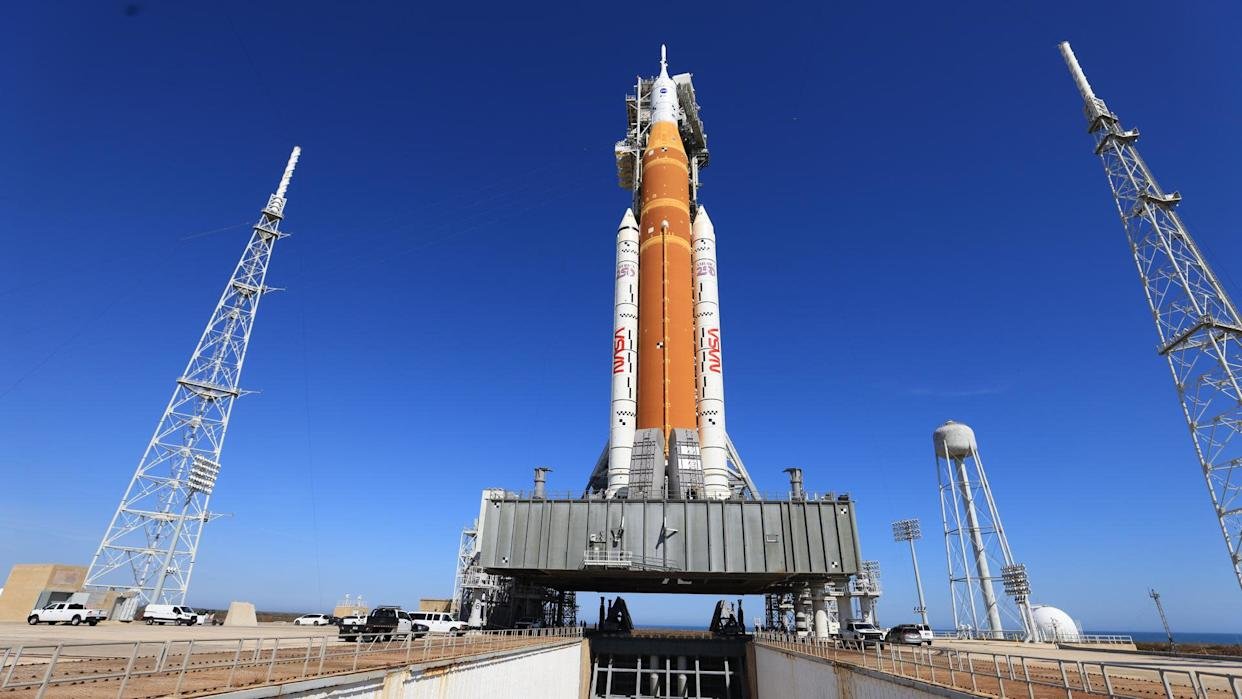
  • NASA’s crewed Artemis II launch gets pushed back again, this time due to a helium issue

    NASA’s crewed Artemis II launch gets pushed back again, this time due to a helium issue

    It looks like a March launch is no longer in the cards for Artemis II, NASA’s first crewed trip to the moon’s vicinity since the final Apollo mission over 50 years ago. While preparations were underway at the Kennedy Space Center for a launch as soon as March 6, the space agency says it ran into an issue with the flow of helium to its SLS rocket’s upper stage this weekend and it now has to roll the rocket from the launch pad back to the Vehicle Assembly Building (VAB) to figure out what’s wrong and fix it. A media briefing is planned for sometime this week to discuss the problem and what’s next.

    But in a post on X, NASA Administrator Jared Isaacman confirmed the rollback will “take the March launch window out of consideration.” NASA noted on its blog that the current effort “potentially preserves the April launch window, pending the outcome of data findings, repair efforts, and how the schedule comes to fruition in the coming days and weeks.” It’s a four-mile trip back to the VAB that will take hours to carefully transport the massive rocket and the Orion spacecraft. NASA says it’s eyeing February 24 for this trek.

    The issue occurred overnight in the early hours of February 21, when NASA says it observed “interrupted flow of helium to the SLS (Space Launch System) rocket’s interim cryogenic propulsion stage.” The space agency explained:

    The upper stage uses helium to maintain the proper environmental conditions for the stage’s engine and to pressurize liquid hydrogen and liquid oxygen propellant tanks. The systems worked during NASA’s Artemis II wet dress rehearsals, but teams were not able to properly flow helium during normal operations and reconfigurations following the wet dress rehearsal that concluded Feb. 19. Operators are using a backup method to maintain the environmental conditions for the upper stage engines and the rocket, which remains in a safe configuration.

    The Artemis II crew — Commander Reid Wiseman, Pilot Victor Glover, Mission Specialist Christina Koch and Canadian Space Agency astronaut Jeremy Hansen, Mission Specialist — had just entered quarantine a day before the issue arose. NASA says the astronauts have since come out of quarantine.

    At the start of this year, NASA announced an accelerated timeline for Artemis II, which was previously set for April 2026 after experiencing delays in 2024. For this 10-day mission, which will be the first crewed flight of the SLS rocket, the Artemis II astronauts will take a trip around the moon in the Orion spacecraft. While it initially targeted early February, the launch was pushed to March due to issues that popped up during the wet dress rehearsal. Now, we’re back to the beginning with a possible April launch, but that’ll depend on the fix being a quick one.

  • Sam Altman would like to remind you that humans use a lot of energy, too

    Sam Altman would like to remind you that humans use a lot of energy, too

    October 13-15

    San Francisco, CA

    Save up to $680 on your pass before February 27.

    Meet investors. Discover your next portfolio company. Hear from 250+ tech leaders, dive into 200+ sessions, and explore 300+ startups building what’s next. Don’t miss these one-time savings.