Tag: News – Al Jazeera

  • How higher gold prices are affecting zakat calculations this Ramadan

    How higher gold prices are affecting zakat calculations this Ramadan

    With the fasting month of Ramadan under way, many Muslims around the world are preparing to fulfil another essential pillar of their faith: Giving zakat.

    Zakat is a compulsory form of charity in Islam, aimed at supporting the needy and promoting economic equality.

    Recommended Stories

    list of 4 itemsend of list

    While many choose to pay zakat during Ramadan for its spiritual rewards, it can be given at any time within a year.

    Since last Ramadan, the price of gold has nearly doubled, from about $2,900 per ounce to more than $5,100 today.

    A higher gold price directly affects zakat in two ways: First, it changes the eligibility threshold (nisab), meaning more individuals may now be exempt from paying zakat. Second, it increases the monetary amount owed based on one’s gold holdings, resulting in a greater overall contribution to charity.

    In this visual explainer, we answer common questions about zakat to help you understand its purpose, calculations and types.

    What are zakat and sadaqah?

    Zakat is one of the five pillars of Islam, making it a core act of worship. The word zakat means purification or growth and is commanded in the Quran as a means to purify wealth, promote social justice and help those in need.

    INTERACTIVE-PILLARS-ZAKAT-MARCH 23, 2025-1742716653

    Zakat is mandatory for Muslims who meet the financial threshold, known as nisab, and is given annually at a fixed percentage of 2.5 (one-40th) of one’s wealth. More on how this is calculated, later.

    Sadaqah, on the other hand, is a voluntary charity of any amount that can be given at any time.

    Who is required to give zakat?

    Zakat is obligatory for adult Muslims whose wealth is above the nisab threshold, the minimum amount needed to be eligible to pay zakat.

    This year, the nisab is equivalent to 85g (3 troy ounces) of gold, or roughly $15,000 based on current market prices. Last year, the nisab was about $8,000.

    Although 85g is a widely accepted modern standard used by many organisations, the classical weight is 20 mithqals or 7.5 tolas, both traditional units of weight used for measuring precious metals, equivalent to roughly 87.48g.

    INTERACTIVE-GOLD STANDARD-ZAKAT-MARCH 23, 2025-1742716635

    In addition to the gold standard for determining the nisab amount, there is also a silver standard. The nisab based on silver is equivalent to 595g (19 troy ounces) of the metal. This accommodates different economic conditions and ensures that zakat is accessible and relevant to a wide range of people.

    If a Muslim’s wealth remains above this threshold for a full lunar year, they must pay zakat.

    INTERACTIVE-WHO IS REQUIRED TO GIVE ZAKAT-ZAKAT-MARCH 23, 2025-1742718040

    How is zakat calculated?

    The standard zakat rate is 2.5 percent (one-40th) of one’s eligible wealth.

    For example, if one’s wealth liable to zakat is $20,000, the due amount is $500 ($20,000 × 2.5% = $500).

    INTERACTIVE-ZAKAT-2.5-ZAKAT-MARCH 23, 2025-1742716693

    Calculation of zakat if you own gold

    If you own physical gold like bars, coins, or jewellery, you should calculate your zakat based on its current market value, not the price you originally paid.

    Understanding the value of a gold item requires knowing its weight in troy ounces alongside its purity in karats. One troy ounce is equal to 31.1035g.

    At $5,100 per troy ounce, 1g of pure gold is worth about $164.

    INTERACTIVE - How is gold value measured-1770547787
    (Al Jazeera)

    Karat or carat (abbreviated as “K” or “ct”) measures the purity of a gold item. Pure gold is 24 karats, while lower karats such as 22, 18, and 9 indicate that the gold is mixed with less expensive metals like silver, copper, or zinc.

    To determine the purity of gold, jewellers are required to stamp a number onto the item, such as 24K or a numeric value like 999, which indicates it is 99.9 percent pure. For example, 18K gold will typically have a stamp of 750, signifying that it is 75 percent pure.

    It’s worth noting that different Islamic schools of thought differentiate between gold used as wearable jewellery and gold stored as an investment when determining whether it is subject to zakat.

    To calculate zakat on gold jewellery, you can follow this formula:

    1. Pure weight (24k)  = (Total weight of your gold item in grammes x karats)/24
    2. Gold price (g) = Current price of gold(in troy ounces)/31.1035
    3. Zakat amount = (Pure weight (24k) in grammes x gold price in grammes) x 0.025

    For example, if you own an 18-karat necklace that weighs 40g:

    1. Pure weight (24k) = (18 x 40)/24 = 30g
    2. Gold price (g) = $5,100/31.1035 = $164
    3. Zakat amount = (30 x 164)x0.025 = $123

    If the necklace is your only savings, you would be below the nisab threshold. If not, you would be required to pay $123 zakat for that item of gold.

    INTERACTIVE-How do you calculate zakat on jewellery-ZAKAT-FEB 25, 2026 copy-1772010356

    You can use the calculator below to calculate zakat owed on gold items:

    What are the different types of zakat?

    There are two main types of zakat: Zakat al-mal and zakat al-fitr.

    Zakat al-mal, meaning “zakat on wealth”, is the most commonly known form of zakat. It is an obligation requiring Muslims whose wealth exceeds the nisab threshold to donate 2.5 percent of their assets annually.

    Zakat al-fitr is a mandatory charitable donation of food before the Eid prayer, marking the end of Ramadan. It is given to help those in need to celebrate Eid. The amount is generally equivalent to the cost of one meal for a person.

    What assets are zakatable?

    Zakat must be paid on assets and savings, kept to resell or profit from, including:

    • Saving and cash
    • Gold and silver
    • Business assets and profits
    • Investments
    • Agricultural produce and livestock

    INTERACTIVE-ZAKATABLE ASSETS-ZAKAT-MARCH 23, 2025-1742716732

    Zakat is not required on assets in use for daily life, such as:

    • The house you live in
    • Your car
    • Essential property like clothing, furniture and appliances

    INTERACTIVE-NON ZAKAT ASSETS-ZAKAT-MARCH 23, 2025-1742716644

    Who can receive zakat?

    Zakat is designed to help alleviate poverty and support the less fortunate. So it must be given to Muslims who meet the criteria of need and lack of wealth. The Quran specifies eight categories of people eligible to receive zakat:

    1. The poor – those with little or no income
    2. The needy – those who have some resources but not enough for a stable life
    3. Zakat administrators – individuals or organisations responsible for collecting and distributing zakat
    4. New Muslims – converts or those inclined towards Islam who need financial support
    5. People in debt – those burdened by debts they cannot repay
    6. Stranded travellers – those who lack financial support while away from home
    7. People working in welfare – individuals engaged in religious, educational, or humanitarian efforts
    8. Captives and slaves – historically used to free enslaved people; now applied to modern equivalents like bonded labour.

    Zakat cannot be given to immediate family members who are considered one’s financial responsibility (like parents, children or spouses). It cannot be given to those who have wealth above the nisab threshold, either.

    When should zakat be paid?

    Once a Muslim’s wealth surpasses the nisab threshold, they are required to pay zakat, provided they have had possession of this wealth for a full lunar year (known as hawl).

    So, if someone’s wealth remains above the nisab threshold for an entire year, they are obligated to pay zakat.

    INTERACTIVE-WHEN CAN YOU GIVE ZAKAT-ZAKAT-MARCH 23, 2025-1742716670

    However, if wealth drops below the nisab during the year, there is no need to pay zakat.

    For example, if someone’s wealth exceeds the nisab for several months but then drops below it before completing a full year, they are not required to pay zakat. Only when their wealth remains above the nisab for a continuous lunar year does the obligation to pay zakat arise.

    INTERACTIVE-WHEN CAN YOU GIVE ZAKAT-2-ZAKAT-MARCH 23, 2025-1742718026

    If someone misses paying zakat in previous years, they must calculate and pay it retroactively.

    Zakat can be given directly to those in need or through trusted charities and organisations that distribute it accordingly. While it is encouraged to help those nearby, it can also be given internationally where there is a greater need.

    By requiring wealthy individuals to give a portion of their assets, zakat prevents wealth from accumulating in the hands of a few and encourages a more equitable distribution of resources, promoting economic balance and reducing income inequality.
  • UK far-right activist Tommy Robinson talks up US State Department visit

    UK far-right activist Tommy Robinson talks up US State Department visit

    Robinson is notorious in the UK where he has been accused of promoting hatred against Muslims and organising mass anti-migrant protests.

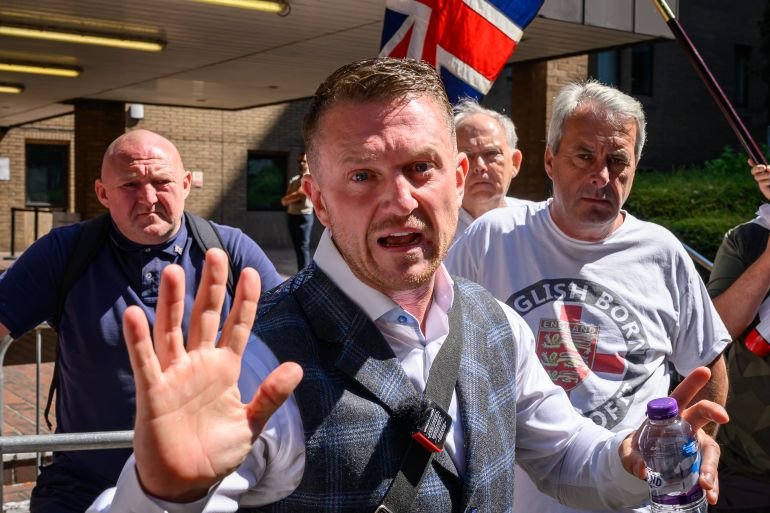
    British far-right activist Tommy Robinson says he visited the United States Department of State as part of a recent trip to Washington, DC, where he was welcomed by government officials and supporters of the Make America Great Again (MAGA) movement.

    “In America making alliances & friendships, today I had the privilege of an invite to the @StateDept,” Robinson posted on X on Wednesday, alongside a photo of himself next to a US flag.

    Recommended Stories

    list of 4 itemsend of list

    Robinson is a household name in the UK, notorious for his anti-Muslim rhetoric and multiple prison terms. He was also a cofounder of the now-defunct far-right English Defence League – a street protest movement.

    US State Department official Joe Rittenhouse, who is a senior adviser for the department’s Consular Affairs bureau, said he met with Robinson, calling him a “free speech warrior”.

    “Honored to have free speech warrior @TRobinsonNewEra at Department of State today. The World and the West is a better place when we fight for freedom of speech and no one has been on the front lines more than Tommy. Good to see you my friend!” Rittenhouse said in an X post.

    Rittenhouse posted photos of what appeared to be Robinson touring the State Department.

    The State Department did not answer questions from the Reuters news agency on who else Robinson met, what was discussed and what the objective of his visit was.

    A representative for the United Kingdom’s embassy in Washington did not immediately respond to a request for comment from Reuters.

    Robinson, whose real name is Stephen Yaxley-Lennon, has become an icon for British nationalists and one of the UK’s most high-profile anti-migration campaigners, organising a large rally last September in London attended by about 150,000 people.

    Social media posts show that during his trip to Washington, Robinson also met far-right US influencer Jack Posobiec and filmed a video with Congressman Randy Fine, a Republican from Florida, who has a history of anti-Muslim rhetoric. Robinson said on X that he will next travel to Florida.

    Robinson’s visit to the US State Department follows a surge in support from the administration of President Donald Trump for far-right activists in the UK and Europe under the pretext of protecting “free speech”.

    In December, the Trump administration accused Europe of engaging in “civilisational erasure” due to demographic and cultural changes from what Washington has described as weak immigration policies.

    US Vice President JD Vance took aim at European countries during his first international trip last year, accusing the region’s leaders of stifling free speech – particularly voices from the far right – and being lax on migration to the detriment of their societies.

    “No voter on this continent went to the ballot box to open the floodgates to millions of unvetted immigrants,” Vance said in remarks that shocked European leaders.

    The UK and European countries have stronger rules on hate speech than the US, and the European Union has taken a proactive stance on regulating social media and internet content – positions that have angered the White House.

    Robinson was banned from Twitter in 2018, but his account was restored in 2022 following its acquisition by Elon Musk, CEO of Tesla and SpaceX.

  • US to allow Venezuelan oil sales to Cuba as alarm grows in the Caribbean

    US to allow Venezuelan oil sales to Cuba as alarm grows in the Caribbean

    US eases oil embargo on Cuba as Caribbean neighbours warn worsening humanitarian crisis could destabilise region.

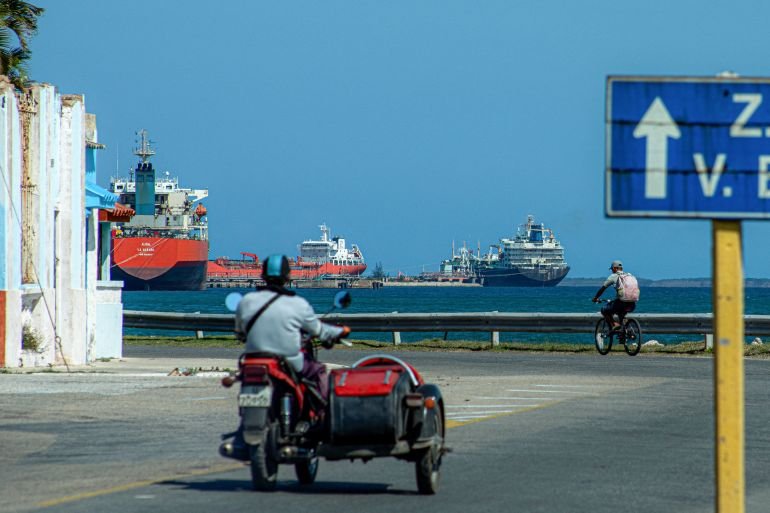
    The United States has said it will allow the resale of some Venezuelan oil to Cuba in a move that could ease the island’s acute fuel shortages, as neighbouring countries raised the alarm over a rapidly deteriorating humanitarian situation caused by Washington’s oil blockade.

    In a statement on Wednesday, the US Department of the Treasury said it would authorise companies seeking licences to resell Venezuelan oil for “commercial and humanitarian use in Cuba”.

    Recommended Stories

    list of 4 itemsend of list

    It said the new “favorable licensing policy” would not cover “persons or entities associated with the Cuban military, intelligence services, or other government institutions”.

    Venezuela had been the main supplier of crude and fuel ⁠to Cuba for the past 25 years through a bilateral pact mostly based on the barter of products and services. But since the US abducted Venezuelan President Nicolas Maduro last month and took control of the country’s oil exports, Caracas’s supply to Cuba has ceased.

    Mexico, which had emerged as an alternate supplier, also halted shipments to the Caribbean island after the US threatened tariffs on countries that send oil to Cuba. The US blockade has worsened an energy crisis in Cuba that is hitting power generation and fuel for vehicles, houses and aviation.

    The shift in US policy came as Caribbean leaders gathering in Saint Kitts and Nevis expressed alarm at the impacts of the blockade on the island nation of some 10.9 million people. Speaking to Caribbean leaders during a meeting of the regional political group CARICOM on Tuesday, Jamaican Prime Minister Andrew Holness affirmed solidarity with Cuba.

    “Humanitarian suffering serves no one,” Holness said at the meeting. “A prolonged crisis in Cuba will not remain confined to Cuba.”

    The Caribbean summit’s host, Saint Kitts and Nevis Prime Minister Terrance Drew, who studied in Cuba to be a doctor, said friends have told him of food scarcity and rubbish strewn in the streets.

    “A destabilised Cuba will destabilise all of us,” Drew said.

    But addressing the meeting in Saint Kitts and Nevis on Wednesday, US Secretary of State Marco Rubio claimed that the humanitarian crisis had been caused by the Cuban government’s policies, not Washington’s blockade.

    Rubio, whose parents migrated to the US from Cuba in 1956, warned that the sanctions would be snapped back if the oil winds up going to the government or military.

    “Cuba needs to change. It needs to change dramatically because it is the only chance that it has to improve the quality of life for its people,” Rubio told reporters.

    It is “a system that’s in collapse, and they need to make dramatic reforms”, he said.

    Rubio went on to blame economic mismanagement and the lack of a vibrant private sector for the dire situation in Cuba, which has been under communist rule since Fidel Castro’s 1959 revolution.

    “This is the worst economic climate Cuba has faced. And it is the authorities there, and that government, who are responsible for that,” Rubio said.

    The US pressure on Venezuela and Cuba ⁠has left several fuel cargoes undelivered since December, according to the Reuters news agency, contributing to the island’s inability to keep the lights on and cars circulating. A Cuba-related vessel that loaded Venezuelan gasoline in early February at a port operated by state-run company PDVSA remained this week anchored in Venezuelan waters waiting for authorisation to set sail.

    Mexico and Canada have meanwhile announced they would be sending aid to Cuba, and Russia’s Deputy Prime Minister Alexander Novak also said his government was discussing the possibility of providing fuel to the island.

    Separately on Wednesday, Cuba’s Ministry of the Interior announced killing four people and wounding six others on board a Florida-registered speedboat that it said entered Cuban waters.

    Rubio told reporters it was not a US operation and that no US government personnel were involved.

    “Suffice it to say, it is highly unusual to see shootouts in open sea like that,” he said. “ It’s not something that happens every day. It’s something frankly that hasn’t happened with Cuba in a very long time.”

  • North Korea’s Kim Jong Un warns South Korea, says US should end hostility

    North Korea’s Kim Jong Un warns South Korea, says US should end hostility

    Kim emphasised that Pyongyang intends to cement its position on the global stage through its nuclear capabilities.

    North Korean leader Kim Jong Un has shuttered the door on dialogue with South Korea, claiming his forces could “completely destroy” his southern neighbour, while also signalling that the future of dialogue with the United States required Washington to discard “hostile” policies towards Pyongyang.

    If Washington “respects our country’s current status as stipulated in the Constitution … and withdraws its hostile policy … there is no reason why we cannot get along well with the United States”, Kim said on Wednesday, as the country wrapped up a key week of meetings by the ruling Workers’ Party of Korea (WPK).

    Recommended Stories

    list of 3 itemsend of list

    According to a report on Thursday by North Korea’s official Korean Central News Agency (KCNA), Kim also called for developing new weapons systems to bolster his nuclear-armed military.

    Kim stipulated intercontinental ballistic missiles that could be launched from underwater and an expanded arsenal of tactical nuclear weapons, such as artillery and short-range missiles, capable of targeting South Korea, according to KCNA.

    He also said the accelerated development of Pyongyang’s nuclear and missile programmes in recent years had “permanently cemented” the country’s status as a nuclear-armed state.

    “Our status as a nuclear-armed country plays an important role in deterring enemies’ potential threats and maintaining regional stability,” Kim said, calling the country’s nuclear weapons “a guarantee and safety device” of its security and interests.

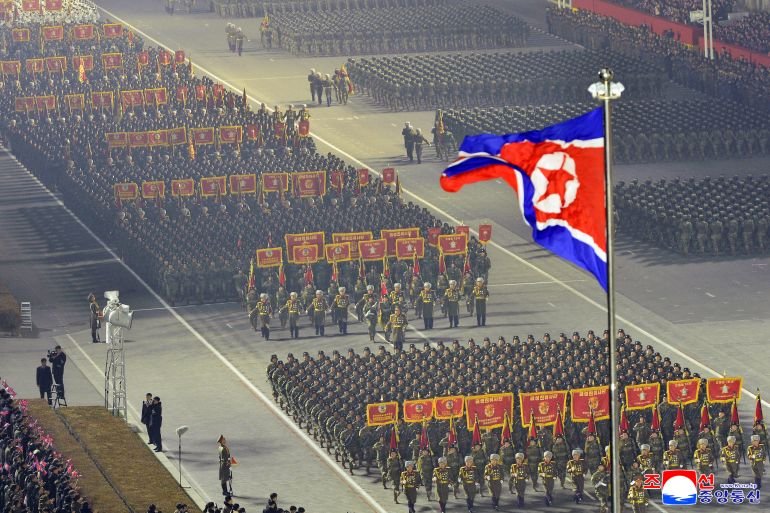
    According to South Korea’s official Yonhap News Agency, the once every-five-years Worker’s Party congress, which brought together some 5,000 party representatives from across the country, was closed out on Wednesday with a military parade on the streets of the capital Pyongyang.

    State media photos of the military parade showed formations of soldiers marching through the brightly-lit Kim Il Sung Square under a podium, where Kim and his daughter stood with senior officials.

    Some troops in the parade wore camouflage and special warfare gear, and a formation of jets held a fly-by. It was not immediately clear what, if any, military ⁠hardware was on display.

    The presence of Kim’s daughter, Kim Ju Ae, at the parade fuelled further speculation over ⁠whether she is being groomed as his successor.

    North Korean leader Kim Jong Un and his daughter Kim Ju Ae attend a military parade to commemorate the Ninth Congress of the ruling Workers' Party of Korea (WPK) in Pyongyang, North Korea, February 25, 2026, in this picture released by North Korea's official Korean Central News Agency. KCNA via REUTERS ATTENTION EDITORS - THIS IMAGE WAS PROVIDED BY A THIRD PARTY. REUTERS IS UNABLE TO INDEPENDENTLY VERIFY THIS IMAGE. NO THIRD PARTY SALES. SOUTH KOREA OUT. NO COMMERCIAL OR EDITORIAL SALES IN SOUTH KOREA.
    North Korean leader Kim Jong Un and his daughter Kim Ju Ae attend a military parade to mark the conclusion of the Ninth Congress of the ruling Workers’ Party of Korea in Pyongyang, North Korea, on February 25, 2026 [KCNA via Reuters]
  • Trump says lawmakers Ilhan Omar, Rashida Tlaib should be removed from US

    US President Donald Trump lashed out at two lawmakers after their protests during his State of the Union address.

    President Donald Trump has said United States Representatives Ilhan Omar and Rashida Tlaib should be sent “back from where they came from” after the two Democratic members of Congress shouted in protest during his State of the Union address.

    During Trump’s address on Tuesday, Tlaib, a Palestinian American, and Omar, a Somali American, criticised Trump as he extolled his ⁠administration’s immigration crackdown and its immigration enforcement actions.

    Recommended Stories

    list of 4 itemsend of list

    Trump wrote on his Truth Social platform late on Wednesday that the two Muslim lawmakers had behaved like “crooked and corrupt politicians” who should be removed from the US.

    “When you watch Low IQ Ilhan Omar and Rashida Tlaib, as they screamed uncontrollably last night at the very elegant State of the Union, such an important and beautiful event, they had the bulging, bloodshot eyes of crazy people, LUNATICS, mentally deranged and sick who, frankly, look like they should be institutionalised,” Trump wrote.

    “When people can behave like that, and knowing that they are Crooked and Corrupt Politicians, so bad for our Country, we should send them back from where they came – as fast as possible,” Trump said.

    “They can only damage the United States of America, they can do nothing to help it,” he added.

    Omar and Tlaib were among a small group of Democratic lawmakers who protested during Trump’s nearly two-hour speech on Tuesday.

    As Trump told legislators during his speech that the US should end “sanctuary cities” – which limit cooperation with federal authorities such as Immigration and Customs Enforcement (ICE), Omar and Tlaib shouted: “You have killed Americans!”

    Omar wrote later on social media: “I said what I said. I had to remind Trump that his administration was responsible for killing two of my constituents”.

    Omar represents Minnesota’s 5th Congressional District, which covers the city of Minneapolis, where Trump launched a sweeping immigration crackdown last year.

    In January, two US citizens were killed by federal officers in Minnesota while protesting against immigration raids by ICE and customs agents.

    Omar is also a member of Minnesota’s Somali American community, which has been repeatedly targeted by Trump for criticism. The president previously said they should also “go back where they came from”.

    Tlaib, who is the first woman of Palestinian descent in the US Congress, wrote later on social media: “Can’t take two Muslimas [Muslim women] talking back and correcting him so now he is crashing out. #PresidentMajnoon.”

    Majnoon is an Arabic word that translates as possessed by an evil spirit, mad or fanatical.

    Trump’s post on Truth Social singled out Tlaib and Omar, but did not mention Democratic Representative Sarah McBride, who US broadcaster NBC said had also shouted in protest during the president’s speech.

    Trump also did not mention Democratic Representative Al Green, who was removed from the floor of the House of Representatives during Trump’s address, for holding a sign that said “Black people aren’t apes” – in reference to a racist video of former President Barack Obama and his wife Michelle Obama that was recently shared by Trump on social media.

  • Iran, US set to hold talks as Trump threatens force, imposes sanctions

    Iran, US set to hold talks as Trump threatens force, imposes sanctions

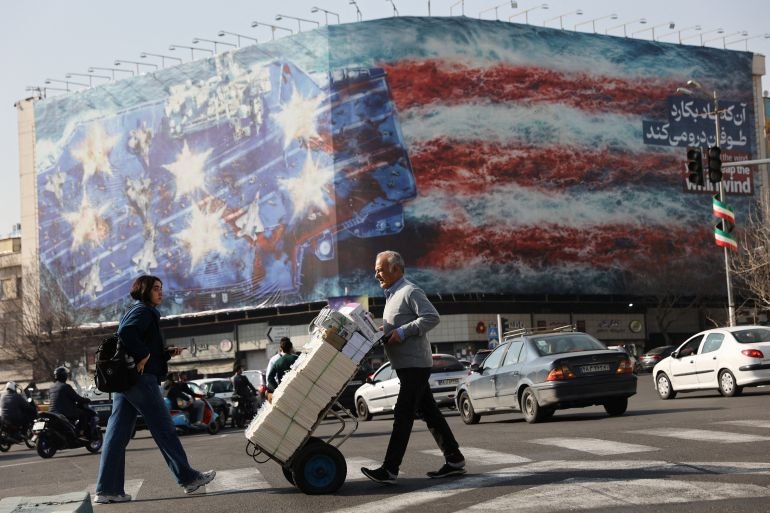
    Iran and the United States are set to begin a third round of nuclear negotiations in Switzerland, with both sides maintaining their preference for a diplomatic solution, even as Washington imposed sweeping new sanctions and continued to build up its military presence in the Middle East.

    Iran’s Foreign Minister Abbas Araghchi arrived in the Swiss city of Geneva on Wednesday and met his Omani counterpart, Badr Albusaidi, who is facilitating the indirect talks scheduled for Thursday.

    Recommended Stories

    list of 4 itemsend of list

    Before his departure, Araghchi said a “fair, balanced and equitable deal” was within reach, while reiterating that Iran was not seeking an atomic weapon and was not ready to give up its “right to peaceful use of nuclear technology”.

    The talks unfolded against a backdrop of continued mistrust with the rhetoric from both sides oscillating between confrontation on the one hand and engagement on the other.

    In Washington, DC, US Vice President JD Vance accused Iran of attempting to rebuild its nuclear programme after US attacks on Iranian nuclear sites last June, and said Tehran should take Washington’s threats of military action seriously.

    “The principle is very simple: Iran can’t have a nuclear weapon. If they try to rebuild a nuclear weapon, that causes problems for us,” he told reporters at the White House. “In fact, we’ve seen evidence that they have tried to do exactly that … As the president has said repeatedly, he wants to address that problem diplomatically, but of course the president has other options as well.”

    The Department of the Treasury announced sanctions against more than 30 individuals, entities and vessels it said had helped finance Iran’s oil sales, ballistic missile programme and weapons production.

    “Iran exploits financial systems to sell illicit oil, launder the proceeds, procure components for its nuclear and conventional weapons programs, and support its ‌terrorist proxies,” ‌Secretary of the Treasury Scott Bessent said in a statement.

    ‘Big, big problem’

    A day earlier, US President Donald Trump, in his State of the Union address, appeared to lay the groundwork for a potential military confrontation, accusing Iran of harbouring “sinister nuclear ambitions” and developing missiles capable of striking the US – claims that Iranian officials flatly rejected.

    “Whatever they’re alleging in regards to Iran’s nuclear program, Iran’s ballistic missiles, and the number of casualties during January’s unrest is simply the repetition of ‘big lies’,” Esmaeil Baghaei, the Iranian Foreign Ministry spokesman, wrote on X, comparing the administration’s approach to the propaganda tactics of Joseph Goebbels, Adolf Hitler’s minister of information.

    US Secretary of State Marco Rubio, speaking in St Kitts and Nevis, said the talks in Geneva would focus primarily on Iran’s nuclear programme and reiterated Washington’s concern about Iranian ballistic missiles, which he said Tehran was attempting to develop into intercontinental-range weapons.

    Iranian insistence on excluding the missile programme from negotiations, he said, was “a big, big problem”.

    The status of Iran’s nuclear infrastructure remains unclear.

    Trump has claimed that US attacks on Iran last year “obliterated” the programme, but the comments from his top officials show Washington now views it as a growing threat. International Atomic Energy Agency inspectors have not been permitted to verify what, if anything, remains at the targeted sites at Fordow, Natanz and Isfahan.

    The negotiations are being led on the US side by Trump’s special envoy Steve Witkoff and his son-in-law Jared Kushner. The first round was held in Oman on February 6, followed by a second session in Geneva on February 17.

    Araghchi said afterwards that the two sides had reached a tentative understanding on the broad principles that would guide further discussions, though no substantive agreement had been reached.


    Al Jazeera’s Tohid Asadi, reporting from Tehran, said the two sides appear far apart on the core issues.

    He pointed to disagreements over uranium enrichment and Iran’s demand for verifiable guarantees that sanctions would actually be lifted before it makes concessions.

    “There are other controversial issues beyond the nuclear dossier, related to foreign assistance, ballistic missiles, defence capabilities, as well as regional activities of the country,” Asadi said.

    “The bottom line is gaps obviously exist,” he said. “And it remains to be seen whether diplomatic engagement could pave the way for a final solution between Washington and Tehran. Until then and for the time being, if anything is certain, that is uncertainty.”

    Iran’s parliament speaker, Mohammad Bagher Ghalibaf, meanwhile offered a blunt summary of Tehran’s position.

    “If you choose the table of diplomacy – a diplomacy in which the dignity of the Iranian nation and mutual interests are respected – we will also be at that table,” he said, according to the semiofficial Student News Network. “But if you decide to repeat past experiences through deception, lies, flawed analysis and false information, and launch an attack in the midst of negotiations, you will undoubtedly taste the firm blow of the Iranian nation.”

    US leverage

    Iran has warned that any US strike would prompt retaliatory attacks on American military bases throughout the Middle East, where tens of thousands of troops are deployed. Tehran has also threatened to close the Strait of Hormuz, the narrow waterway through which a significant share of the world’s oil supply passes.

    US Central Command spokesman Tim Hawkins said Washington remained ready to respond to any escalation.

    “Deterrence from our perspective comes through a show of strength,” he said.

    “During a time of heightened tensions, we are going to make sure that we have the forces in place to protect our troops, that’s what you’re seeing. Additionally, with respect to Iran….our focus remains on ensuring we have right forces in place to protect out troops and that’s what we’re doing.”

    Al Jazeera’s Kimberly Halkett, reporting from Washington, DC, said the US was seeking to ramp up the pressure on Iran with the rhetoric as well as the sanctions.

    “The goal, according to the US, is to try and make it so that the funding for what the US says is an illegal weapons programme will be removed. But the other thing the United States is trying to do is to increase US leverage in these negotiations,” she said.

    “The hope is that Iran will come to an agreement to limit its uranium enrichment programme, and also that there can be room for negotiations later on, regarding not only its support for proxies in the region, but limiting its ballistic missile programme. The US is promising, should those concessions be made, it will provide the economic relief that Iran’s economy needs,” Halkett said.

  • Former US F-35 fighter pilot arrested for training Chinese air force

    US Justice Department accuses former Air Force officer Gerald Brown of training Chinese military pilots.

    A former United States Air Force officer and “elite fighter pilot” has been arrested and accused of betraying his country for illegally providing training to Chinese military pilots.

    The US Department of Justice said ex-Air Force Major Gerald Brown, once known by his pilot’s call sign “Runner”, was arrested on Wednesday in Indiana and charged with a criminal complaint for providing and conspiring to provide defence services to Chinese pilots without authorisation.

    Recommended Stories

    list of 4 itemsend of list

    Brown, 65, a former F-35 Lightning II instructor pilot with decades of experience in the Air Force, “allegedly betrayed his country by training Chinese pilots to fight against those he swore to protect”, Roman Rozhavsky, assistant director at the FBI’s Counterintelligence and Espionage Division, said in a statement.

    “The Chinese government continues to exploit the expertise of current and former members of the US armed forces to modernise China’s military capabilities. This arrest serves as a warning,” Rozhavsky said.

    US Attorney Jeanine Ferris Pirro for the District of Columbia said Brown “and anyone conspiring against our Nation” will be held accountable for their actions.

    According to the Justice Department, Brown served in the US Air Force for 24 years, had led combat missions and was responsible for commanding “sensitive units”, including those involved in nuclear weapons delivery systems.

    After leaving the US military in 1996, Brown worked as a commercial cargo pilot before working as a defence contractor training US pilots to fly F-35 and A-10 warplanes.

    Brown is alleged to have travelled to China in December 2023 to begin his work training Chinese pilots, and he remained in the country until returning to the US in early February 2026.

    His contract to train Chinese pilots was negotiated by Stephen Su Bin, a Chinese national who in 2016 pleaded guilty and was sentenced to four years in prison for conspiring to hack a defence contractor in the US to steal military secrets for China, according to the Justice Department.

    The department said Brown faces charges similar to those levelled against former US Marine Corps pilot Daniel Duggan, who was arrested in Australia in 2022 and is currently fighting his extradition back to the US, where he faces prosecution for violating the US Arms Export Control Act for providing pilot training to the Chinese armed forces.

    Duggan appeared in an Australian court in October 2025 to appeal against his extradition, which was approved in December 2024 by Australia’s then Attorney General Mark Dreyfus.

    Duggan, 57, a naturalised Australian citizen, was arrested by Australian police in 2022 shortly after returning from China, where he had lived since 2014.

    According to the Reuters news agency. Duggan’s lawyer, Christopher Parkin, told the court that his client’s extradition to the US was “uncharted territory” for Australia.

    He argued that his client’s conduct was not an offence in Australia at the time or when the US requested extradition, and so did not meet the requirement for dual criminality in Australia’s extradition treaty with the US.

    The governments of Australia, Canada, New Zealand, the United Kingdom and the US published a notice in 2024 warning current and former members of their armed forces that China was seeking to recruit them and other NATO military personnel in order to harness Western military expertise and bolster its own capabilities.

    “The insight the PLA [People’s Liberation Army] gains from Western military talent threatens the safety of the targeted recruits, their fellow service members, and US and allied security,” the notice stated.

    “Those providing unauthorized training or expertise services to a foreign military can face civil and criminal penalties,” it added.

  • Anthropic vs the Pentagon: Why AI firm is taking on Trump administration

    Anthropic vs the Pentagon: Why AI firm is taking on Trump administration

    A row is simmering between the United States government and Anthropic, one of the tech companies that develops artificial intelligence (AI) tools for defence and civilian uses.

    According to recent reports, Anthropic’s Claude software was used in a US military operation, which resulted in the abduction of Venezuelan President Nicholas Maduro in January this year.

    US Defense Secretary Pete Hegseth has given the company until Friday to loosen its rules about how its AI tools can be used by the Pentagon, or risk losing its government contract, The Associated Press and Reuters news agencies reported on Tuesday, quoting unnamed sources.

    But Anthropic is refusing to back down over safeguards which prevent its technology from being used to conduct US domestic surveillance and to programme autonomous weapons which can hit targets without human intervention.

    What is Anthropic?

    Anthropic is an AI company founded in 2021 by former OpenAI executives.

    It was the first AI developer to be used in classified operations by the US Defense Department, which is housed at the Pentagon in Washington, DC.

    Anthropic is best known for building Claude, a popular large language model (LLM) and has rapidly become one of the most prominent AI development companies.

    LLM is a type of AI technology which generates text, visual or audio output similar to content created by humans after analysing massive datasets such as books, archives, websites, pictures and videos.

    For military and defence use, LLMs can summarise large volumes of text, analyse data, translate, transcribe and draft memos. In theory, they can also be used to support autonomous or semi-autonomous weapons systems, which can identify and hit targets without the need for human instruction. However, most AI companies have terms that prohibit this use.

    Anthropic positions itself as a “responsible” developer in the AI landscape. On its website, the company describes itself as a “Public Benefit Corporation” committed to the “responsible development and maintenance of advanced AI for the long-term benefit of humanity”.

    In November, the company alleged that a Chinese state-sponsored hacking group had manipulated the Claude code in an attempt to infiltrate about 30 targets globally, including government agencies, chemical companies, financial institutions and tech giants. Some of these attempts were successful.

    Earlier this month, Mrinank Sharma, an AI safety researcher at Anthropic, resigned from his position over concerns about the use of AI.

    In a statement posted on his X account on February 9, Sharma wrote: “The world is in peril. And not just from AI, or bioweapons, but from whole series of interconnected crises unfolding in this very moment.”

    “Moreover, throughout my time here, I’ve repeatedly seen how hard it is to truly let our values govern our actions. I’ve seen this within myself, within the organization, where we constantly face pressures to set aside what matters most, and throughout broader society too,” he added.

    Which other AI companies does the US military work with?

    The Pentagon announced last summer that it was awarding defence contracts to four AI companies – Anthropic, Google, OpenAI and xAI. Each contract is worth up to $200m.

    Anthropic was the first AI company to be approved for classified military networks, on which it reportedly works with partners like US software company Palantir Technologies, which has been criticised for its links to the Israeli military. Elon Musk’s xAI, which operates the Grok chatbot, says Grok is also ready to be used in classified settings, according to an unnamed senior Pentagon official, AP reported.

    But the Trump administration wants to be able to use the products of these AI companies without restrictions. Hegseth said his vision for military AI systems means that they operate “without ideological constraints that limit lawful military applications”, before adding that the Pentagon’s “AI will not be woke”.

    Why is Anthropic at odds with the Pentagon?

    Sources reported that at a meeting on Tuesday, Hegseth gave Anthropic CEO Dario Amodei until Friday, 5pm (22:00 GMT) to agree to provide Anthropic’s AI models for use on the Pentagon’s new internal network with fewer restrictions.

    Officials at the US Defense Department warned they could designate Anthropic a supply chain risk or use the Defense Production Act to essentially give the military more authority to use its products even if it doesn’t approve of how they are used, according to a person familiar with the meeting and a senior Pentagon official, neither of whom were authorised to comment publicly and spoke on condition of anonymity, AP reported.

    Amodei has also previously raised ethical concerns about unchecked government use of AI, including the dangers of fully autonomous armed drones and of AI-assisted mass surveillance that could track dissent.

    “A powerful AI looking across billions of conversations from millions of people could gauge public sentiment, detect pockets of disloyalty forming, and stamp them out before they grow,” he wrote in an essay last month.

    The person familiar called the tone of the Tuesday meeting “cordial” but said Amodei refused to budge on two key issues – fully autonomous military targeting operations and domestic surveillance of US citizens.

    In a podcast appearance on Tuesday in which he explained his refusal to give in to the Pentagon’s demands, Amodei reiterated his concerns around “autonomous drone swarms” – likely autonomous drones which can attack targets without human input – and mass surveillance.

    “The constitutional protections in our military structures depend on the idea that there are humans who would disobey illegal orders with fully autonomous weapons,” Amodei said, noting that autonomous drones would not be able to make such a distinction.

    The Pentagon objects to Anthropic’s ethical restrictions because military operations require tools which do not have built-in limitations, the senior Pentagon official said. The official argued that the Pentagon has issued only lawful orders and stressed that using Anthropic’s tools legally would be the military’s responsibility.

    How was Claude used in Venezuela?

    On January 3, US special forces abducted Maduro, who remains in US custody and faces trial on drugs and weapons charges in New York.

    US media reports revealed on February 14 that Anthropic’s Claude had been used in the operation to strike Caracas and capture Maduro.

    An unnamed Anthropic official approached by The Wall Street Journal declined to comment on whether Claude, or any other AI model, was used in any operation. However, the official did say that any use of Claude in the private sector or by the government would need to be in compliance with Claude’s usage policies.

    According to the usage policies listed on Anthropic’s website, Claude cannot be used for surveillance, the development of weapons or “inciting violence”.

    A total of 83 people, including 47 Venezuelan soldiers, were killed during the US special operation in Venezuela.

    US media have also reported that Anthropic has partnered with Palantir Technologies, whose tools are also used by the Defense Department and by federal law enforcement agencies.

    It is unclear how exactly Claude was used during the raid on Caracas in January, but AI tools can be used to control drones, analyse images and summarise intercepted communications.

    In July 2025, Francesca Albanese, the United Nations special rapporteur on human rights in the occupied Palestinian territory, released a report mapping the corporations aiding Israel in the displacement of Palestinians and its genocidal war on Gaza, in breach of international law.

    The report found that Palantir had expanded its support to the Israeli military since the start of its genocidal war on Gaza in October 2023.

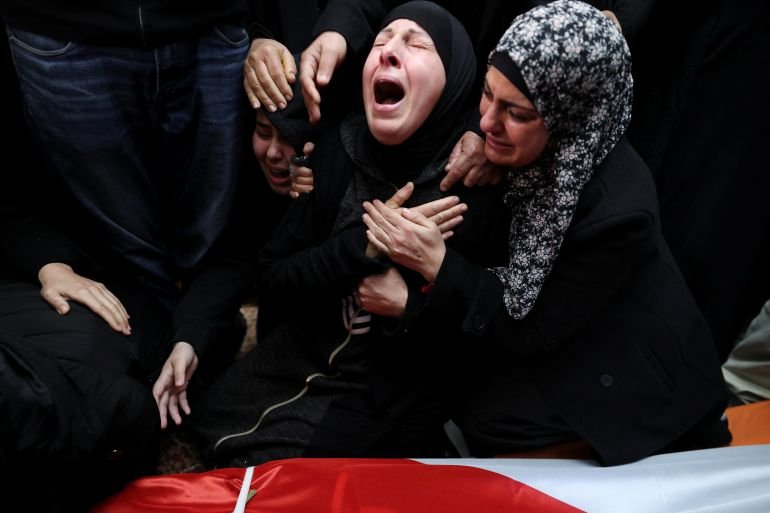
  • Calls for justice grow after Israeli settlers kill another US citizen

    Calls for justice grow after Israeli settlers kill another US citizen

    Washington, DC – After Israeli settlers killed 19-year-old United States citizen Nasrallah Abu Siyam in the occupied West Bank last week, the US Department orf State said it “has no higher priority than the safety and security of Americans”.

    But, as the number of US citizens killed by Israel continues to mount, rights advocates say Washington’s failure to ensure accountability is driving a deadly cycle of impunity.

    Recommended Stories

    list of 3 itemsend of list

    Abu Siyam, who was shot dead in the village of Mikhmas near Jerusalem, is among at least 11 US citizens killed by Israeli settlers or soldiers since 2022.

    “It’s a joke. I don’t take these people seriously,” William Asfour, Chicago chapter coordinator for American Muslims for Palestine, said of the US government’s response to the latest killing.

    “If this is true, we would stop supplying Israel with weapons. We would hold these settlers, these terrorists, accountable. We would sanction them. We would have a weapons embargo.”

    Last year, Asfour helped lead calls for an independent, US-led investigation into the July killing of Khamis Ayyad, a father of five from Chicago, in a settler attack in the West Bank.

    But the US Department of Justice has not opened a probe into Ayyad’s death, and no one in Israel has faced charges over the incident.

    Similarly, there have been no charges for the killing of Sayfollah Musallet, a 20-year-old Florida man who was beaten to death by Israeli settlers last year.

    Other cases – going back to Rachel Corrie, a peace activist who was run over by an Israeli bulldozer in 2003 – have followed a similar pattern: US officials initially express concern but do not take decisive action to seek justice.

    “It’s a terrible cycle. We just continue to see how dehumanised we are,” Asfour, who is Palestinian American, told Al Jazeera.

    “If you truly cared about American citizens, whether domestically or abroad, you would take necessary actions. You can talk all you want, but we want to see action.”

    Mike Huckabee’s role

    Advocates say Washington could compel accountability simply by leveraging the large sums of aid it sends to Israel. The US has provided Israel with more than $21bn over the past two years alone.

    But US President Donald Trump has shown little indication that he plans to sanction Israel or suspend assistance.

    Rather, he said last May that it would not be his job to “use US policy to dispense justice” abroad, and he has moved to lift existing penalties against Israeli citizens.

    Shortly after returning to the White House last year, Trump revoked sanctions against violent settlers involved in well-documented abuses against Palestinians, including US citizens.

    Trump’s ambassador to Israel, Mike Huckabee, has also been a staunch defender of Israeli policies, while exerting little pressure – at least publicly – to ensure the protection of American citizens.

    For example, over the past week, Huckabee shared more than 40 posts on the social media platform X, many of them amplifying pro-Israel and anti-Muslim activists.

    Some also defended Israel’s genocidal war on Gaza. But none mentioned the shooting of Abu Siyam.

    Huckabee did issue a strongly-worded statement after Israeli settlers beat Musallet to death last year, saying that there “must be accountability for this criminal and terrorist act”.

    But the US government has not opened its own investigation or imposed any sanctions over the incident.

    The ambassador sparked anger last week when he suggested that he would approve of Israel taking over Egypt, Jordan, Lebanon, Syria, Iraq and parts of Saudi Arabia in accordance with his interpretation of the Bible.

    “It would be fine if they took it all,” Huckabee said in an interview with conservative commentator Tucker Carlson.

    When asked about the carnage in Gaza, Huckabee also argued that the Israeli army takes more measures to protect civilians than the US military.

    Asfour said that Huckabee’s public statements show a failure in his duty to protect US citizens and interests.

    “Are you representing the United States government, or are you a puppet for Israel?” Asfour said of the ambassador.

    A ‘green light’ for violence

    On Sunday, the American-Arab Anti-Discrimination Committee (ADC) called on the US government to take the necessary measures to ensure accountability for Abu Siyam’s recent shooting death.

    The civil rights group made a connection between the killing and Huckabee’s comment in support of Israeli expansionism. ADC said such a remark “signals permission and the green light for Israeli forces to use violence and empower settlers for further annexation and dispossession”.

    “The US Ambassador to Israel is engaging in empowering and allowing for actions that lead to the targeted lynching and killing of US citizens,” the ADC said in a statement.

    After Abu Siyam’s shooting, a US State Department spokesperson told Al Jazeera that the government was “aware of the death of an American citizen in the West Bank”.

    “We are closely monitoring the situation and stand ready to provide consular assistance,” the spokesperson added.

    But Charles Blaha, senior adviser at the rights group DAWN, who previously served at the State Department, questioned Washington’s commitment to the safety of its citizens of Palestinian descent.

    “The US State Department and the US Embassy in Jerusalem claim that protecting US citizens is their highest priority,” Blaha told Al Jazeera.

    “This is one of the first things the department teaches incoming diplomats. However, their failure to act on the killings of US citizens in the West Bank by settlers and Israeli security forces belies that claim and suggests that US citizens of Palestinian origin are not a priority.”

    Settler violence

    Settler violence in the occupied West Bank, which several former Israeli officials have described as “terrorism”, has been on the rise over the past few years.

    Armed and operating under the protection of the Israeli military, settlers frequently descend on Palestinian towns and farmland, burning property and assaulting those who come in their way.

    Such attacks, which have claimed the lives of three Palestinian Americans over the past year, have coincided with an Israeli government push to deepen control of the West Bank in what experts say amounts to de facto annexation of the illegally occupied territory.

    “The US government’s inaction in the face of violence by Israeli settlers has contributed to the atmosphere of impunity that fuelled Nasrallah Abu Siyam’s killing at the hands of Israeli settlers,” Blaha said.

    Ahmad Abuznaid, the executive director of the US Campaign for Palestinian Rights (USPCR), has also accused the US government of enabling Israeli abuses over the years.

    He cited the 1985 assassination of Palestinian American activist Alex Odeh in California, an incident that activists say US authorities failed to properly investigate. The perpetrators in that killing were suspected to be violent pro-Israel operatives.

    “From Alex Odeh to Abu Siyam, from occupied Palestine all the way here to the United States, the US government has refused to hold Israel accountable for its military and settler killings of Palestinian US citizens,” Abuznaid told Al Jazeera.

    “This is what history has shown us, and if the US government disagrees, they can gladly prove otherwise. Until then, we see it for exactly what it is.”

  • Influential economist Larry Summers to depart Harvard over Epstein ties

    Influential economist Larry Summers to depart Harvard over Epstein ties

    Release of documents show close relationship between high-profile economist and disgraced sex offender.

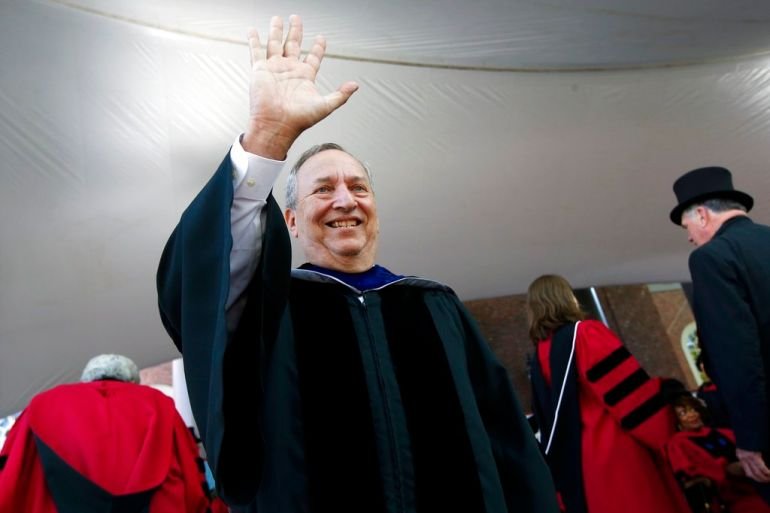
    Former United States Treasury Secretary Larry Summers says he will resign as a professor at Harvard University at the end of the semester after revelations of his close relationship with disgraced sex offender Jeffrey Epstein.

    Summers, a longtime influential figure in economic policymaking circles and a former president of Harvard, said on Wednesday that he would resign from teaching at the end of the academic year.

    Recommended Stories

    list of 3 itemsend of list

    “In connection with the ongoing review by the University of documents related to Jeffrey Epstein that were recently released by the government, Harvard Kennedy School Dean Jeremy Weinstein has accepted Professor Lawrence H Summers’ resignation from his leadership position as co-director of the Mossavar-Rahmani Center for Business and Government,” Harvard spokesperson Jason Newton said in a statement.

    Documents released as part of an effort to bring greater transparency to Epstein’s relationships with powerbrokers in politics, business and culture shed light on Summers’s extensive correspondence with Epstein, whom he once emailed asking for advice on wooing women.

    Summers, who has denied any wrongdoing and has not been charged with any crime, previously resigned from the board of the company OpenAI over his ties to Epstein, with whom he remained in contact as late as July 2019.

    “I take full responsibility for my misguided decision to continue communicating with Mr Epstein,” Summers said in a statement to US media after releases of Epstein files in November, at which time Harvard announced a review of those named in the documents, which were compiled during criminal investigations of Epstein.

    Documents released in December also showed that Summers had been designated as a successor executor in a 2014 draft of Epstein’s will, according to the student newspaper The Harvard Crimson. The paper reported that a spokesperson for Summers denied any knowledge of the matter.