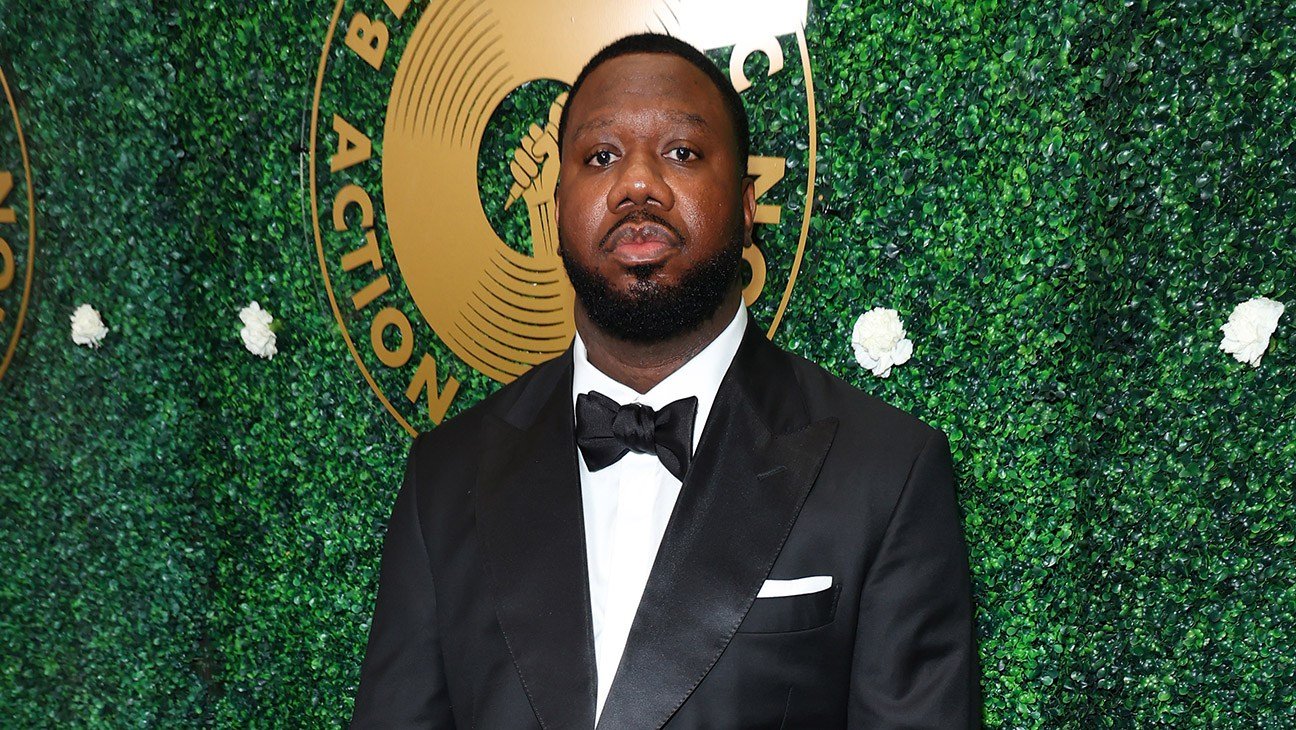
Quality Control co-founder Pierre “P” Thomas has been hospitalized after suffering a heart attack, the company said on social media on Friday.
“We want to clarify that Pierre “P” Thomas is alive and currently hospitalized receiving medical care,” Quality Control said in an Instagram post. “We ask that everyone keep P and his family in their thoughts and prayers and respectfully give them the privacy and space they need during this time. We deeply appreciate everyone’s concern, support, prayers, and loving energy right now.”
TMZ reported earlier Friday that Thomas is being treated in the ICU at a hospital in Las Vegas, with members of his family beside him.
Quality Control is a power-player in the hip-hop world, with Thomas co-founding the record label and artist management company with Kevin “Coach K” Lee in 2013. Quality Control’s roster has included the likes of Migos, Cardi B, City Girls, Lil Baby and Lil Yachty among others.
The company sold to the then-Scooter Braun-led Hybe America back in 2023 for about $300 million. “P and I are ecstatic about this partnership with Scooter and HYBE and are confident they can get us to our global ambitions we’ve had in our scope since the beginning of the company as nothing means more than our artists impacting worldwide,” Lee said in a statement at the time. “Over many years, Scooter and I have cultivated real trust and a common way of looking at the world and culture.”
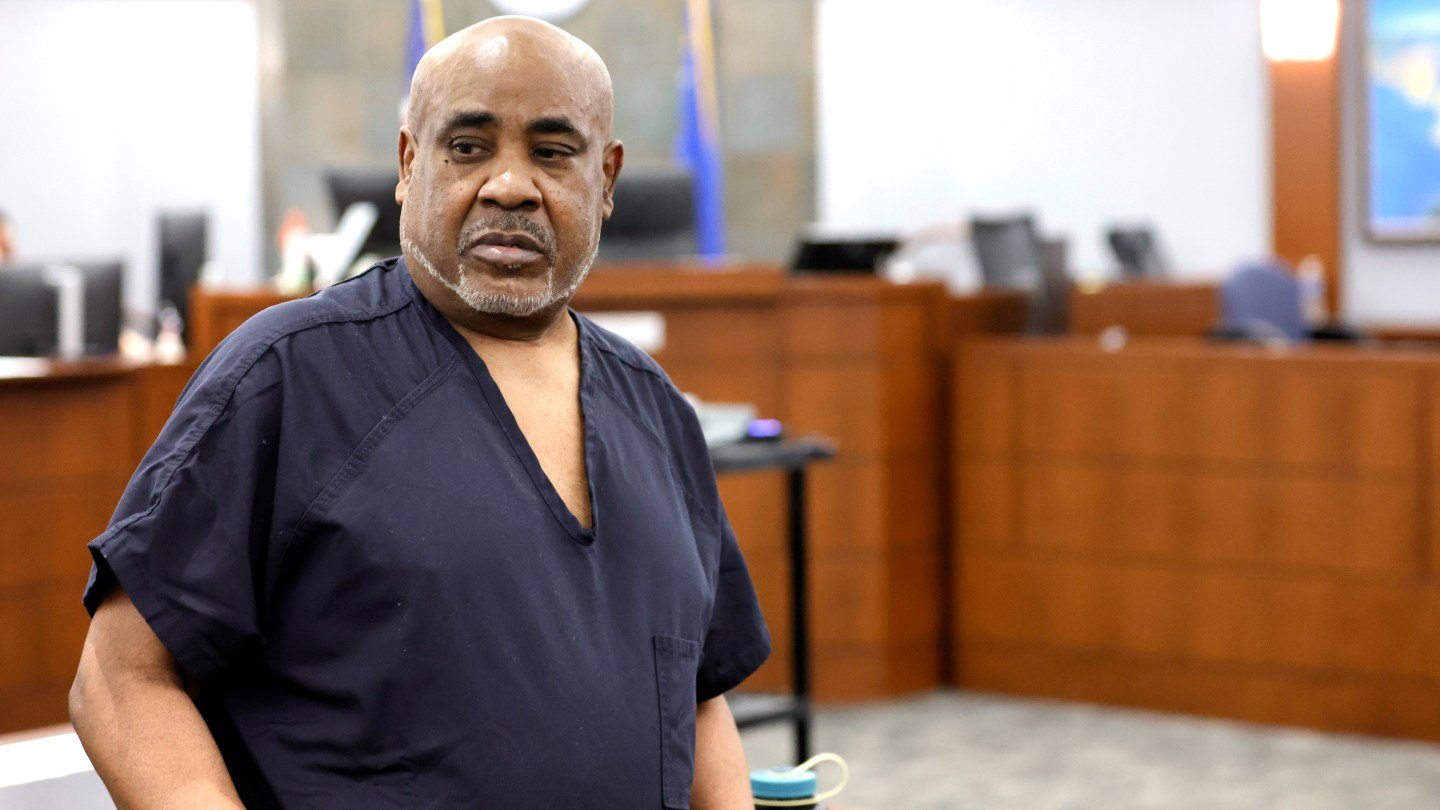
The trial of the former L.A. gang leader accused of orchestrating the shocking 1996 murder of rapper Tupac Shakur in a drive-by shooting in Las Vegas ended its first week on Friday with major evidence shown to the jury, including secret audio of the defendant’s admission to police decades ago of his involvement and the reemergence of the theory that imprisoned mogul Sean “Diddy” Combs ordered the hit.
Duane “Keffe D” Davis is facing one count of murder with the use of a deadly weapon in a Las Vegas court for his alleged involvement in the murder of rap icon Shakur and attempted murder of Death Row Records honcho Suge Knight. Prosecutors claim Davis orchestrated the attack that killed Shakur on Sept. 7, 1996, and that his nephew, Orlando “Baby Lane” Anderson — who Tupac’s crew had roughed up earlier that day — was in a rented Cadillac when it pulled up alongside the record label owner’s BMW off the Vegas Strip. Gunshots were exchanged, leaving Knight injured and Shakur mortally wounded; Shakur died days later from his injuries.
Audio from a conversation between Davis and investigators — which prosecutors say amounts to a full confession from the former Compton Crips capo — was played for the jury on Thursday. In it, Davis laments the state of life as a street gangster in Los Angeles and complains about the younger generation coming up in that world, before telling LAPD detectives about the 1996 shooting in an apparent bid to avoid prosecution on unrelated drug charges that would have carried a hefty sentence. He describes renting the car that pulled up to Knight’s vehicle and says his nephew fired the fatal shot.
“He leaned over on the window. He rolled down the window, popped ’em,” Davis said, according to the recording. “If they drove on my side, I would have popped ’em, know what I’m saying. But they was on the other side.”
LAPD Detective Daryn Dupree testified that when he was assigned to investigate the 1997 murder of rapper Christopher “Biggie Smalls” Wallace in Los Angeles, he interviewed Davis, who told him Bad Boy Records founder Combs had offered $1 million to whoever killed Shakur and Knight. To pursue Combs’ alleged involvement, Davis was brought in as a confidential informant and flown to New York to meet a man who was supposed to deliver the payment.
Dupree told the court Davis said he could “rekindle that relationship with [a contact named] Zip Martin and [discuss] the money that was given from Sean ‘Puffy’ Combs to Mr. Martin that never got to Mr. Davis.” But the meeting fell through — Davis was instead connected with the contact’s nephew, and the lead went nowhere.
Combs has repeatedly denied the allegation and has never been charged in connection with Shakur’s death.
Still, it’s a persistent alternative narrative that has resurfaced many times in the decades since the killing devastated the rap community. The theory first gained substantial traction from a 2008 interview in which, according to former LAPD detective Greg Kading, Davis described Combs approaching him about eliminating two prominent Death Row figures, with his gang allegedly promised $1 million for the double hit.
There was no hard evidence, and Combs has categorically denied the claim — but the theory resonated because it came from someone who was actually in the Cadillac during the shooting and was relayed by a law enforcement investigator. It was published in Kading’s 2011 book Murder Rap: Inside the Biggie and Tupac Murders. Combs called the theory “ridiculous,” but it was his book that pushed the idea deep into public consciousness. Notably, from 2011 on, the claim that Combs ordered Tupac’s murder was an allegation advanced by Kading based primarily on Davis’ statements — not a fact of any investigation.
In 2016, Kading’s theory became the centerpiece of a documentary also titled Murder Rap: Inside the Biggie and Tupac Murders, which again presented Combs as having commissioned the hit and named Anderson as the triggerman. Combs again denied involvement.
In 2019, Davis released a memoir, Compton Street Legend, offering a more detailed account of the shooting — one that reportedly contradicted his earlier narrative and is part of why he’s since been viewed as an unreliable witness and shaky defendant at trial.
Davis was arrested in 2023, nearly three decades after the murder, when Las Vegas authorities charged him with murder with a deadly weapon in connection with Shakur’s death. Prosecutors allege he obtained the gun and organized the men in the Cadillac after Anderson was beaten in a fight at the MGM Grand earlier that night.
Davis pleaded not guilty. Combs was not charged. The case drew renewed attention in 2024 when reports emerged that members of Shakur’s family had hired attorney Alex Spiro and a team of investigators to examine a possible Combs connection to the murder. Also that year, Ashley Parham filed a civil suit against Combs alleging that after she suggested in 2018 that he was involved in Tupac’s death, Combs threatened and assaulted her.
As Combs entered federal prison last year following convictions in his Mann Act/RICO trial, the Emmy-nominated docuseries Sean Combs: The Reckoning introduced the theory of his involvement to a new audience, featuring Kading and others connected to the case. The film received strong reviews for its scope but more mixed reactions to its evidence-to-speculation ratio.
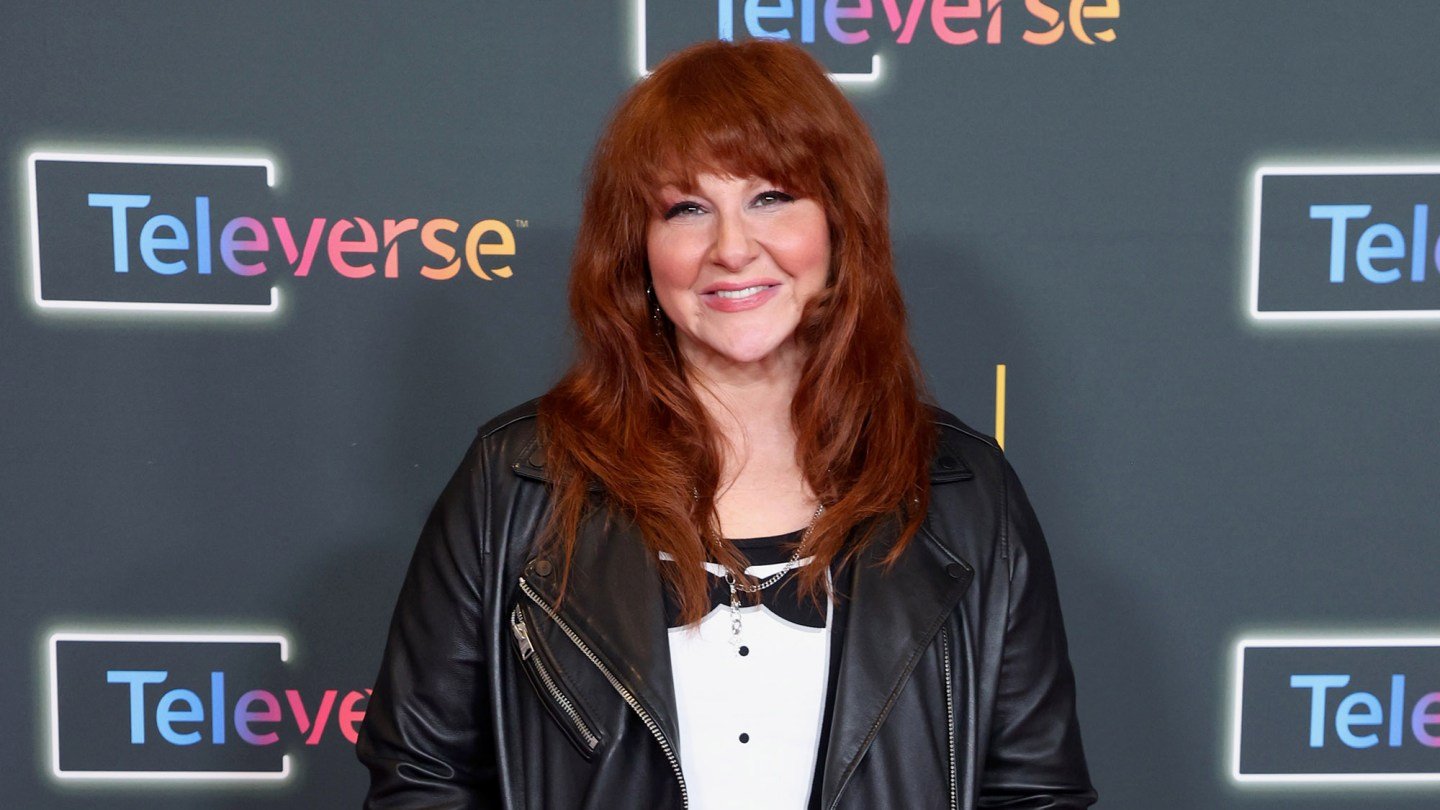
Julie Klausner would like comedy liberated from the phone and returned to the sitcom.
“If I want to canvass for one cause, it is for the return of the hard comedy sitcom,” the Difficult People creator told a sold-out audience at Televerse in downtown Los Angeles, where The Hollywood Reporter’s It Happened in Hollywood staged its first live episode. “I think that the idea that comedy is for your phone is not great. I think that it’s a little isolating. I think it’s reductive.”
Klausner joined me for an hour devoted to Difficult People, the cult Hulu comedy she created and starred in opposite Billy Eichner. Four clips from the series guided a conversation about its making, its reputation for being ahead of its time and the television landscape that has changed dramatically since its 2015 premiere.
The phone-comedy discussion followed a scene in which Julie Kessler and Billy Epstein, the proudly embittered struggling comedians played by Klausner and Eichner, confront an up-and-coming digital creator.
The face-off was pointed in 2015. Eleven years later, its target has largely won. Front-facing-camera videos and scrolling feeds have claimed an enormous share of comedy consumption, while traditional television has moved away from tightly constructed joke machines and toward dramedies and funny hourlong shows. Klausner cited Succession as an example of how much great comedy writing now resides in dramas.
What she misses is not simply the multicamera format or a laugh track, but the communal and emotional function of a show built around jokes. “Sitcoms with hard jokes and heart are beyond comforting,” Klausner said. “They are a really, really important part of being connected.”
She pointed to the enduring popularity of earlier ensemble comedies as evidence that younger viewers still respond to the form. “There’s a reason why even young people who were born way later than 1996 are watching Friends and Seinfeld and Golden Girls reruns every night,” she said. “We love and appreciate these rhythms. Shows especially about friendships are really great. They help us connect not just to different worlds, but to each other. And I really, really miss that form.”
Friendship was also the protection built into Difficult People. For all the show’s cruelty, one of Klausner’s rules was that Julie and Billy would never seriously turn on each other. Their unconditional loyalty counterbalanced the acid surrounding them, grounding the series in what Klausner described as the special relationship between queer people and their “hags.” The rule was broken only in the series finale, when Klausner suspected the show might not return.
Difficult People began during the Obama era, a context Klausner believes matters when people call the series prophetic. Its protagonists’ cynicism was then “more like salt on chocolate than salt on an open wound,” she said. The show mocked sex creeps before the #MeToo movement made those conversations public and treated online snark as something fun before, in Klausner’s formulation, “nuclear fertilizer” turned Twitter into something much uglier.
Ironically, the series itself grew out of an earlier internet-comedy ecosystem. Klausner was Eichner’s first writer when Billy on the Street expanded from online videos into a television series. Their rapport led Amy Poehler to attach herself as a producer. USA funded a presentation before eliminating its scripted comedy department, and Hulu, then a relatively new buyer of original programming, picked up the show. Klausner remembered having to ask: “What’s Hulu?”
At Televerse, the clips demonstrated the series’ density and range. In addition to the battle with the young digital creator, one transformed Julie’s discovery of her Italian American roots into a Goodfellas parody. Another found Julie and Billy serving as court-mandated clowns and tormenting a child. The final selection revisited Julie’s role in a catastrophically bad Woody Allen-created television series.
Klausner modeled the show’s intricate plotting on Curb Your Enthusiasm, constructing separate stories that would dovetail at the end of an episode. “It’s like sitcom ecstasy,” she said of achieving that convergence. She also assembled a cast from New York comedy and theater, including Cole Escola, who joined the writers room and played Matthew, Billy’s workplace nemesis.
Difficult People ran for three seasons before Hulu canceled it in 2017, but Klausner has not abandoned the characters. She also revealed new details about an existing route back. Universal commissioned a Difficult People feature screenplay from Klausner and Alex Scordelis, a writer on all three seasons. The pair completed Difficult People: Ahead of Their Time in 2022 and will stage a reading at New York’s Town Hall on election night, Nov. 3.
Christopher Meloni will play himself in the reading, Klausner said, while Cecily Strong and Michael Urie will portray what she called “a bizarro version of Billy and Julie.” She described the movie as a caper in the tradition of the 90-minute comedies she grew up watching, citing Foul Play, What’s Up, Doc? and Bette Midler’s Touchstone movies.
“I hope it leads to something great happening,” Klausner said. “I hope that there’s some opportunity to revisit this world and these characters, in whatever form that takes.”
A revived Difficult People would have no shortage of material. Klausner imagined Matthew falling into the “Clavicular manosphere.” Julie might land a “street-casted” role in a Benny Safdie movie, take a dubious weight-loss drug and become “the first person to die from a panic attack.”
The ideas suggest that Julie and Billy remain ideally equipped to take on an increasingly surreal era of looksmaxxing, brand integration, nepo babies, prestige dramedies and vertical video.
In other words, we’ve never needed Difficult People more.
Neon is giving Korean action maestro Na Hong-jin‘s gritty monster epic Hope an early theatrical launch on premium screens across the U.S.
The distributor revealed Thursday that it will hold large-format screenings of Hope on Sept. 7 at 175 premium locations ahead of its wide release on Sept. 9. The one-night event, with showtimes at 6:30 p.m., spans six formats — Dolby Cinema, 4DX, ScreenX, Barco HDR, D-Box and Dolby Atmos — at theaters in New York, Los Angeles, Chicago, San Francisco, Dallas and elsewhere. The launch strategy is reminiscent of Neon’s rollout last year of Osgood Perkins’ The Monkey, which used advance premium-format screenings to build word of mouth on the way to the film’s strong $40 million theatrical performance.
One of the buzziest films to emerge from this year’s Cannes Film Festival, Hope’s visceral spectacle certainly seems to warrant the premium-format splash.
Describing the film as “a superbly sustained pedal-to-the-metal experience that’s almost dizzying in its bravura,” The Hollywood Reporter‘s chief film critic hailed Hope as a “rip-roaring sci-fi creature feature” that “has instant cult classic written all over it.”
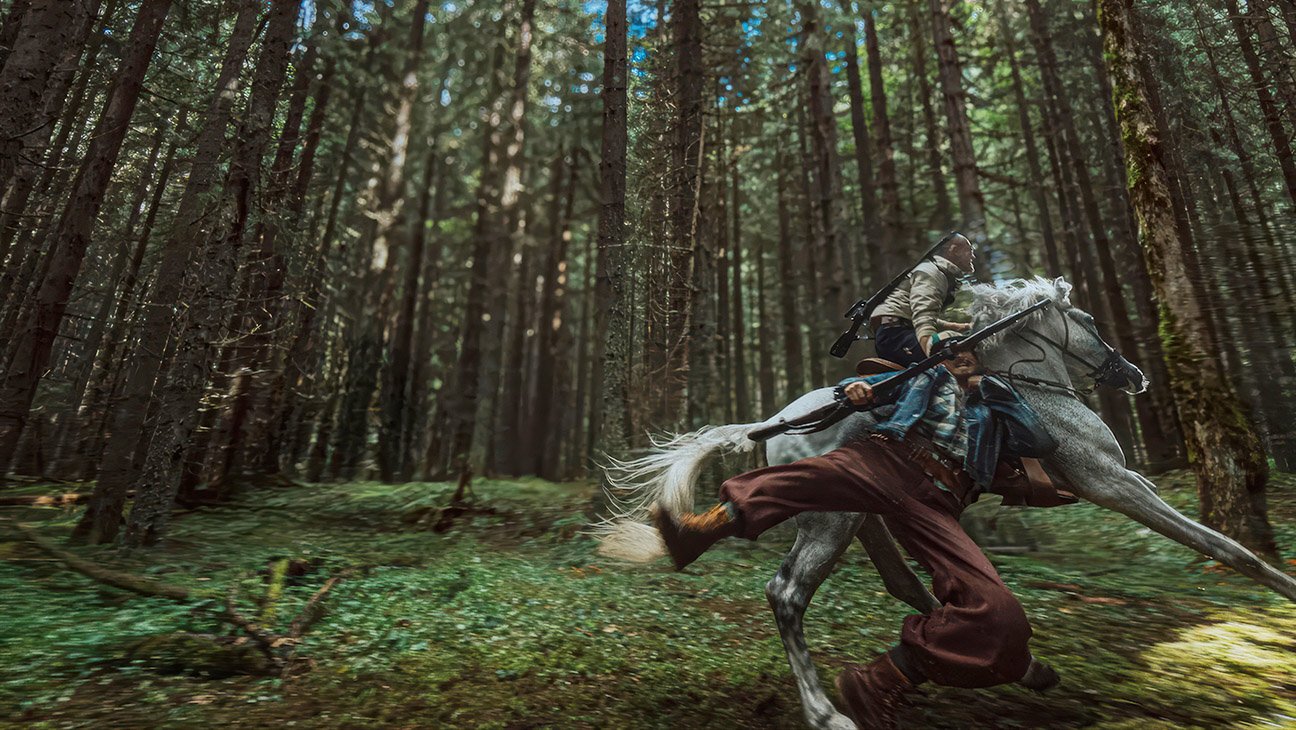
Set in the fictional border town of Hope Harbor near the Korean Demilitarized Zone (DMZ), the film follows put-upon police chief Bum-seok (Hwang Jung-min) and his bad-ass female deputy Sung-ae (Squid Game‘s Hoyeon) as they frantically hunt an enormous mystery creature that has begun rampaging through their village. A band of local hunters, led by the charismatic Sung-ki (Zo In-sung), joins the chase and tracks the beast into a nearby forest — only to become its prey. What begins as a series of understandable misjudgments soon spirals into tragedy on a cosmic scale.
Hope is Na’s first feature in roughly a decade. The writer-director has become a favorite of both arthouse fans and action aficionados thanks to his trio of stunning genre movies, the brutal crime thrillers The Chaser and The Yellow Sea and the 2016 horror sensation The Wailing. He reunites here to stunning effect with his Wailing cinematographer, Hong Kyung-pyo, a revered figure in the Korean industry whose other credits include Bong Joon Ho’s Parasite and Lee Chang-dong’s Burning. Hope‘s score is by Michael Abels, the composer behind Jordan Peele’s Get Out and Nope. The film’s Korean ensemble is rounded out by surprising supporting characters played by Michael Fassbender, Alicia Vikander, Taylor Russell and Cameron Britton.
Hope opened at home in South Korea on July 15 and has earned $35 million, becoming the country’s third-biggest domestic release this year.
Na conceived Hope as the first chapter of a potential franchise — and, so far, international distributors appear on board. The film’s main backer and sales agent, Plus M pre-sold the title to roughly 200 territories out of Cannes, a record for a Korean film, with the deals reportedly recouping nearly half of the movie’s net production budget ahead of release.
During an interview on Fox News’ Jesse Watters Primetime Thursday evening, the former To Catch a Predator host said he went to the indie production studio and distributor’s office earlier in the day for a private screening of the film, but ended up leaving without seeing it.
“The lawyers at A24 wanted me to sign away my rights to my name, image and brand, essentially, as well as any potential legal rights that would come out of the movie,” Hansen alleged. “I couldn’t sign that, so they didn’t show me the film. I went all the way over there. … But who’s going to sign something like that?”
He added that it was a “very restrictive agreement” and that he “had never seen anything quite like it.”
The Hollywood Reporter learned that Hansen was asked to sign a standard NDA a week in advance that all preview audiences must sign in order to watch an unreleased A24 film. It’s mostly to prevent spoilers and protect the studio’s IP.
Hansen noted to Jesse Watters that his “lawyers had already seen” the NDA before he arrived at A24’s offices.
When asked by the host what A24 might be worried about, the veteran journalist replied, “I don’t know! I haven’t seen the film. If you look at the trailer, obviously it’s a very dramatized version. They had told me that it’s fictionalized in many aspects. I know other people have seen it who didn’t sign an NDA, and yet they wanted me to sign it.”
Primetime, which stars Pattinson as the Dateline NBC correspondent, chronicles the intense production, ethical dilemmas and media sensationalism behind To Catch a Predator, which ran from 2004 to 2007.
During an interview with podcaster Annie Elise last week, Hansen questioned “Hollywood’s motive” behind the movie directed by Lance Oppenheim, but refused to judge the film until he’s seen it.
“A couple months ago, they came and said, ‘Hey look, we’re doing this, we’d like you to have some sort of consideration in terms of helping us with this,’” he said. However, Hansen noted that the film was already made before “they” reached out to him.
“As a reporter, it’s sort of silly for me to talk about something that I haven’t seen yet,” he added. “My suspicion is that they used my name because it helps in a commercial enterprise.”
Primetime, also starring Merritt Wever, Skyler Gisondo, Phoebe Bridgers, Matthew Maher and Bokeem Woodbine, hits theaters on Sept. 25.
During a recent interview withTown & Countryfor a cover story about Sheridan, the Landmanstar said, “Hollywood wasn’t nice to Taylor. There’s something about being an outsider that drives you.”
Prior to building his television empire, which includes hit shows from Yellowstone and Mayor of Kingstown to Landman and Special Ops: Lioness, Sheridan was a struggling actor living in L.A.
“I was homeless twice,” he said. “I lived in my car. Sometimes I’d go to Ojai, just somewhere where I could safely sleep. I did that for six months.” Despite the challenges, Sheridan said he “chose to sleep in my car” rather than giving up on his dream.
However, after spending roughly two decades as a working actor, appearing on shows like Sons of Anarchy and Veronica Mars, his dream slightly changed when he pivoted to screenwriting — ultimately changing his life.
Sheridan told The Hollywood Reporter during a 2023 cover story, “Hollywood will tell you what you’re supposed to do if you listen. If you’re banging your head against the wall for 20 years trying to be an actor, maybe you shouldn’t be an actor. But the first thing I ever wrote [the pilot for Mayor of Kingstown in 2011] got me meetings at every major network, at every agency. I had multiple people trying to buy it.”
Once he gathered enough money from his early hits, such as Yellowstone, Sheridan decided to return to Texas, where he spent most of his childhood. He started buying up land and now owns more than 250,000 acres of ranchland across Texas, which includes his Four Sixes (6666) Ranch and Bosque Ranch.
Thornton told Town & Country, “I think the ranch community in Texas accepted Taylor 100 percent because he’s not phoning it in. He doesn’t go to the tourist cowboy shop and get an outfit. This is the real thing.”
Sheridan now spends most of his time in Texas, as he often invites castmembers to come to his ranch for meetings rather than going back to L.A. The ranching empire he’s built has also given him a creative edge, influencing the stories he writes that audiences love.
“When I lived in Los Angeles, everything I saw was the same and I didn’t learn anything in my day-to-day life,” Sheridan previously told THR. “Here, I get to experience so much. I heard 25 iconic pieces of dialogue today. Most of my great lines I heard someone else say, or some version of it. I’m banking story all the time.”
The Goop founder and Oscar-winning actress is leaning in on the swirl surrounding her supposed dinner with OpenAI chief Sam Altman by posting a series of faux invites in honor of various bold-faced yet fictional characters. “Gwyneth Paltrow invites you to a private, off-the-record al fresch dinner at her home in honor of M3GAN,” reads the first in a carousel of images shared with her 9.2 million Instagram followers. Other characters she’s welcoming to the table: Samantha Jones (Kim Cattrall’s Sex and the City character), Shrek, Jessica Rabbit (of Who Framed Roger Rabbit fame) and Chanty Beluga (a meme queen created by L.A.-based comedian and actor Courtney O’Donnell).
“We’re serving swordfish burritos, cheddar foam lattes on request,” wrote Paltrow in the caption of the new post, which was shared Thursday afternoon as word continued to spread online about this alleged dinner. First reported by Puck’s Matthew Belloni, Paltrow is said to be hosting Altman for an off-the-record dinner at her Amagansett home on Saturday, Aug. 29.
Neither Paltrow nor Altman has confirmed the validity of the invite or whether the dinner party is really happening, but a reporter from BBC Verify posted on X that the invite itself had “likely” been created using OpenAI tools.
I don’t know if Gwyneth Paltrow is actually hosting an event for Sam Altman, but I do know that this purported invitation card that’s been going viral is likely AI-generated.
It’s not the first time Paltrow has gone viral for her association with an AI company. Following the kiss cam controversy at a Coldplay concert involving senior executives at Astronomer, Paltrow partnered with the tech data company as a “very temporary spokesperson” to poke fun at the scandal in a commercial that traveled far and wide.
She’s also reportedly invested in several AI-forward start-ups and her Goop Kitchen signed a lease at 405 Howard Street in San Francisco as part of an expansion for the fast-casual empire. The ground floor unit is in a building that serves as part of the massive headquarters for top AI company Anthropic.
If Paltrow actually hosts Altman to break bread outside her home, she would be part of a larger trend among Hollywood actresses promoting or at least endorsing the use of AI, like Reese Witherspoon and Sandra Bullock.
If you’re terminally online, you’ve probably found yourself swept up in this year’s exhausting discourse over creative license and beloved IP.
When the now well-received Lanterns premiered its official trailer earlier this year, a vocal subset of fans objected to the premise of taking the ring-powered space cops of the Green Lantern Corps and grounding these colorful, cosmic superheroes in small-town Nebraska for a desaturated, Taylor Sheridan-esque riff on True Detective. Earth’s first Green Lantern, Hal Jordan, played by Kyle Chandler, also drew criticism for being portrayed as an older, messier iteration of the most famous intergalactic peacekeeper rather than the more idealized version in his prime.
Concurrently, Christopher Nolan’s modernized adaptation of Homer’s ancient Greek poem, The Odyssey,endured endless kvetching prior to becoming the highest-grossing film of his storied career. Some found fault with the use of American accents instead of British ones, something Hollywood has long conditioned audiences to hear in sword-and-sandal epics. Others argued that the characters should be speaking with Greek accents or even in an ancient Greek dialect to honor the source material’s roots in Greek mythology. Additional gripes, among many others, targeted the use of the word “dad,” the Greek soldiers’ anachronistic armor and two casting choices that together accounted for less than ten minutes of screen time.
Resident Evilwriter-director Zach Cregger — who delivered two of the most unique genre films this decade, Barbarian and the Oscar-winning Weapons — has also taken a great deal of flak for having the audacity to tell a new story that’s set inside the world of the popular video game franchise. Hardcore Resident Evil devotees contend that he should have just made an original movie if he didn’t want to meaningfully engage with the existing characters and stories. Cregger maintains that his goal was to capture the experience of playing the games he himself loves.
If anyone understands fan backlash and demands for adaptational fidelity, it’s Lanterns‘ Emmy-winning co-creator Damon Lindelof. He’s worked across a wide range of existing IP, including Watchmen, Star Trek, Star Wars, Alien, World War Z and The Leftovers. He also co-created Lost, a series that is bound to be revisited or reinterpreted by someone else down the road. Having lived on both sides of the equation, he has heard every possible reaction to his work, from effusive praise to deep-seated contempt.
“We all just have to acknowledge that there’s a level of hubris involved in taking on any of this preexisting IP. But it is called adaptation. Source material is supposed to change and evolve [by definition],” Lindelof tells The Hollywood Reporter. “As a consumer and as someone who’s making this stuff, there’s almost a responsibility to take risks. I don’t think anybody wants to see you be completely and totally vigilant to the source material because then it isn’t an adaptation at all. Shouldn’t we be beyond this conversation by now?”
While some of these perpetual controversies are generated with financial and/or political incentive in mind, Lindelof notes that such grievances are partially tied to Hollywood’s habit of returning to the same wells. And though consumers claim to want more brand-new experiences like Obsession, the numbers continue to show that branded entertainment still rules the day.
“There is a fundamental grumbling and annoyance that we’re still telling the same stories over and over and over again. But at the same time, we’re hungry for something new,” Lindelof says. “And because we don’t want to resolve or acknowledge that paradox in ourselves, we throw it onto the culture. It manifests itself in conversations about whether or not Odysseus is having enough sex.”
Thus, until the audience behavior truly shifts away from franchise stories, barring a few outliers each year, creators like Lindelof will keep utilizing creative license to reimagine the familiar in the most compelling ways possible.
“Nobody who does what we do goes to bed at night, saying, ‘All that I care about is whether or not I pissed off the fans.’ They go to bed at night, going, ‘Did I do anything worthwhile creatively? Did I put anything authentically emotional into this story that people can relate to?’” Lindelof says. “And the fact that we have to do it inside familiar IP most of the time is the cost of doing business.”
Below, during a conversation with THR, Lindelof and fellow Lanterns co-creator Tom King also discuss the inspiration behind the traumatic backstory of aspiring Green Lantern, John Stewart (Aaron Pierre), as well as the challenge King currently faces in adapting his 2017 Mister Miracle comic book run for animation.
***
It’s nothing new, but the discourse this year surrounding adaptations and source material has been as insufferable as it’s ever been. Whether it’s Lanterns or The Odyssey or Resident Evil, there’s been so much bellyaching over creative license. Some of it is manufactured and disingenuous, but why do you think there’s so much resistance to change when it’s been proven that people rarely want more of the same?
DAMON LINDELOF I love the frame on the question. I love how insufferable [the discourse] is, and at the same time, it feels like it’s such a vital conversation. In the case of TheOdyssey, which is millennia-old, or GreenLantern [comic series], which is on the right side of the century mark, our engagement in these works generates a high level of passion. But the other level of it is this weird conceptual framework of ownership, and that’s where it becomes insufferable. There’s a direct corollary to the amount of time that you spend ingesting something or thinking about something or talking about it with your friends or communities. You begin to feel like a proprietary interest in protecting it.
So I think we all just have to acknowledge that there’s a level of hubris involved in taking on any of this preexisting IP. But to your point, it is called adaptation. I don’t have my dictionary handy, and while I’m sure there are multiple definitions of adaptation, the one that resonates the most for me is that source material is supposed to change and evolve. [Writer’s Note: To his point, here’s another definition: Something that is changed or modified to suit new conditions or needs.]
The fandom will also watch the new HarryPotter trailer and be like, “This just looks exactly like HarryPotter.” And then the other side of the fandom is like, “Thank God, this is exactly what I want. This is what I love about Harry Potter.” When you try to split that difference and say, “How can we do something original inside something that is iterative [and/or] older than God?” — that is always the $64,000 question. I should probably add inflation.
The answer, particularly in the case for Tom and I, is that we identify primarily as fans. We were fans of this content long before we got the opportunity to make it. You don’t start from a place of, What would I do? You start from a place of, What would excite me? What would I hate? Then you always come to an answer that’s going to have some risk involved. As a consumer and as someone who’s making this stuff, there’s almost a responsibility to take risks. It’s not just for the sake of taking them; you’ve got to earn them. I don’t think anybody wants to see you be completely and totally vigilant to the source material because then it isn’t an adaptation at all.
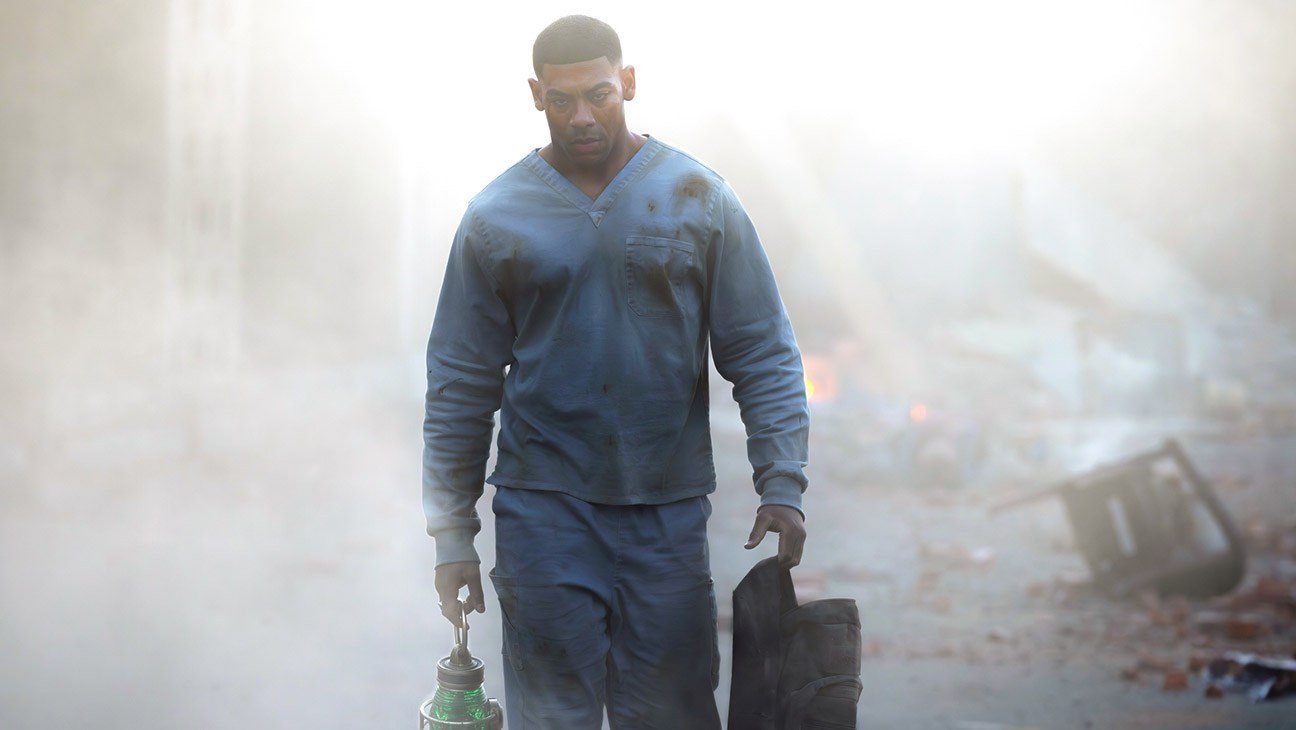
Aaron Pierre ‘s John Stewart in Lanterns
John Johnson/HBO Max
Tom, what’s your take on this tug of war?
TOM KING To me, at the end of the day, it’s quality. And that’s such a stupid answer. Clueless, which is an adaptation of Jane Austen’s Emma, is completely different. It almost has nothing to do with it, but it’s such a good movie on its own. When you look into it and you see the Jane Austen of it all, you’re like, Oh my God, that’s an amazing adaptation. So adaptations have to do two things at once: they have to stand on their own and they have to talk to the old material. If they can’t stand on their own, then what you’re going to see is how you misinterpreted the old material. So quality, quality, quality is always just the apex of everything.
When artists or bands cover well-known songs, the whole point is to hear their twist on the material. Nobody expected Johnny Cash’s “Hurt” to be a carbon copy of Nine Inch Nails’ original, so it’s puzzling to me why movie and TV adaptations are held to a different standard.
LINDELOF I hard agree. I also don’t even know if they’re being held to any standard at all. There is a fundamental grumbling and annoyance that we’re still telling the same stories over and over and over again. But at the same time, we’re hungry for something new. And because we don’t want to resolve or acknowledge that paradox in ourselves, we throw it onto the culture. It manifests itself in conversations about whether or not Odysseus is having enough sex.
KING So you do open my emails. Good.
LINDELOF & KING (Laugh.)
LINDELOF But I do find the conversation much more exhilarating on the outside than from the inside. Also, look at the movies and television shows that are generating the most interest and the most eyeballs. It’s disproportionately a retelling versus a telling. So when something fresh and original like Backrooms or Obsession comes along, it’s the exception to the rule versus the rule. All of us are completely and totally overwhelmed by the familiar.
Nobody who does what we do goes to bed at night, saying, “All that I care about is whether or not I pissed off the fans.” They go to bed at night, going, “Did I do anything worthwhile creatively? Did I put anything authentically emotional into this story that people can relate to?” And the fact that we have to do it inside familiar IP most of the time is the cost of doing business. But I don’t disagree with you. Shouldn’t we be beyond this conversation by now?
KING I’m working on MisterMiracle now, this animated series within the DC Universe. It’s me adapting myself, but it’s myself from ten years ago.
LINDELOF The fans will get to say, “You ruined it!”
KING (Laughs.) As a comic book writer, I’ve been to ten years of conventions where people tell me about the parts they loved and hated in the book. So I’ve been arguing with myself from ten years back, being like, Oh my God, you wrote that well, or, You wrote that terribly. I’m hearing those fans from conventions in my head, and I’m hearing my own instincts as a creator who’s learned a ton since then, including by watching Damon create. So all of this is entirely on my mind, and I’m trying to produce something that both honors and elevates the original on a new medium.
Cairo Cash Lee as Young John Stewart in Lanterns
John Johnson/HBO Max
John Stewart’s (Aaron Pierre) traumatic backstory seems like it has both of your fingerprints all over it.
LINDELOF & KING (Laugh.)
Actually, I could say the same thing about Hal. He has a little bit of Dogen (Hiroyuki Sanada’s Lost character) in his background. In the case of John, though, had one of you been dabbling in Swiss folklore at the time?
LINDELOF In truth, a lot of that came from Vanessa [Baden Kelly], who wrote the [third] episode. Justin Britt-Gibson, as well. He was in our writers’ room, and we previously worked on a StarWars movie that we never got to make. I don’t know how familiar you are with comic-book John’s myriad backstories and introductions, but it was this idea of trying to honor the inconsistency of his comic book legacy with some new ideas of our own. Obviously, I was really proud to be in this room. This is not a show that I ran; Chris Mundy ran it impeccably. So it felt like I was batting around .175 in terms of the ideas that I was throwing out. But the more exciting part of the job was hearing other ideas from the other writers and going, “Yes, that.” So when it came to John’s origin story, Tom pitched the dad and the apples, and that was very early in the pilot we wrote with Chris. But working backwards from that and saying, “Alright, how did we get here?” — a lot of that heavy lifting came from Vanessa.
KING Yeah, I remember us going, “This is a father story.” And she was like, “No, this is a mother story.”
LINDELOF She was like, “Enough of the bad dads.”
*** Lanterns is now airing new episodes on HBO/HBO Max every Sunday until Oct 4.
It’s a big day for Cameron Diaz fans as her next feature sets its Netflix release date.
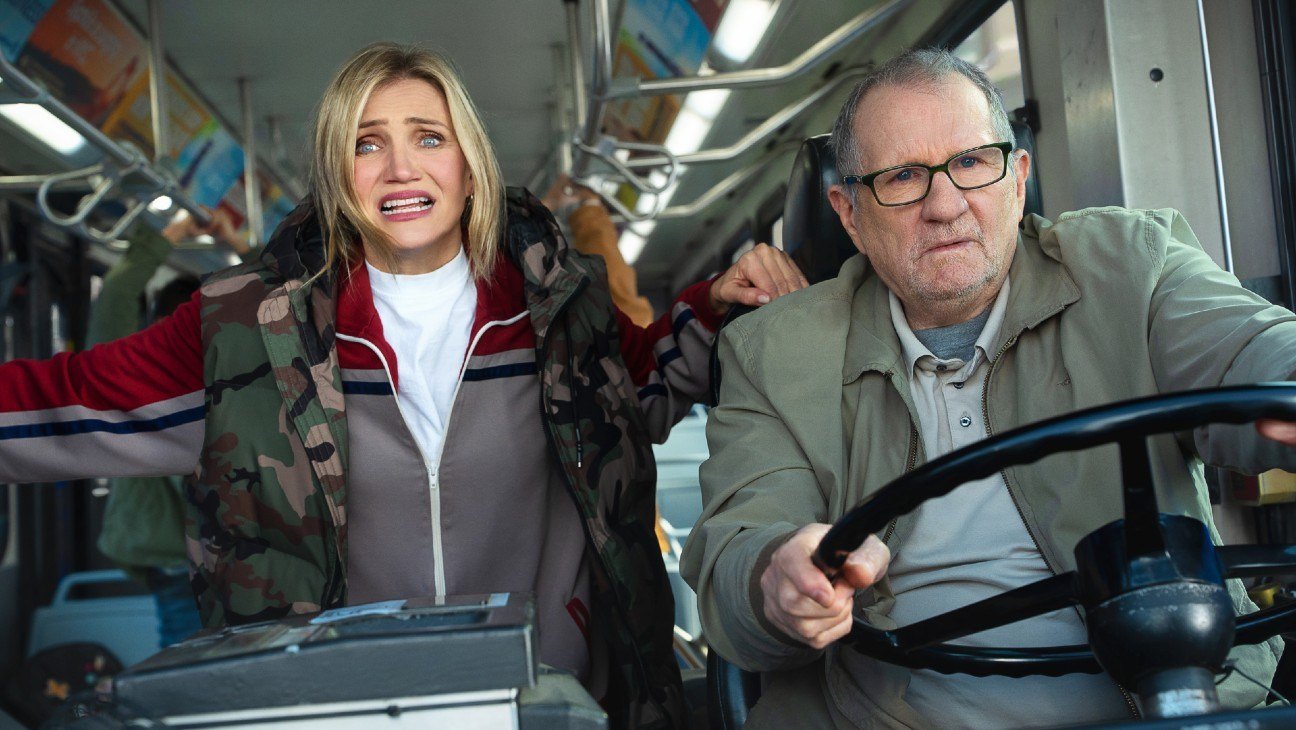
The streaming service announced Thursday that director Jake Szymanski’s action-comedy movie Bad Day is set to begin streaming Dec. 11. Diaz leads the cast that also includes Danielle Brooks, Rhenzy Feliz, John Higgins, Mark Duplass, Jessica Belkin, Ed O’Neill, Rob Corddry, Ayden Mayeri, Ben Schwartz, Retta, Emma Pearson, P.J. Byrne, Sherry Cola, Edi Patterson and Beck Bennett.
Bad Day sees Diaz starring as a single mom who endures the toughest day of her life while striving to keep a promise to her daughter.
Szymanski (Jury Duty) helmed the film from a script by Laura Solon. Beau Bauman produces for Good One Productions, with Solon and Mark Moran executive producing. First-look images from the project can be seen above and below.
Cameron Diaz in Bad Day.
Courtesy of Netflix
Diaz, who is known for such movies as There’s Something About Mary and Charlie’s Angels, took a 10-year break from lead acting roles before returning to the craft to star in Netflix’s 2024 feature Back in Action, opposite Jamie Foxx.
“I don’t know how I view it. It’s hard to say,” the actress told Empire at that time about her outlook on continuing her career. “If I say it then it becomes this thing. I reserve the right to say no to doing a movie ever again, and I reserve the right to say yes if I decide to. I’m not defining anything. I’m just open to whatever makes sense for me and my family at any given moment.”
Plenty of British children’s stories have managed to catch on with American audiences via their cinematic adaptations, from Mary Poppins to Charlie and the Chocolate Factory to Paddington. The latest entry to cross the pond is unlikely to reap similar success despite the presence of Claire Foy and Andrew Garfield in leading roles and a supporting cast featuring some of England’s finest thespians. Adapted from Enid Blyton’s 1943 novel, which was part of a three-book series, The Magic Faraway Tree proves so relentlessly twee and sugary that all but the youngest viewers will find themselves at risk of a diabetic coma.
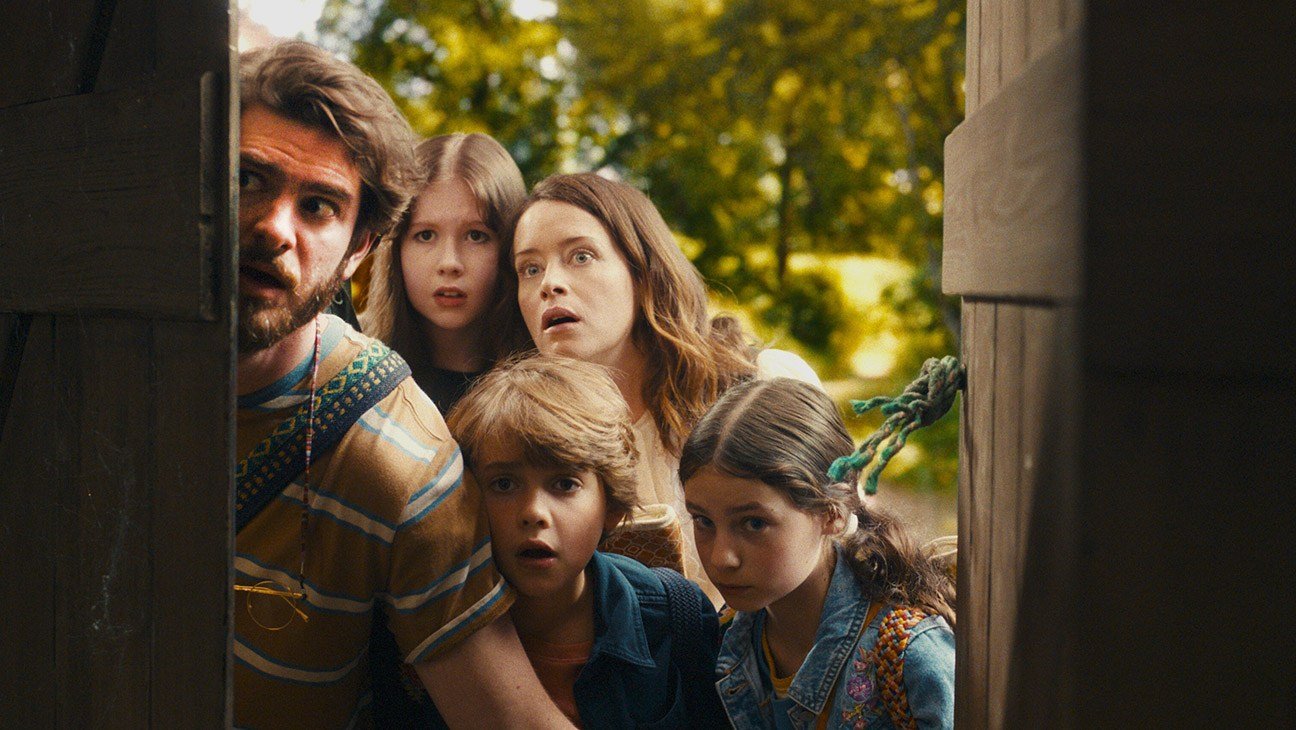
Foy and Garfield play Polly and Tim, a married couple who decide to decamp from their London home when Polly resigns from her job at a manufacturing company after said company installs spying technology in the smart refrigerator — voiced by Judi Dench, of all people — that she’s invented. So they take off with their kids to the rural countryside, renting a dilapidated barn and creating a tomato farm to fulfill Tim’s dream of marketing his homemade pasta sauce.
The Magic Faraway Tree
The Bottom Line
Too imaginative for its own good.
Release date: Friday, August 21 Cast: Claire Foy, Andrew Garfield, Nonso Anozie, Nicola Coughlan, Delilah Bennett-Cardy, Billie Gadsdon, Phoenix Laroche, Dustin Demri-Burns, Jessica Gunning, Hiran Abeysekera, Mark Heap, Pippa Bennett-Warner, Oliver Chris, Lenny Henry, Michael Palin, Simon Russell Beale, Jennifer Saunders, Rebecca Ferguson Director: Ben Gregor Screenwriter: Simon Farnaby
Rated PG,
1 hour 50 minutes
The decision doesn’t sit well with their three children: smartphone-obsessed Beth (Delilah Bennett-Cardy), who is horrified to discover that their new home doesn’t include electricity and running water, let alone Wi-Fi; and younger siblings Joe (Phoenix Laroche) and mostly silent Fran (Billie Gadsdon). “I don’t understand, have we gone back in time?” Joe plaintively asks.
Their feelings change when Fran has an encounter with Silky (Nicola Coughlan of Bridgerton), an exuberant fairy, who invites her to join her for tea at the Magic Faraway Tree. There, a newly verbal Fran meets a variety of bizarre characters including the aptly named Moonface (Nonso Anozie); the Saucepan Man (Dustin Demri-Burns), who’s clad in kitchen paraphernalia; Dame Washalot (Jessica Gunning of Baby Reindeer), who, yes, does a lot of scrubbing; and Mr. Whatzisname (Oliver Chris), who, you guessed it, has memory issues.
Not so magical complications ensue, with the overstuffed proceedings eventually involving such other fantastical characters as the Birthday Elves, who offer each of the children one wish (Joe asks to be turned into his favorite Minecraft character, which is presumably an update from the original story); Mr. Oom Boom Boom (Mark Heap), who has the handy ability to reverse the wishes; and the Know-Alls (Michael Palin, Lenny Henry, Simon Russell Beale, all virtually unrecognizable under mounds of facial hair).
It’s all, as you can imagine, more than a bit much, and by the time the villainess Dame Snap (Rebecca Ferguson, whose giant lopsided wig probably required her to see a chiropractor between takes) comes along, you find yourself rooting for her. Indeed, it’s the most acerbic characters who prove the most endearing, especially the children’s grandmother played by British national treasure Jennifer Saunders, who practically makes a meal out of her disgusted exclamation, “Unemployed!”
Screenwriter Simon Farnaby has plenty of experience with this sort of material, having co-written the screenplays for Paddington 2 and Wonka, but he doesn’t bring similar wit to these proceedings. He also shows up briefly as a friendly farmer who provides the opportunity for a labored gag in which he confuses “Wi-Fi” for “wifey.” And while Foy is appealing as the indefatigable mother, Garfield leans too heavily into manic cutesiness as the endlessly chirpy father who at times seems less grown-up than his children. The story’s ultimate message about the kids learning to forego their electronic devices to embrace the joy of friends and family also seems a bit ironic, considering the film’s future as an electronic babysitter.
The Magic Faraway Tree is most notable for the imaginative costume and make-up designs for its outlandish characters and the brightly colored, pastel visuals that give you the feeling you’re looking at an oversized children’s book. But even the distinctive look becomes wearisome after not too long. By the time the film is over, you’ll be longing for some refreshing monochrome.