
Tag: Engaget

  • 13-hour AWS outage reportedly caused by Amazon’s own AI tools

    13-hour AWS outage reportedly caused by Amazon’s own AI tools

    A recent Amazon Web Services (AWS) outage that lasted 13 hours was reportedly caused by one of its own AI tools, according to reporting by Financial Times. This happened in December after engineers deployed the Kiro AI coding tool to make certain changes, say four people familiar with the matter.

    Kiro is an agentic tool, meaning it can take autonomous actions on behalf of users. In this case, the bot reportedly determined that it needed to “delete and recreate the environment.” This is what allegedly led to the lengthy outage that primarily impacted China.

    Amazon says it was merely a “coincidence that AI tools were involved” and that “the same issue could occur with any developer tool or manual action.” The company blamed the outage on “user error, not AI error.” It said that by default the Kiro tool “requests authorization before taking any action” but that the staffer involved in the December incident had “broader permissions than expected — a user access control issue, not an AI autonomy issue.”

    Multiple Amazon employees spoke to Financial Times and noted that this was “at least” the second occasion in recent months in which the company’s AI tools were at the center of a service disruption. “The outages were small but entirely foreseeable,” said one senior AWS employee.

    The company launched Kiro in July and has since pushed employees into using the tool. Leadership set an 80 percent weekly use goal and has been closely tracking adoption rates. Amazon also sells access to the agentic tool for a monthly subscription fee.

    These recent outages follow a more serious event from October, in which a 15-hour AWS outage disrupted services like Alexa, Snapchat, Fortnite and Venmo, among others. The company blamed a bug in its automation software for that one.

    However, Amazon disagrees with the characterization of certain products and services being unavailable as an outage. In response to the Financial Times report, the company shared the following statement, which it also published on its news blog:

    We want to address the inaccuracies in the Financial Times’ reporting yesterday. The brief service interruption they reported on was the result of user error—specifically misconfigured access controls—not AI as the story claims.

    The disruption was an extremely limited event last December affecting a single service (AWS Cost Explorer—which helps customers visualize, understand, and manage AWS costs and usage over time) in one of our 39 Geographic Regions around the world. It did not impact compute, storage, database, AI technologies, or any other of the hundreds of services that we run. The issue stemmed from a misconfigured role—the same issue that could occur with any developer tool (AI powered or not) or manual action. We did not receive any customer inquiries regarding the interruption. We implemented numerous safeguards to prevent this from happening again—not because the event had a big impact (it didn’t), but because we insist on learning from our operational experience to improve our security and resilience. Additional safeguards include mandatory peer review for production access. While operational incidents involving misconfigured access controls can occur with any developer tool—AI-powered or not—we think it is important to learn from these experiences. The Financial Times’ claim that a second event impacted AWS is entirely false.

    For more than two decades, Amazon has achieved high operational excellence with our Correction of Error (COE) process. We review these together so that we can learn from any incident, irrespective of customer impact, to address issues before their potential impact grows larger.

    Update, February 21 2026, 11:58AM ET: This story has been updated to include Amazon’s full statement in response to the Financial Times report.

  • A judge ruled Tesla still has to pay $243 million for a fatal crash involving Autopilot

    A judge ruled Tesla still has to pay $243 million for a fatal crash involving Autopilot

    Tesla is still on the hook for $243 million after a US judge rejected the EV maker’s bid to overturn a jury verdict from last year. On Friday, US District Judge Beth Bloom upheld the jury’s decision to hold Tesla partially responsible for a deadly crash that happened in 2019 and involved the self-driving Autopilot feature.

    The judge added that there was enough evidence to support the jury’s verdict, which was delivered in August 2025 and ordered Tesla to pay millions in compensatory and punitive damages to the two victims in the case. Judge Bloom added that Tesla didn’t present any new arguments to dispute the decision.

    While the case has been moving along recently, the incident dates back to several years ago when the driver of a Model S, George McGee, was using Tesla’s Autopilot feature while bending down to retrieve a dropped phone. The Model S then crashed into an SUV that was parked on a shoulder, where Naibel Benavides Leon and Dillon Angulo were standing aside. Benavides was killed in the crash, while Angulo was severely injured.

    Tesla hasn’t publicly commented on Judge Bloom’s decision yet, but it won’t be a surprise to see the company appeal the latest ruling with a higher court. Tesla’s lawyers previously tried to pin the blame on the driver, claiming that the Model S and Autopilot weren’t defective. As this major case plays out, Tesla is also facing several investigations from the National Highway Traffic Safety Administration for both its Autopilot and Full-Self Driving features.

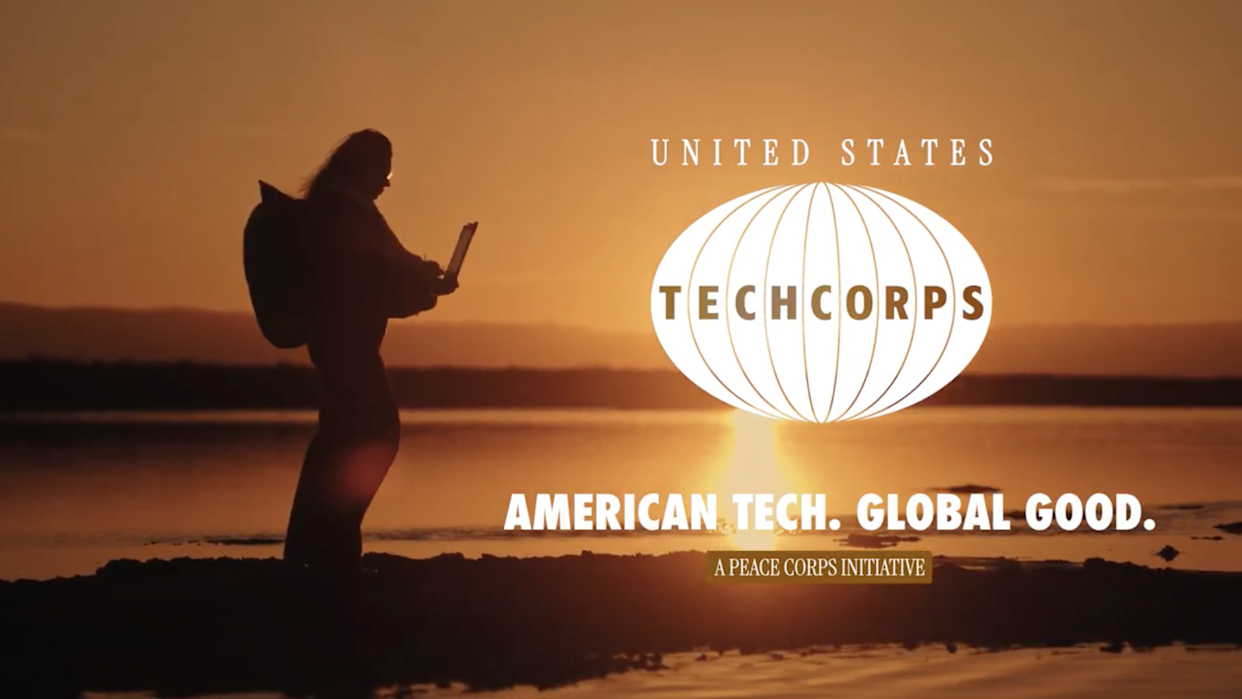
  • The US will send Tech Corps members to foreign countries in its latest push for AI dominance

    The US will send Tech Corps members to foreign countries in its latest push for AI dominance

    The government agency that sends its corps members abroad to volunteer in foreign countries launched its latest initiative called Tech Corps. The Peace Corps’ latest proposal will recruit STEM graduates or those with professional experience in the artificial intelligence sector and send them to participating host countries.

    According to the press release, volunteers will be placed in Peace Corps countries that are part of the American AI Exports Program, which was created last year from an executive order from President Trump as a way to bolster the US’ grip on the AI market abroad. Tech Corps members will be tasked with using AI to resolve issues related to agriculture, education, health and economic development. The program will offer its members 12- to 27-month in-person assignments or virtual placements, which will include housing, healthcare, a living stipend and a volunteer service award if the corps member is placed overseas.

    Richard E. Swarttz, the acting director of the Peace Corps, said in a press release that Tech Corps volunteers will be “building technical capacity, supporting AI adoption across critical use cases and addressing barriers to last-mile AI implementation.” While the Tech Corps program is framed at benefiting host countries, it would also help to secure the US’ position in the rapidly expanding global AI market that includes growing competition from China.

  • The Stop Killing Games campaign will set up NGOs in the EU and US

    The Stop Killing Games campaign will set up NGOs in the EU and US

    The Stop Killing Games campaign is evolving into more than just a movement. In a YouTube video, the campaign’s creator, Ross Scott, explained that organizers are planning to establish two non-governmental organizations, one for the European Union and another for the US. According to Scott, these NGOs would allow for “long-term counter lobbying” when publishers end support for certain video games.

    “Let me start off by saying I think we’re going to win this, namely the problem of publishers destroying video games that you’ve already paid for,” Scott said in the video. According to Scott, the NGOs will work on getting the original Stop Killing Games petition codified into EU law, while also pursuing more watchdog actions, like setting up a system to report publishers for revoking access to purchased video games.

    The Stop Killing Games campaign started as a reaction to Ubisoft’s delisting of The Crew from players’ libraries. The controversial decision stirred up concerns about how publishers have the ultimate say on delisting video games. After crossing a million signatures last year, the movement’s leadership has been busy exploring the next steps.

    According to Scott, the campaign leadership will meet with the European Commission soon, but is also working on a 500-page legal paper that reveals some of the industry’s current controversial practices. In the meantime, the ongoing efforts have led to a change of heart from Ubisoft since the publisher updated The Crew 2 with an offline mode.