Category: Weird

  • Threat to stab horse at Northern California rodeo prompts online rumors

    Following an altercation between a group of youths and animal owners on Tuesday evening at the Fortuna Rodeo, the Fortuna Police Department is noting that safety is a top priority for the city during Rodeo Week.

    It’s also advising that, despite rumors to the contrary, the FPD does not believe Tuesday’s incident is connected to a July 3 incident at a local assisted living facility in which several juvenile suspects were reportedly witnessed trespassing and antagonizing residents and staff. FPD Lieutenant Jason Kadle told the Times-Standard that online rumors about what one Facebook commentator characterized as “the juveniles that have been terrorizing Fortuna” were just that — online rumors.

    “We don’t have any evidence or supporting facts that say that is the same juveniles,” Kadle said.

    As to what happened Tuesday, Kadle said that the rumors trace back to a specific altercation late that evening.

    “Apparently there were some juveniles in the area near where a lot of the junior rodeo contestants are camping and have their horses in portable pens near their trailers,” Kadle explained. “And some juveniles were, … from what I understand, they were trying to pet the horses, and the owners asked them not to do that. And there was a little bit of a verbal back and forth. … They were asked to leave, and then they made a threat that they were going to stab the horse.”

    Kadle said that the FPD is taking that seriously, especially as they involved threats of violence to animals.

    “Those horses are worth a lot of money, and I definitely wouldn’t appreciate that being said about my animals as well,” Kadle said.

    The FPD, Kadle said, has increased patrols, and he said that anyone caught violating the law or the rodeo’s rules will be told to leave the premises and barred from returning to the event. He also said that anyone caught committing a crime at the event would face legal consequences.

    “The rodeo is a big event for us here in Fortuna, and we want to make sure that everybody’s safe, including the animals,” Kadle said. “We want everybody to come down and take part in the events. It’s a great time, and we’re going to (ensure that with) any kind of horseplay or anything that happens in the park that we deem as a nuisance, we are definitely gonna remove those people from the park. And if they come back, we will issue citations, or if it’s an incident where we can take somebody to jail or the (juvenile) hall, that’s definitely going to be on the table.”

    That being said, Kadle said that the Fortuna Rodeo is far from a rowdy event.

    “We make sure that we are ready and capable to deal with whatever we need to deal with,” Kadle said. “ And we wouldn’t be able to do this without the help of the outside agencies that come in: Eureka Police Department, the Arcata Police Department, Rio Dell, Ferndale. We put out requests for mutual aid from all of them, and we get officers from all those agencies to come in and help.”

    Robert Schaulis can be reached at 707-441-0585.

  • Mysterious ‘green mass’ spotted in waters of Loch Ness fuelling fresh Nessie rumours

    Mysterious ‘green mass’ spotted in waters of Loch Ness fuelling fresh Nessie rumours

    To view this video please enable JavaScript, and consider upgrading to a web
    browser that
    supports HTML5
    video

    A mysterious green mass has been spotted in the waters of Loch Ness, fuelling fresh rumours about the monster which is said to lurk in its depths.

    The object was caught on camera next to Urquhart Castle by a tourist on a Jacobite Cruises boat tour on June 23.

    Sharon Herbert had been taking a picture of the castle – but spotted the strange sight lurking just beneath the surface. It is the seventh possible Nessie sighting to be made this year.

    The picture, recently uploaded to the official Loch Ness monster sightings register, also left the experienced skipper of the tour boat flummoxed.

    The mysterious ‘green mass’ just below the surface (circled) was spotted by a woman on a cruise boat approaching Urquhart Castle (Picture: Official Loch Ness Monster Sightings Register / Cover Media)

    The register said: ‘Sharon Herbert, visiting from Kent, took a picture of an unknown object close to the Jacobite cruise boat at 10.27am as it came to shore at Urquhart Castle.’

    ‘Jacobite Cruises have confirmed that their skipper says there is no explanation that they can offer as to what the green mass is.’

    The incident is the latest in a busy year for Nessie spotters with six in-person sightings and another via webcam since the start of the year.

    A video grabs of the sighting of Nessie off the pier of The Clansman Hotel in March (Picture: Cover Media)

    By comparison, the register only recorded six in-person and four webcam sightings for the whole of 2025.

    The official Loch Ness Monster sightings register has recorded a total of 1,172 sightings to date.

    Scientists have long cast doubt on the existence of the aquatic being, with the famous 1933 photograph of a long-necked creature swimming in the lake dismissed as a hoax.

    Nevertheless, thousands of people still head to Loch Ness every year armed with cameras in the hopes of catching a glimpse of its most famous resident.

    In April, the mythical creature was ‘spotted’ twice within a few days after months without a glimpse of it.

    Follow Metro on WhatsApp to be the first to get all the latest news

    Apps With More Than One Million Users
    Follow us to receive the latest news updates from Metro (Picture: Getty Images)

    Metro’s on Whatsapp! Join our community for breaking news and juicy stories.

    And in December 2024, it emerged the sightings could be down to ‘standing waves’,according to Alan McKenna, the founder of Loch Ness Exploration (LNE).

  • Robotaxi riders are falling asleep, sparking frantic 911 calls

    By Kara Carlson and Natalie Lung, Bloomberg

    Waking up in a Waymo comes as a shock.

    Ditto Kasendar remembers soft music drifting from the robotaxi’s speakers as he rode home late at night from a friend’s birthday party last year. The next moment, Los Angeles firefighters were opening the door and asking if he was OK.

    RELATED: Waymo car delivers misbehaving teen passengers to San Mateo police

    His six-minute trip had ended nearly an hour before. A remote Waymo assistant, dialing in through the car’s speakers, repeatedly tried to rouse him and finally called 911 when he wouldn’t stir.

    “I was like, ‘Oh my god, what happened?’” said Kasendar, 30, an interior designer.

    Kasendar’s robocab nap was, unfortunately, not an isolated incident.

    As companies like Alphabet Inc. and Tesla Inc. bring self-driving taxis to more cities, the messier aspects of serving unpredictable humans are becoming harder to ignore. Passengers are falling asleep, spilling drinks, dropping food, vomiting, experiencing medical emergencies and, in at least two instances, giving birth in the cars. They stumble out of the vehicles and forget to close the doors, forcing the operators to pay nearby gig workers to do it.

    These seemingly minor nuisances are becoming a drain on municipal resources and complicating the rollout of robotaxi service.

    So many robotaxi customers have nodded off in the midst of a ride that Austin police and firefighters even have a name for the incidents: “sleepers.” The Texas capital recorded 99 such calls in Waymo’s first nine months of service there, said Roger Patterson, a commander with Austin-Travis County Emergency Medical Services.

    RELATED: Waymos are convenient, safe and increasingly obnoxious

    If tired or wasted passengers fall asleep in a traditional taxi or rideshare, the driver can shout or shake them awake. Not so in a robotaxi. Remote assistants monitoring the cars try talking through the speakers and checking on passengers with interior cameras. But if they get no response, company protocols often require them to call 911. And first responders have to assume the worst.

    Austin dispatchers treat an incident as a potential heart attack if the remote assistant can’t tell whether the passenger is breathing, Patterson said. In the end, only about 3% of such calls require transporting the passenger to a hospital, he said. But the incidents tie up personnel who might be needed elsewhere.

    “We don’t want to commit a significant number of resources to these calls when, statistically, we know that most of the time, these people do not need further medical treatment,” Patterson told an Austin City Council meeting in April. “These calls are very resource-heavy.”

    For the cities involved, robotaxis can pose other problems that require a human response. In San Francisco, more than 60 Waymos had to be moved out of the way after a widespread blackout in December left the cars paralyzed on city streets, in some cases blocking first responders.

    Last week, the National Highway Traffic Safety Administration sent autonomous driving companies a letter saying some cars have been driving through emergency scenes, ignoring flares and traffic cones and obstructing ambulances. It urged the companies to find solutions and said the administration would set up meetings with them to ensure the problems are addressed.

    “When someone else is there to take on the responsibility, then that divests the company of a lot of incentives to do something,” said Bryant Walker Smith, an associate law professor at the University of South Carolina and expert on automated vehicle technology. “Local governments are massively subsidizing the research and development and operation of automated driving.”

    Tom Dwiggins, fire chief of a Phoenix suburb served by Waymo, said the companies need to standardize their procedures so first responders won’t have to guess how to immobilize vehicles, open car doors and contact remote assistants in an emergency.

    “We would love to see one standard approach across the board,” said Dwiggins, with the Chandler, Arizona fire department. “If you expect a firefighter in a four-minute response to look up research, try to figure out which vehicle it is, what type of platform it’s on, what company — that’s not going to happen.”

    Robotaxi companies don’t publicly report statistics on slumbering customers or mid-ride emergencies, making it difficult to gauge the scale of such problems. Most host cities aren’t in a rush to publicly discuss them, either. Officials in San Francisco, ground zero for the technology’s testing and deployment, did not disclose numbers despite repeated requests from Bloomberg, although Austin officials in a public meeting said San Francisco experienced 250 such incidents in 2025.

    The rollout of autonomous taxis, however, can at times resemble a vast social experiment, testing technology and people alike.

    Alphabet’s Waymo, Amazon.com Inc.-owned Zoox and Tesla have had to design incentives to keep passengers from trashing cars that lack a watchful human driver. Tesla, for example, charges users $50 for moderate messes such as food spills or significant dirt. Smoking or leaving biowaste behind costs $150.

    Waymo, meanwhile, prompts users to report their own spills, charging a $50 cleaning fee that jumps to $100 if the next passenger discovers the mess first. Repeat offenders — for trash and smoking violations — will be charged more, according to the company’s help page.

    “Life happens, which is why we have robust systems and trained professionals ready to support our riders and fleet when it does,” said a Waymo spokesperson. “Since Waymo is a shared space, we ask riders to treat the vehicles with respect and let us know if a car needs more attention so it stays clean and pristine for the next person.”

    The absence of a driver can lull passengers into thinking they can do whatever they want, unobserved. But the cars have internal cameras. Waymo’s remote team of support staff, for example, can access that footage to conduct cleanliness checks or if they detect unusual activity or rule violations.

    And someone will always find the mess. Waymos — all of them electric — return to their depots when they require charging, giving workers a chance to clean the cars. If they have to deal with any sort of biohazard, they are paid extra for the shift, one former contractor told Bloomberg News. A recent job listing for an autonomous vehicle cleaner posted by Moove, Waymo’s fleet partner in Miami, included “respond to biohazard incidents (vomit, blood, spills) per OSHA bloodborne pathogen protocol” as one of the job’s responsibilities. “Full PPE and training are provided,” the posting read.

    Social media show many passengers are willing to ride with some level of mess, even if it annoys them. They often post snapshots of the refuse, including beer cans, spilled fries, a half-eaten bowl — even cracked eggs.

    Sarah Vasile, a frequent Waymo rider in Los Angeles, has found trash and alcohol left inside some vehicles. Her roommate recently took a ride during which BuzzBallz rolled out from beneath the seat. Still, Vasile considers the robotaxis cleaner than most human-driven cabs or rideshares.

    Last year, Vasile realized she had stepped in dog poop just before her Waymo arrived. She hit the call button on the back screen of the car to report the issue to Waymo remote assistants, who thanked her and said the car would return to its depot after her trip was done. She wasn’t charged for cleaning.

    “It made me feel good knowing that they weren’t going to send the car to someone else,” she said.

    Preventing or cleaning filth, however, pales in comparison to the problems posed by medical emergencies en route.

    Waymo has a team of specialized, US-based agents dedicated to coordinating with first responders during incidents, according to the company’s written testimony to US Senator Ed Markey in February. Riders who experience a medical emergency can reach out to 911 directly or contact Waymo’s remote support staff via the in-car tablet. Zoox passengers can press the “emergency call” button located above them, on the screen, or on their app to connect with a support representative who will contact first responders as necessary, according to a company spokesperson.

    In December, a passenger in San Francisco on her way to the hospital even gave birth in a Waymo’s back seat. The remote assistant called to check on the rider and contacted 911 after the vehicle detected “unusual activity,” according to NBC News. That marked at least the second Waymo delivery, following a similar situation in Phoenix.

    David Margines, director of product management at Waymo, said the vehicles can offer a safer solution in emergencies than a traditional taxi or rideshare, whose driver may not know how to respond.

    For his part, Kasendar said the response to his accidental nap made him even more likely to use Waymo, which he rides about four or five times a week. It didn’t hurt that the experience ultimately did not cost him more than the original $8 fare, even with the added time.

    “It feels safer in a way,” Kasendar said. “With humans you don’t know what’s going to happen, but with Waymo you do know.”

    More stories like this are available on bloomberg.com

    ©2026 Bloomberg L.P.

  • World’s first operation performed by robot surgeons has been carried out

    World’s first operation performed by robot surgeons has been carried out

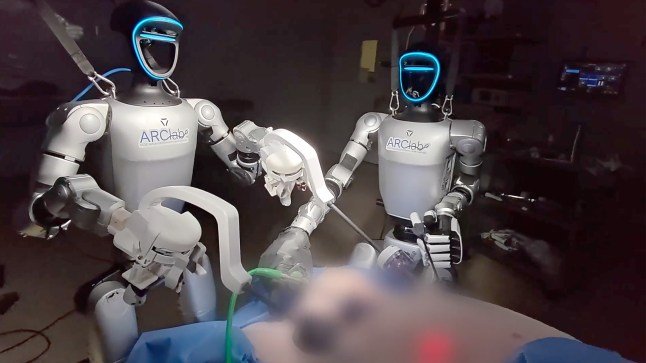
    Two teleoperated robots work as a team to perform a laparoscopic gallbladder removal during a pre-clinical trial
    Two teleoperated robots work as a team to perform a laparoscopic gallbladder removal during a pre-clinical trial (Picture: University of California San Diego (UCSD)/Cover Images)

    It’s like the plot of a science fiction film.

    The world’s first operation performed by robot surgeons has been successfully carried out.

    Researchers say the breakthrough could one day allow specialists to carry out life-saving procedures from hundreds of miles away, helping patients in remote communities, disaster zones and military field hospitals.

    The human-shaped robots completed two gallbladder removal operations during a preclinical trial on large animal models.

    One procedure saw a robot operate alongside a human surgeon acting as an assistant. In the second, two humanoid robots worked together as the surgical team.

    The research, published in the journal Nature, was carried out by engineers and surgeons at the University of California San Diego.

    Nicknamed ‘Surgie’, the robots stand around 5ft tall, weigh just 27kg and use standard surgical instruments, meaning they could work in existing operating theatres without the specialist facilities needed for conventional robotic surgery systems.

    A human-robot team made up of a humanoid robot and a human surgeon acting as an assistant successfully performed a gallbladder removal (Picture: University of California San Diego (UCSD)/Cover Images)

    Professor Michael Yip, one of the study’s senior authors, said the technology could help tackle a growing global shortage of surgeons.

    He said: ‘There is a shortage of surgeons alongside growing patient needs, which leads to longer wait times, reduced access and greater healthcare disparities.

    ‘Remotely operated and autonomous humanoid robots have real potential for expanding access to critical surgeries that patients would otherwise not receive.’

    Conventional robotic surgery systems can weigh almost 1,800lb and require specialist operating theatres and large support teams.

    The researchers say humanoid robots are far cheaper, more compact and could be deployed in under-resourced hospitals or temporary medical facilities.

    Dr Shanglei Liu, who remotely controlled one of the robots during the trial, said: ‘It’s a fraction of the cost and it takes a fraction of the space in an operating room. So it’s easy to deploy anywhere from rural areas to the battlefield, and even to space.’

    Ryan Broderick, MD, controls a robot during a gallbladder removal procedure (Picture: University of California San Diego (UCSD)/Cover Images)

    The robots mirror a surgeon’s hand movements using a teleoperation system, allowing procedures to be performed remotely.

    The team says the technology is still in its early stages. The robots needed several recalibrations during surgery and the operations took much longer than those carried out using existing robotic systems.

    But the researchers believe the technology will improve rapidly, pointing out that early robotic keyhole surgery once took six hours but can now be completed in around 30 minutes.

    They hope humanoid robots will eventually work alongside surgeons, helping deliver specialist care to patients wherever it is needed.

  • Unidentified marine animal bites person in Foster City Lagoon

    FOSTER CITY – Go for a dip, get a nip.

    On Monday afternoon, an unidentified marine animal bit a person in the Foster City Lagoon near Shearwater Isle, according to the Foster City Police Department.

    “Based on the initial assessment, the injury is consistent with a bite from a small marine animal,” police said in a news release. “At this time, the exact species has not been confirmed.”

    While efforts are made to keep bay marine life out of the lagoon, the possibility always exists for creatures to make their way into the body of water, according to police.

    Police are coordinating with other agencies and plan to provide updates if more information becomes available. In the meantime, people are being asked to report any “unusual marine animal activity.”

    “Thank you for your cooperation in helping keep our community safe,” police said in the news release.

    The lagoon, which serves as a drainage detention basin, spans 212 acres and has an average depth of about 6 feet, according to the city’s website. Swimming, along with boating and fishing, is permitted.

    Check back for updates.

  • Video from Safeway puts a twist on Tahoe Goldilocks story

    A Tahoe-area man who reported someone had been living in his house knew sheriff’s deputies were on the right track when they showed him video of a Safeway shopper.

    Video image of man sought in alleged Tahoe home break-in. (Douglas County Sheriff's Office)
    Video image of man sought in alleged Tahoe home break-in. (Douglas County Sheriff’s Office) 

    The stranger was wearing the homeowner’s clothes.

    The sheriff’s office in Nevada’s Douglas County is now seeking the public’s help identifying the “person of interest.”

    A report last week from the agency said the case began when the homeowner returned from a three-week vacation and found that somebody had been inside his house, near Lake Tahoe’s east shore. Among the indications: Food was missing and personal property had been disturbed — including the man’s birth certificate, which was gone.

    Sheriff’s investigators searching the home for clues found a recent receipt for the purchase of two packs of Camel cigarettes from the Safeway at the Round Hill Shopping Center, on Highway 50 north of Stateline.

    They obtained the store’s surveillance video for the time of the purchase, and zeroed in on a specific shopper.

    The homeowner didn’t recognize the man but recognized the clothes: a plaid shirt and a trucker hat from his own wardrobe.

    The sheriff’s office has released an image of the shopper, to whom deputies would like to speak, and asks that anyone who has information on the case contact its Stateline office, (775) 586-7253.


  • Elephant who fell into abandoned well rescued with excavator

    Elephant who fell into abandoned well rescued with excavator

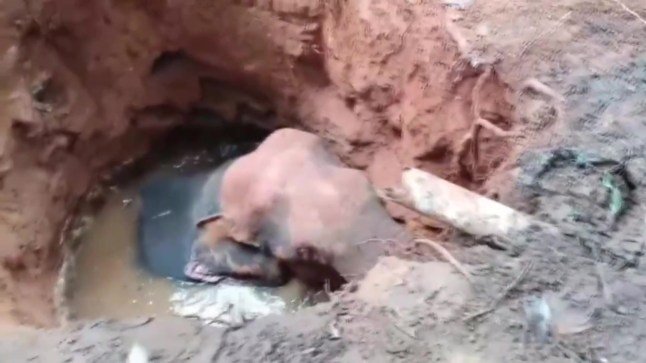
    Video grab as an elephant was rescued after falling into an abandoned well and becoming stuck for over 10 hours. // A 15-year-old elephant was found trapped in an abandoned well in Ernakulam, in southern India's Kerala on July 7.According to reports, the wild tusker accidentally fell into an abandoned unwalled well near the residence of local resident Thattayath Aliyar, away from the forest boundary.Forest officials worked to rescue the animal using an excavator to create a mud ramp for its safe escape after several hours. Photo released 08/07/2026
    The elephant fell into the unmanned well earlier this week (Picture: Newslions / SWNS)

    A 15-year-old elephant was trapped for 10 hours in an abandoned well before it was rescued.

    The animal fell into a well in Ernakulam, in the southern Indian state of Kerala, on Tuesday at around 2.00am. According to the reports, the well didn’t have a wall, and was located near the home of doctor Thattayath Aliyar.

    Forest officials rescued the elephant using an excavator, creating a mud ramp so it could safely escape.

    Witnesses say the elephant struggled at first to climb out from the muddy water, but eventually managed to break free and return to the forest.

    Forest department personnel were initially prepared to begin rescue operations in the early morning, but residents protested, demanding that the elephant be permanently relocated away from human habitation.

    Video grab as an elephant was rescued after falling into an abandoned well and becoming stuck for over 10 hours. // A 15-year-old elephant was found trapped in an abandoned well in Ernakulam, in southern India's Kerala on July 7.According to reports, the wild tusker accidentally fell into an abandoned unwalled well near the residence of local resident Thattayath Aliyar, away from the forest boundary.Forest officials worked to rescue the animal using an excavator to create a mud ramp for its safe escape after several hours. Photo released 08/07/2026
    Villagers had their doubts about the rescue (Picture: Newslions / SWNS)

    Sign up for all of the latest stories

    Start your day informed with Metro’s News Updates newsletter or get Breaking News alerts the moment it happens.

    Video grab as an elephant was rescued after falling into an abandoned well and becoming stuck for over 10 hours. // A 15-year-old elephant was found trapped in an abandoned well in Ernakulam, in southern India's Kerala on July 7.According to reports, the wild tusker accidentally fell into an abandoned unwalled well near the residence of local resident Thattayath Aliyar, away from the forest boundary.Forest officials worked to rescue the animal using an excavator to create a mud ramp for its safe escape after several hours. Photo released 08/07/2026
    The elephant fell at around 2am (Picture: Newslions / SWNS)

    After a meeting, the area’s divisional forest officer, P. Karhik, assured villagers the elephant would be kept under 24-hour surveillance using drones and forest patrol teams upon release and would be captured if it were to stray into human areas again. 

    Authorities also said they would compensate the homeowner for damages and install an electric fence in the region. Only after these demands were met did the rescue operation begin, around noon. 

    Forest officials say that the top of the elephant’s trunk was damaged as part of an old wound. The injury restricts the elephant’s ability to forage for food and water, explaining why it frequently wanders into residential areas to find easily accessible sustenance. 

  • Man who’s spent 28 years walking from Chile to Hull stopped from swimming English Channel home

    Man who’s spent 28 years walking from Chile to Hull stopped from swimming English Channel home

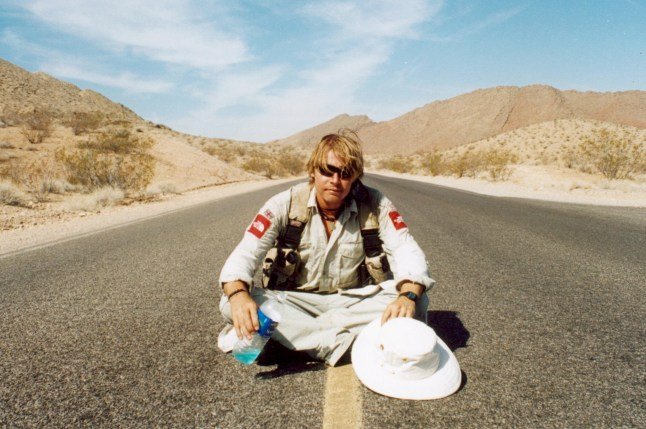
    Karl Bushby has been travelling the world on foot for nearly 30 years (Picture: Karl Bushby / SWNS)

    A former paratrooper who has spent nearly 30 years walking home to Hull from South America may be prevented for a second time after he was prevented from swimming across the English Channel.

    Karl Bushby – who is travelling the world without using cars, trains, buses or planes – may not be able to make the final crossing to the UK from France, as French authorities only allow people to swim in the other direction.

    Karl, 57, said: ‘We are talking with the French coastguard.’

    Bushby set off from Chile in 1998 and has reached Belgium.
    He is now nearing the final stages of his journey back to his hometown.

    But crossing the Channel has proven a challenge more than once after Eurotunnel bosses refused his request to walk through it in June.

    Sign up for all of the latest stories

    Start your day informed with Metro’s News Updates newsletter or get Breaking News alerts the moment it happens.

    Karl in Chile in 1999, shortly after he started his epic journey (Picture: Karl Bushby / SWNS)

    This left him with no option but to swim, in line with the terms of his challenge, which say he cannot use any form of transport to travel.

    Bushby still hopes that authorities might let him use the Eurotunnel. In the meantime, he is hoping he can find a way to swim the 21-mile distance in just a few months.

    We have secured a support boat for October’, he said. ‘That’s a big thing. I would expect it to take two or three days to swim across to the UK.’

    Karl is currently in Mexico, where he takes breaks between stages of his challenge to meet visa regulations and to plan routes. On occasion, he visits the US, where his sponsors are based. 

    ‘I will be back in Belgium in early September,’ he said. ‘Towards the end of that month, I expect to be in France, preparing for the swim.

    ‘I am not angry it has come to this. I am more disappointed. But things could still change. Walking through the service tunnel is still the preferred option.’

    Karl Bushby on his walk while in Alaska, USA, 2005.
    Karl has crossed all terrains and has even been detained along his route (Picture: Karl Bushby / SWNS)

    Karl is no stranger to traversing vast bodies of water. 

    In 2006, he became the first Brit to walk across the Bering Strait, a 58-mile stretch of frozen sea linking North America and Russia. 

    Then, in 2024, he swam more than 170 miles over 31 days across the Caspian Sea from Kazakhstan to Azerbaijan to avoid conflict zones in Russia and Iran.

    Despite this, Karl isn’t a fan of this method of getting around.

    ‘I’m just not into the swim thing,’ he said previously. 

    ‘I’ve had to do a couple of swims here and there. […] [The English Channel] is a different stretch of water; it’s colder, we’ll see. Hopefully, I’ll never have to think about it.’

    Where has Karl been so far?

    Karl Bushby on his walk - Panama, 2001. // A Brit nearing the end of a round-the-world walk faces swimming across the English Channel after he was told he can?t use the Channel Tunnel.Former paratrooper Karl Bushby, 57, has spent the last 27 years trekking across the globe ? after setting off from Chile in 1998, with the aim of returning to Hull.But despite overcoming hurdles ? including the infamous Darien Gap, being arrested in Russia, and having to swim through the Caspian Sea to avoid Iran ? Mr Bushby now faces his final: the English Channel.GetLink, the operators of the tunnel, have denied his formal request to walk through the 31-mile long service tunnel ? saying it would pose a safety risk. Photo released 18/06/2026
    Karl in Panama in 2001 (Picture: Karl Bushby / SWNS)

    Karl began the challenge after sketching a rough path on a map when he was in the army. He showed the plan to fellow soldiers who told him it could not be done.

    This made him all the more determined, and he set himself two rules: to never use transport, and to not return to the UK until he had completed the journey.

    Karl set off on his 36,000-mile journey from Punta Arenas, Chile, in 1998, thinking it would take him 12 years.

    But in the three decades since, he has been met with several setbacks that have lengthened his adventure.

    He has had to evade bandits in the notoriously dangerous Darien Gap and has been detained by Russian officials for illegally entering the country.

    He also spent 18 days in prison in Panama for entering without a visa before continuing his journey through Mexico and the US, where he overstayed his visa and had to fly back to Colombia to wait for a new one.

    In 2003, as he was preparing to cross the border into Canada, his trailer was stolen and he was forced to wait another month for the items in it to be replaced.

    Karl Bushby on his walk - Bering Strait crossing, 2006. // A Brit nearing the end of a round-the-world walk faces swimming across the English Channel after he was told he can???t use the Channel Tunnel.Former paratrooper Karl Bushby, 57, has spent the last 27 years trekking across the globe ??? after setting off from Chile in 1998, with the aim of returning to Hull.But despite overcoming hurdles ??? including the infamous Darien Gap, being arrested in Russia, and having to swim through the Caspian Sea to avoid Iran ??? Mr Bushby now faces his final: the English Channel.GetLink, the operators of the tunnel, have denied his formal request to walk through the 31-mile long service tunnel ??? saying it would pose a safety risk. Photo released 18/06/2026
    Karl crossed the Baring Strait in 2006 (Picture: Karl Bushby / SWNS)

    His trailer was stolen on New Year’s Day 2003, a day before he was due to cross into Canada while visiting a bar. Another month passed while he replaced his lost items.

    Despite this – and many other issues he encountered along the way – he reached Armenia last June, before travelling through Turkey, Bulgaria, Romania, Hungary, Austria, Slovakia and, after stopping off in Mexico to sort his Schengen visa out, traversed Europe where he is now hoping to find a way to cross his final sea.

    Once he is back on UK shores, Karl will walk to Hull, where the journey will end at his childhood home.

    The French Maritime Rescue Coordination Centre referenced a 2018 ‘prefectural order’ confirming the restriction on Karl’s swim.

    It said it has referred Karl’s support team to the Channel and North Sea Maritime Prefecture.

  • It’s coming phone! England’s spectacular victory over Mexico sparks huge surge in mobile use 

    It’s coming phone! England’s spectacular victory over Mexico sparks huge surge in mobile use 

    Close Overlay

    In The Mixer’s World Cup special

    Everything you need to know about the World Cup – England updates, the games to watch and stories you missed – in five minutes, at 1pm, every day.

  • 31 miles, 9 Taco Bell items and the hot sun? Napa trio brings underground ultrarun to North Bay

    For the area’s many elite runners, distance races can be as much about fueling and hydration strategies as they are about mileage build-up and training plans.

    On race day, athletes dial in the amount of carbohydrates they are taking in via gels and sports drinks and they plan to the moment when said fueling must occur to optimize performance in a race setting. Nothing is left to chance.

    The Napa Taco Bell 30K/50K is not that race.

    Imagine, if you will, asking a crowd of runners not to stretch and limber up before the starter gun fires, but to take down a soft taco with seasoned beef and set out on an all-day run.

    The idea is painfully (literally) simple. In order to be considered not a finisher but a “survivor” of the 50K event, one must run the approximately three miles between Napa’s two Taco Bell restaurants, eating a food item at nine of the 10 stops over a total of 31 miles.

    Wait, there’s more.

    While racers are allowed to pick and choose from the menu what might sit best in their gastrointestinal tract, there are two required food items. By stop No. 4, runners must have consumed at least one Chalupa Supreme or one Crunchwrap Supreme. By stop No. 8 (which is approximately 24 miles in) runners must have consumed at least one Burrito Supreme (think seasoned beef, onions, sour cream, cheese, beans, lettuce and red sauce) or one Nachos Bell Grande (same ingredients, just add chips).

    Runners are asked to literally have receipts – in the form of wrappers from their orders.

    As a journalist, I usually have many questions.

    On this story it all boils down to just one. Why?

    “We said, ‘Let’s plan something kind of silly, kind of dumb, and pretty fun and see what happens,” said Ryan Melendez, 31, of Vallejo.

    Melendez is one of the three co-conspirators putting on the inaugural Napa Taco Bell 50K. He’s joined by Alec Villagomez, 30, of Napa and Jamie O’Sullivan, 49, of Napa. All three are elite runners with athletic resumes full of short, medium and long races. All three are training for the Javelina Jundred in October, a race so long it spans two days, not one.

    But nary a one of them have done any mileage carrying a belly full of Chalupa.

    “I think just the volume of food is going to be tough,” Villagomez said. “I think having a running stomach that is somewhat delicate, I’m worried about the volume of things I’m going to put in it. But there comes a kind of Zen moment and you have to be uncomfortable in a run and accept it.”

    But distance runners are nothing if not optimistic folk. How could you lace up and run 50 kilometers (31 miles) and not hold a hopeful outlook? Hopeful that this pain will pass, that the next step will bring something better, that the finish line must be close?

    So Villagomez said he’s banking on camaraderie and good cheer among his fellow runners to lift him in moments when the cheese and sour cream hit.

    “In this race the discomfort will be a bloated stomach,” he said. “It’s going to be a hot day, the Taco Bell aspect, but I think it will be a lively atmosphere.”

    See what I mean about optimistic?

    Melendez, Villagomez and O’Sullivan  — they go by Larry, Curly & Moe on some social media sign-up pages — did not invent this mayhem, but they loved the sound of it so much they decided to bring it to Napa where all three are active in the running community.

    Call it a franchising effort.

    “We all love Taco Bell and we all love running,” Villagomez said. “We have never tried the two together but we assume it would all go together. And then we’d see if we could get anybody to join us.”

    So far, they have lured about 40 runners into their web.

    The event started in Colorado. In October, the ninth running of the Denver Taco Bell 50K will be held. There, it’s a sweeping loop of the metro area with almost exactly the same rules as those adopted by the crew in Napa: 31 miles, nine stops, required items and bonuses if you can take down 2 liters of Mountain Dew Baja Blast and/or slather all items in Diablo sauce (and take a Diablo sauce shooter at the finish line).

    Not familiar with the Baja Blast? Me neither, but I found this description on the interwebs: “Tastes like the back end of a Slurpee.”

    What you are not allowed to imbibe? Pepto-Bismol, Alka-Seltzer and the like. This race is au naturel.

    But pacers are allowed “for moral support and holding your hair if you must eject a Gordita.”

    So popular has this adventure proven to be that sister events have popped up in Washington, D.C. and in the Twin Cities and in Southern California.

    So why not Napa?

    One “problem” (but what are ultra runners if not on-the-fly problem-solvers) was that the city only has two Taco Bell restaurants. So a sweeping loop route was out of the question.

    But Melendez, Villagomez and O’Sullivan measured the distance between the Soscol Road Bell and the one on Jefferson Street. It was almost exactly a 5K (3.1 miles) between the two and runners could be funneled onto the Napa Valley Vine Trail for the majority of their miles.

    But because the organizers don’t want runners with wobbly legs and wobblier stomachs out on the city streets all night, there is a 10-hour time limit for finishing and anyone on the course after 7 p.m. must wear a headlamp.

    “Actually this is where there is a soft side to all of us,” O’Sullivan said. “We didn’t want anyone on the Vine Trail after 8 p.m. and we wanted a 10-hour cutoff.”

    O’Sullivan was tasked with letting Taco Bell know of their plans. There is zero affiliation with the restaurants but organizers hope it might be considered a boon for business on a Saturday. Still, O’Sullivan wanted to cover their bases and be respectful.

    “I don’t want anybody to be an unintentional victim, I don’t want anybody to be overworked,” he said. “This is going to be busy.”

    So he set up a meeting with one of the managers. By O’Sullivan’s telling, what followed was in line with the whimsical feel of the event.

    “I showed up with the waiver and the rules and the flier and she said, ‘I thought you were kidding,’” he said. “I was like, ‘No, I’m quite serious.’”

    I showed up at said Taco Bell to confirm this story but did not hear back from the manager by my deadline.

    Melendez, Villagomez and O’Sullivan might seem diabolical for staging such an event – they even planned a late 10 a.m. start to make sure it would be extra hot out there. But they are generous.

    There is no fee for entry, just the cost of perhaps losing a sliver of dignity. They are also working out a Dine and Donate plan for each of the Taco Bells with funds going to the two elementary schools closest to the restaurants.

    “This is our community,” O’Sullivan said. “We don’t want to create any negativity around this event.”

    Plus, he figures that the back and forth nature of the route will mean less a crush of runners than a steady flow of customers. The route also means that athletes will see each other out there, be able to root each other on and offer support. And that is what the trio of organizers are going for.

    “There is a saying, if you want to run fast, run by yourself, but if you want to run far, run with others,” Melendez said. “It’s community. For long endurance events, it’s very supportive and just great… definitely the community being able to share suffering experiences with yourself is really big.”

    And Melendez, Villagomez and O’Sullivan say they already have a slew of folks signed up to volunteer on the course and outside the restaurants. They will be checking less for scofflaws (when I asked about the potential for cheating, O’Sullivan was appalled at the idea: “It’s totally honor system. That is one of the things we will tell the runners, ‘Are you really going to cheat on this? What is wrong with you?’”) than making sure runners are carrying water and standing upright.

    “All of our volunteers are runners,” Villagomez said.

    There are plans for a “vibe station” with music and good cheer for a needed morale boost when the build up of seasoned beef might get one down.

    Organizers plan to have medals at the finish line for all survivors. To that end, there is a sign-up deadline on July 15.

    But very clearly, completing this “race” isn’t about hanging a medal around your neck. It’s about something next-level, Villagomez said.

    “We are hoping that everyone shows up and has a good time,” he said. “Anyone who shows up do the Taco Bell 50 is a champion of the heart.”

    And of the gut.

    How to participate

    To participate in the Napa Taco Bell 30K/50K, register at https://pdne.ws/4gvlmDw

    Event starts at 10 a.m. August 29 at the Taco Bell, 155 Soscol Avenue in Napa.

    Register by July 15 to ensure finisher medal.

    You can reach Staff Columnist Kerry Benefield at 707-526-8671 or kerry.benefield@pressdemocrat.com. On Instagram @kerry.benefield.