Haley said during an interview last year that her seven-year marriage to the former Minnesota Viking ended in 2022 partly because he was so well-endowed that sex between the pair was unbearably painful. She alleged that his sex organ was the size of “two (stacked) Coke cans, maybe even a third.”
The 37-year-old offensive tackle, who has remarried and has a child, sued the model and influencer, claiming her remarks were an invasion of privacy, even though she insists she didn’t identify him by name. Matt said Haley gained financially at his expense.
A U.S. district court judge dismissed Matt Kalil’s suit Thursday, finding that his ex’s remarks were tied to subjects of public interest, including the public figures’ divorce, according to The Minnesota Star Tribune.
Matt had argued that he tried staying out of the public eye after retiring from football in 2019. He said in his $75,000 lawsuit that Haley’s comments made that difficult.
Haley told TMZ she’s glad to put the case behind her.
“I never wanted to be in a courtroom discussing matters of my own life,” she said. “I think this ruling is important and I hope it encourages women everywhere to speak openly about what they’ve been through. Your story belongs to you and you shouldn’t fear sharing it.”
Matt retired a Pro Bowl blocker, who also suited up for the Houston Texans and Carolina Panthers after being a college football star with the University of Southern California Trojans.
A Minnesota woman accused of stealing batteries is getting a lot of attention because of her resemblance to pop star Jennifer Lopez.
Police in Wright County said Cyrena Anne Quast was busted Aug. 30 on a theft charge in the small, 14,500-person town of Monticello. But her mugshot, in which she sports large hoop earrings, has been picked up by numerous gossip sites because many people believe the suspect looks a lot like the American Music Award-winning singer and actor from the Bronx
The 35-year-old suspect was taken into custody after she allegedly stole a pair of power tool batteries from a store, according to TMZ. The batteries are valued at less than $600. A worker reportedly told cops Quast is also suspected of stealing from the shop days before her arrest.
The mugshot of Cyrena Anne Quast (pictured), who’s accused of stealing batteries, is getting a lot of attention because of her resemblance to pop star Jennifer Lopez. (Wright County Sheriff’s Office)
The Wright County Sheriff’s Office in central Minnesota hasn’t responded to a request for comment.
Arrest records from neighboring Stearns County, Minn., indicate Quast’s previous brush with the law included a 2025 theft charge.
Lopez was arrested in 1999 when New York City police found a gun in a car she was riding in with Sean “Diddy” Combs. The pair, who were dating at the time, had just left a Midtown club where gunshots were fired. She was released without charges.
Jennifer Lopez arrives for Elle’s 2023 Women in Hollywood celebration, at Nya Studios in Los Angeles, California, on December 5, 2023. (Photo by MICHAEL TRAN/AFP via Getty Images)
Lopez’s latest film, “Office Romance,” was released in June and is streaming on Netflix. People magazine voted J.Lo its “World’s Most Beautiful” person in 2011.
“I don’t want anybody thinking it’s easy,” she said about looking good on television. “It does take time and it’s hard work.”
Forbes lists her net worth at $150 million.
Combs is serving a 50-month sentence on unrelated charges in New Jersey’s low-security FCI Fort Dix. He’s been incarcerated since September 2024 when he was arrested by federal agents on racketeering and sex trafficking charges.
Dante Rowley had all the elements of a viral video.
Surveillance cameras captured a man breaking into his Sherman Heights home, then making himself right at home. Rowley’s golden retriever sweetly wagged his tail, trying repeatedly to get the burglar to throw a toy. A police drone chased the man inside the home. Officers came in the front door with guns drawn.
The drama had unfolded a few weeks earlier, but Rowley’s friends encouraged him to post the video online.
By the time Rowley and his fiancée, Stephanie Calderon, got home from a short walk on Monday afternoon, the Instagram reel showed 10,000 likes. By the next day, millions had viewed it. The news show “Inside Edition” showed up at the house to film a spot, and soon the video appeared on local and national news, as well as outside the U.S.
“I tried to make it as funny as possible,” said Rowley, who is head of business and product development at the Museum of Contemporary Art San Diego in La Jolla. “I got a good response.”
Nash the golden retriever’s home on Thursday. (Luke Johnson / The San Diego Union-Tribune)
The incident began Sept. 5 when Rowley and Calderon were boarding a flight home from Chicago, and Calderon got an alert on her Ring app indicating someone was in their backyard. They looked at the video and saw that a man had pulled up a ladder next to the house.
After checking with his brother to make sure he hadn’t hired someone to work at the home while they were out of town, the couple realized someone was breaking in.
Calderon called 911 from her cellphone but reached Chicago authorities, so they had relatives in San Diego contact San Diego police about the intruder. From the plane, Rowley texted with a police officer and gave them live access to footage from his six Ring cameras. His brother, who lives down the street, gave police the code for the door.
Videos showed the intruder taking off his shirt and shoes, helping himself to food in the refrigerator and trying to take a nap on a dog blanket left on the floor by the front door.
The couple’s other two dogs had run out a doggy door and into the yard after the man entered, but Nash, a 4-year-old golden retriever, kept trying to get the stranger to play.
On the plane, Rowley and Calderon were “freaking out” mainly over Nash’s safety.
“(The intruder) seemed like he was not interested in, like, stealing anything, but we were just worried about the dog, honestly,” he said.
For his part, Nash seemed unperturbed. At one point, he brought the man a toy, sat and wagged his tail as he waited in vain for him to throw it. Rowley included the clip with the caption: “Nash is the worst guard dog.”
“He actually brought multiple toys to him,” Rowley told the Union-Tribune. “He brought one, there was like a reindeer, and the guy didn’t pay attention to him and then when the guy went upstairs, he actually put the reindeer on the bed where the guy was lying, and then he went and got another toy.”
Rowley said Nash is usually “the friendliest dog ever” and very high energy, and will jump at people to get their attention. He seemed much better behaved on the security footage.
“So we think he was actually, like, scared. He was thinking, ‘Hey, are you a friend?’” Rowley said.
Police arrived within minutes, and officers flew a drone inside the open upstairs window. The man ran from it and eventually climbed out a bathroom window.
“The guy runs past the camera, basically high-stepping it,” Rowley said. “It looked very (much) like a comedy sketch, really. This drone is flying behind him.”
Rowley scored his video montage to “Bad Boys,” the song associated with the early reality TV show “Cops.”
A 57-year-old man was arrested on suspicion of first-degree burglary, battery on a peace officer, vandalism and possession of a controlled narcotic substance, according to San Diego police.
Nash the golden retriever runs through the front yard of his home. (Luke Johnson / The San Diego Union-Tribune)
After the suspect was in custody, officers entered the home with guns drawn — Rowley thinks they were checking to make sure no one else was inside — and Nash ran to the door with a toy in his mouth, his tail wagging. After they opened the door, one of the officers patted Nash on his head as he bounded outside.
Rowley said officers put Nash on a leash and gave him to his brother, who was outside and assisting the officers.
The couple has lived in the home for more than 15 years and plans to make some security upgrades as a result of the intrusion, including replacing their front fence with a taller one and installing window locks.
Rowley said Ring camera company officials have reached out to him about possibly using the video.
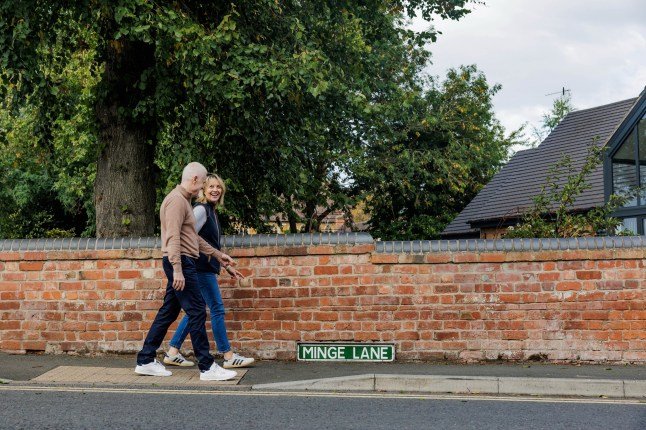
Have you ever been to Minge Lane? (Picture: Ben Gregory-Ring/PA Media Assignments)
One of the rudest named streets in the UK needs to secure its road signs with concrete because tourists keep stealing them.
Minge Lane in Upton upon Severn in Worcestershire features as one of the UK’s rudest place names in a new survey.
It is joined by the likes of Sluts Hole Lane in Norfolk, Sandy Balls in the New Forest and Shitterton in Dorset.
Derbyshire’s Fanny Avenue, Cocks in Cornwall and Wetwang in Yorkshire also caused a stir, according to the poll.
Jeremy Owenson, the mayor of Upton upon Severn, said people living in Minge Lane are so proud that they host a festival named after it every summer.
He said: ‘There is an informal festival with loads of bands and a bit of fancy dress.
‘People get down to the local pub and generally have a good time. It’s a fun celebration to embrace the name Minge Lane rather than worrying too much about it.’
Minge Lane is found in Upton upon Severn, Worcestershire (Picture: Ben Gregory-Ring/PA Media Assignments)
However, Mr Owenson, who is also the deputy leader of Malvern Hills District Council, said: ‘From a district council perspective, we regularly had the street name stolen.
‘The new names have been concreted in to make sure they can’t be taken.’
Bell End in Rowley Regis in the West Midlands, which is also on the list of rudest place names, was the target of complaints in 2018 and residents started a petition to change it.
They claimed children would be bullied at school and called on the local council to rename it because they had become a ‘laughing stock’.
Minge Lane is proudly on the list of Britain’s rudest place names, which includes Sluts Hole Lane and Twatt (Picture: Ben Gregory-Ring/PA Media Assignments)
The petition attracted only 100 signatures but a rival campaign – titled ‘Leave the Historic Name of Bell End Alone!’ – received more than 4,800 supporters at the time and the road name was left untouched.
Follow Metro on WhatsApp to be the first to get all the latest news
Follow us to receive the latest news updates from Metro (Picture: Getty Images)
Metro’s on Whatsapp! Join our community for breaking news and juicy stories.
More than half of Britons think that the UK has some of the funniest road and village names in the world, according to Asda Money’s survey.
They also found the cheeky names were a distraction, putting off two-thirds of drivers while six in 10 had missed their turn or exit and one in three nearly had an accident.
The images offer a glimpse of what life (or lack thereof) is like on the Red Planet (Picture: Nasa)
Nasa has published a brand new ‘postcard’ picture of a sand ridge on Mars.
The new shots were taken by the agency’s rover, Curiosity Mars, while it was parked at a sandy geographical feature nicknamed ‘Chocolatal’.
The pair of photos were captured at 9.56am on August 29 and 5.39pm on September 2 – Mars time – and were merged together after being sent back to Earth, creating a larger landscape shot showing morning and evening on the Red Planet.
Colour was added to the picture to bring it to life, with the blue on the right side representing morning, while the yellow on the left depicts sunset.
Curiosity is currently scanning the lower foothills of Mount Sharp, a three-mile tall mountain within Mars’ 96-mile-wide Gale Crater.
The Mars Curiosity rover has been on the red planet looking for signs of microbial life since 2012 (Picture: Nasa/JPL-Caltech/MSSS et al. /S)
The crater’s rim is barely visible on the horizon of the picture, which was taken towards the hole’s floor.
The first image was taken on Curiosity’s 5000th Martian day, or sol, of its mission. A Martian day is around 39 minutes longer than a day on Earth.
Last month, Nasa released a panorama of 323 individual images taken by Curiosity’s mast camera between August 1 and 2 of a valley named ‘Valle Grande’.
Colour was again adapted to match the lighting conditions as they would be seen by the human eye on Earth.
The shot caught the rover’s tracks fading into the distance, showing where the robotic searcher had travelled through the valley.
Approximately the size of a car, the robotic rover was built by Nasa’s jet propulsion laboratory and is managed from Pasadena in California.
The rover has been on Mars since 2012 to find signs of microbial life.
Curiosity reached a milestone in August when it accumulated 1km of elevation as it climbed the slope of Mount Sharp.
It has also collected 42 powderised rock samples from holes drilled into the surface by its robotic arm.
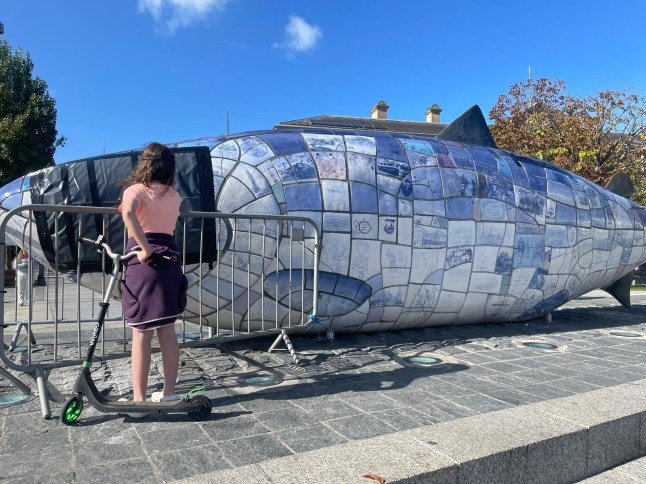
Damage was caused to the ‘Big Fish’ sculpture in an overnight incident in Belfast. (Picture: Jonathan McCambridge/PA Wire)
A man is set to appear in court for vandalising Belfast’s famous Big Fish sculpture.
The 44-year-old has been charged with criminal damage and possession of an offensive weapon in a public place after the attack left it with ‘significant damage’, police said.
He remained in custody this evening and is due to appear at Belfast Magistrates’ Court tomorrow (Monday).
The Police Service of Northern Ireland (PSNI) said they arrested a suspect after receiving reports that the sculpture, which is located in the Donegall Quay area of the city, was being damaged in the early hours of this morning (Sunday).
A social media image of it appeared to show that one side of it had been damaged around the eye.
A 44-year-old man has been arrested by police investigating the damage. (Picture: PA)
Sergeant Kelly, from the force, said: ‘Officers attended the scene, where it was noted that significant damage had been caused to the left eye of the sculpture.’
Sergeant Kelly added: ‘Our inquiries are ongoing and we would appeal to anyone with information to contact police using our witness appeal form.
‘Alternatively, you can call Crimestoppers anonymously on 0800 555 111.’
The PSNI said that as is usual procedure, all charges will be reviewed by the Public Prosecution Service.
The British auditor, who had moved to Malawi from Leicester, was snatched from her home last week (Picture: Handout)
A British woman taken from her home by a gang in Malawi has been rescued following a deadly shootout.
Nusrat Osman, 47, was snatched from her home in the southern city of Blantyre a week ago when masked men forced their way in.
She was traced to the outskirts of the city, and a rescue operation was launched yesterday after a days-long search that saw a reward of £12,800 being offered for any credible information.
The suspected kidnappers were armed with an AK-47 and a pistol, according to the police.
Officers exchanged fire with those inside the building, killing four men who are yet to be identified.
Osman was reunited with her family, and taken to hospital for treatment and mental and physical check-ups after the ordeal.
The kidnapping happened in Blantyre, Malawi (file image) (Picture: Universal Images Group Editorial)
Malawi Police Service said in a statement: ‘The criminals got shot and were rushed to the hospital where they succumbed to the injuries.’
Deputy Inspector General of Police Noel Kayira was also shot and injured during the rescue, and was taken to the hospital, where he remains in stable condition.
The 47-year-old, who works as an auditor, had moved to the southern African country with her family from Leicester after her husband set up a business there.
Authorities have not publicly revealed how they found out where the woman was kept.
The motive for the abduction has also not been publicly shared at this stage.
Atupele Muluzi, a Malawi politician, said in a statement: ‘It is with great relief and gratitude that I share the news that Mrs. Nusrat Jiwa Osman, who was reported missing, has been found.
‘It is understood that the rescue operation was extremely dangerous
‘The family has expressed profound appreciation for the professionalism, dedication, and incredible bravery of the Malawi Police Service throughout this ordeal, particularly Deputy Inspector General of Police Dr. Noel Kayira.’
Muluzi, the President of the United Democratic Front, has said that kidnappings and abductions are becoming more common in Malawi, where the incidents were previously ‘largely unheard of.’
Her husband told local media in the aftermath of the kidnapping he doesn’t know where she is or how she is.’
‘‘My wife is an auditor and I have no issues with anyone,’ he told Nyasa Times.
A spokesperson for UK Foreign Office told Metro: ‘We are pleased that a British woman who was abducted in Malawi has been released and reunited with her family.
‘We thank the Malawian authorities for their efforts to secure her release.
‘We continue to provide support to her and her family.’
To view this video please enable JavaScript, and consider upgrading to a web
browser that supports HTML5
video
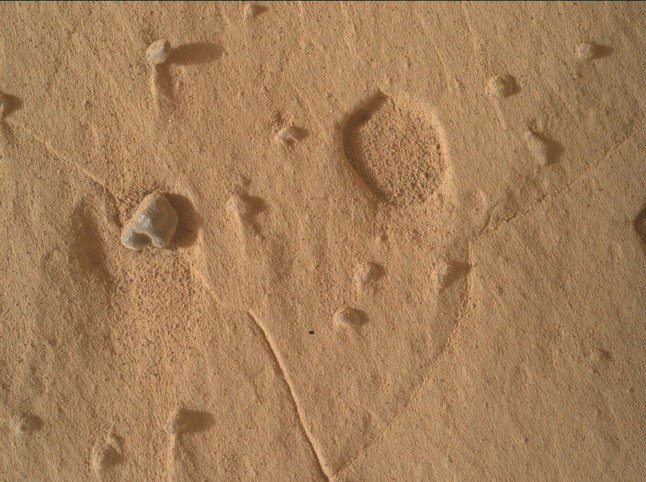
Scientists are perplexed by the discovery of what looks like footprints on the surface of Mars.
Images captured by the Curiosity Rover show an unusual feature on the Red Planet’s surface – broad, shallow pits unlike anything researchers have previously spotted.
The discovery was made as Curiosity explored Mount Sharp, a vast mountain rising from the floor of Gale Crater.
The rover has been exploring Mars since landing in 2012, and despite more than a decade on the planet, it continues to find things that puzzle scientists back on Earth.
These mysterious markings on Mars’ surface were found by the Curiosity Rover (Picture: NASA/JPL-Caltech/MSSS/Cover Images)
Small pits and depressions are relatively common on Mars. They can form when harder nodules or pebbles embedded in rock gradually weather away, leaving a hollow behind.
But the newly observed features are different. They are much wider and shallower than similar pits seen previously, and researchers could not identify obvious objects that might once have occupied them.
The Curiosity team used the rover’s cameras and instruments to examine the features in detail.
MAHLI and the Mastcam instrument captured overlapping images that can be combined to produce three-dimensional models of the pits and their structure.
Nasa’s Perseverance rover previously captured what appeared to be a boulder field on the Red Planet (Picture: NASA/JPL-Caltech/ASU/MSSS / SWNS)
The team does not believe the marks are actual footprints, but the unusual formations provide a new clue about the geological processes that have shaped this part of Mount Sharp.
The surrounding bedrock also provided plenty for Curiosity’s instruments to investigate. Mastcam images and measurements from the ChemCam instrument revealed layers whose texture and structure changed over relatively short distances.
People think they spotted a mushroom on Mars in previous images released by Nasa (Picture: Nasa/UFO Sightings Daily)
Scientists say these variations could indicate changes in the conditions under which the sediments were deposited.
The rover also examined rough, grey layers that were more resistant to erosion than the surrounding rock. ChemCam, MAHLI and the Alpha Particle X-ray Spectrometer (APXS) analysed the material, which may have a different chemical composition from the bedrock around it.
After almost 14 years on Mars, Curiosity continues to provide scientists with new glimpses of the planet’s geological history – and, occasionally, features they have never seen before.
To view this video please enable JavaScript, and consider upgrading to a web
browser that supports HTML5
video
Way up in the sky, a triangle glowed the same three colours over and over again: yellow, red and green.
Craning their neck to see it, mobile phone in hand, was a former RAF personnel member on holiday on the west coast of Bali in Indonesia.
The triangle wasn’t alone.
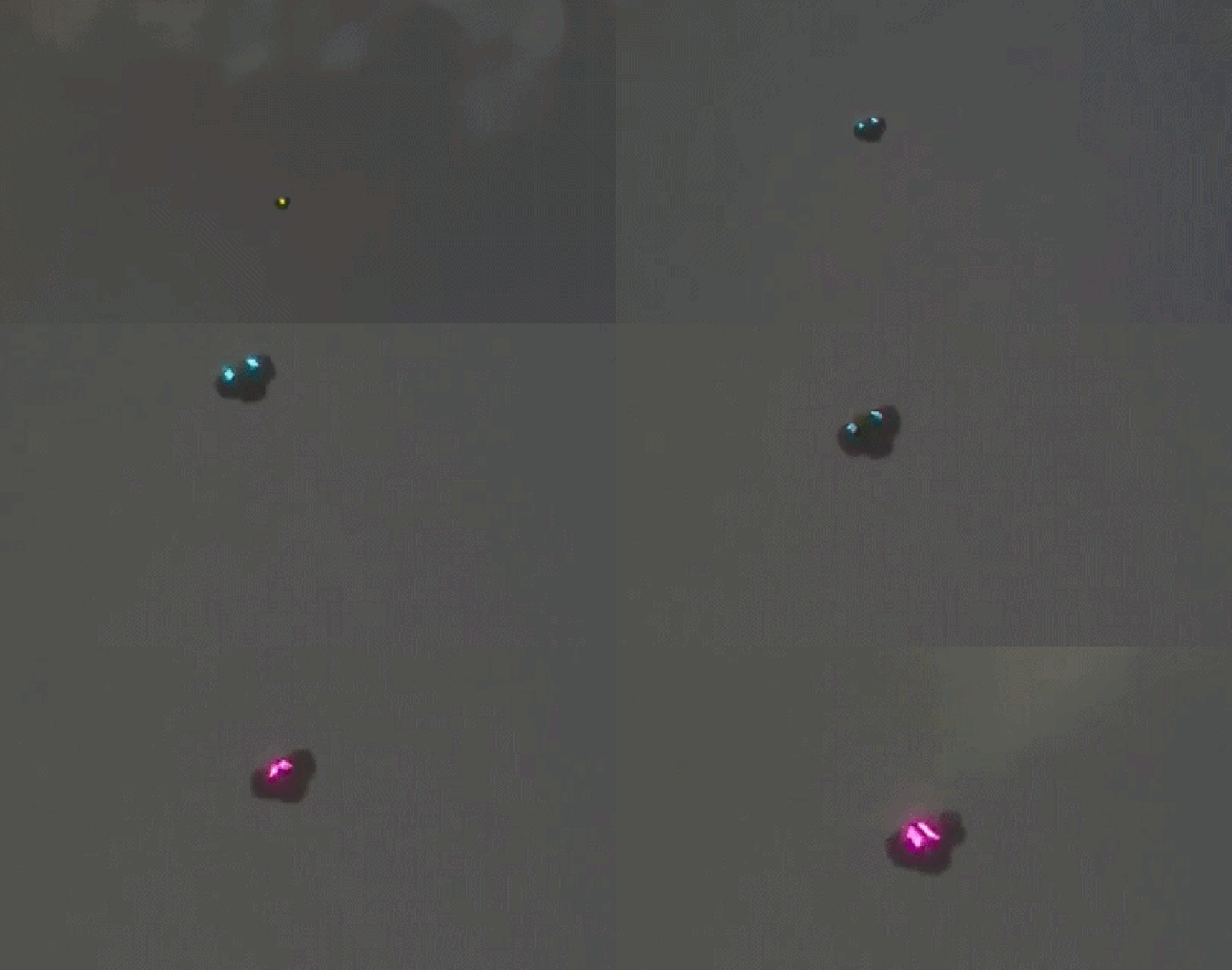
‘We saw three triangular-shaped objects in the sky,’ the personnel member, who asked to speak anonymously, tells Metro of the July 6 UFO encounter.
‘One was flashing red, pink and blue green lights and the other was showing three steady green lights.
‘The third was quite faint. They were not making any noise and were stationary.’
A UFO, a kite or just AI? Depends on who you ask (Picture: Gary Heseltine)
The sky was clear and the wind still as the objects hovered about 600ft above them and their partner’s heads for 20 minutes from 6.40pm, they add.
‘We moved briefly inside the apartment to get ready to go out. When we moved outside again, we noticed they had gone. That’s about it. Quite weird really.’
‘There are several things to suggest it’s a UFO’
Gary Heseltine, the editor of UFO TRUTH MAGAZINE, was sent the footage by a former colleague.
He says that at first glance, the objects in the clip appear to be drones.
‘But there are several things that suggest to me that they might be anomalous, or a UAP,’ Heseltine says, using the modern term for UFOs, unidentified anomalous phenomena.
‘They hovered above the hotel for 20 minutes in total silence and they have an unusual appearance, three objects with two distinct shapes.’
The objects don’t appear to be in a typical drone formation, though, and he location of the encounter, a hotel in Seminyak, is ‘unusual’.
‘All in all,’ the retired British Transport Police Detective Constable adds, ‘curious and for me unidentified.’
So… is it aliens?
Depends on who you ask. Metro shared the alleged close encounter with other experts in all things extraterrestrial.
Mark Christopher Lee, a UFOlogist and filmmaker, says that while the video is ‘impressive’, he’s not convinced it shows aliens coming to say hello.
Instead, he said the triangles could be Balinese kites fitted with ‘terrestrial’-looking LED lights.
The objects were seen at the height of the island’s kite-flying season, a centuries-old tradition where locals ask the Hindu gods for a good harvest.
Some kites, known locally as layang-layang, are fitted with green, blue and red lights, a Bali tourist website says.
‘For a brief few seconds my ancient alien head on was thinking ancient Vimāna [flying ships described in Hindu text] coming back!’ adds Lee.
‘But logic kicks in, especially with those lights – I guess at night you also can’t see the strings.’
Mick West, a science writer and UFO sceptical investigator, was blunter with his verdict.
‘They look like LED kites,’ he says.
Experts suggested the video was of a kite (Picture: Gary Heseltine)
Bali’s kite season runs from May to September each year (Picture: SOPA Images/LightRocket/Getty Images)
Videos of UFOs over the decades are all too infamous for being low-quality. And we might be entering the modern-day version of that.
Kate Burns, VP EMEA of identifAI – a tool that detects if an image or video is AI-generated – says parts of the video appear to be edited.
She added: ‘The challenge with such videos, however, is that the lower the resolution they are, the harder it is to provide an entirely confident score.’
But exact figures on UFO sightings can be tricky, as police forces do not record them, leaving alien hunters to compile their own databases.
Nearly 100 sightings of orbs, colourful triangles and fleets of metal discs in UK skies have been reported to UFO Identified this year.
Almost all sightings can be explained away as hoaxes, Chinese paper lanterns or aircraft lights, according to Nick Pope, who investigated UFOs for the Ministry of Defence in the 1990s.
Speaking before his death in April, Pope told Metro nearly all callers to the ministry’s ‘UFO desk’ were ‘sincerely believed’ they saw a UFO.
‘In the end, we found about 80% or so of these sightings were misidentifications, 15% had insufficient data and 5% were unknown,’ he said.
‘That 5% doesn’t mean extraterrestrial, but as I always remind people, neither did we rule that out.;
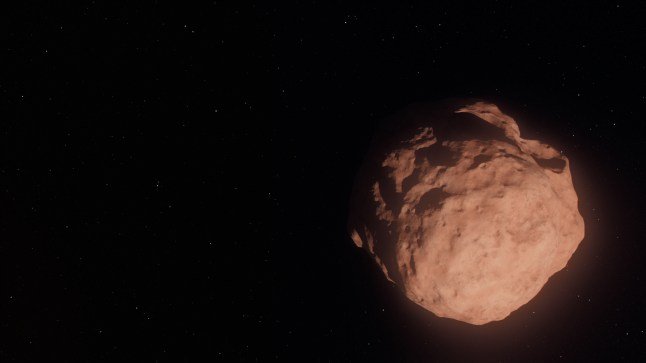
Artist’s concept of a Trans-Neptunian Object, a small, faint, icy body (Picture: NASA, ESA, Leah Hustak (STScI)/Cover Images)
Scientists have identified 27 mysterious new objects hovering at the edge of our Solar System.
Astronomers used the combined power of NASA’s Hubble and James Webb Space Telescopes for the first time to study the trans-Neptunian objects (TNOs).
TNOs are small, faint and icy bodies orbiting the Sun beyond Neptune.
Some are among the smallest and faintest objects ever directly observed.
In two complementary papers published in The Astronomical Journal, researchers analysed the colour, composition and size distribution of 27 newly discovered tiny TNOs.
They unexpectedly found fewer small TNOs than predicted by some models of planet formation. They also discovered that the colours of the smallest objects closely matched those of their much larger counterparts. Most TNOs are more than 100 million times fainter than objects visible to the unaided eye.
The TNO is orbiting the Sun beyond the orbit of Neptune (Picture: NASA, ESA, Leah Hustak (STScI)/Cover Images)
Scientists believe these small bodies offer a glimpse into an early stage of planet formation. At that time, a disc of dust and pebbles orbiting the young Sun began to clump together into city-sized ‘planetesimals’ – the solid building blocks from which planets eventually formed.
Beyond Neptune, the process stopped before these bodies could merge into full-sized worlds, leaving behind a frozen population of planetesimals. In what researchers describe as the deepest TNO survey so far, teams led by PhD candidates from the University of Victoria in Canada, working under the guidance of the National Research Council of Canada, and Northern Arizona University in Flagstaff studied the same region of sky using both telescopes.
Hubble observed visible light from the objects, while Webb detected their infrared light. By combining the observations, researchers were able to measure the TNOs’ colours, which provide clues about the composition of their surfaces. They also determined their sizes and traced their orbits.
The teams examined two populations of TNOs. The first, known as dynamically ‘cold’ TNOs, remain in relatively circular orbits close to the original plane of the Solar System.
The second, dynamically ‘hot’ TNOs, are thought to have formed between the present-day orbits of Uranus and Neptune before being pushed outwards as the giant planets migrated early in the Solar System’s history. These ‘hot’ objects now follow highly elliptical orbits and move in and out of the plane of the Solar System.
Astronomers had expected small TNOs in both populations to have experienced numerous collisions. Such impacts should have fragmented the objects and altered their surfaces compared with those of larger TNOs. But the observations told a different story. The smallest bodies appeared to resemble their larger relatives, suggesting collisions have not significantly altered their surfaces.
One possibility is that collisions occur less often than expected. Another is that the TNOs somehow preserve their original, pre-collision compositions. Researchers say the reason remains unclear.
The teams examined two populations of TNOs. The first, known as dynamically ‘cold’ TNOs, remain in relatively circular orbits close to the original plane of the Solar System (Picture: World History Archive)
‘You could imagine a scenario where getting knocked around and fragmented would change the surface composition, and then you would see a different surface colour for tiny TNOs compared to their larger siblings,’ said Northern Arizona University PhD candidate Anastasia Morgan, who led the study of colour and composition.
‘So it’s really fascinating to see that the smallest objects are somehow ‘remembering’ and preserving the history of how they were made.’
‘These dynamically ‘hot’ TNOs retain a signature of where they were born, even though they’ve been orbitally scrambled since then,’ said co-author David Trilling of Northern Arizona University.
Both the ‘hot’ and ‘cold’ populations appear to have retained the colours they had when they formed, with little change since the birth of the Solar System.
The researchers also found fewer very small TNOs than expected from some planet formation models. Webb identified 27 new, exceptionally faint TNOs. One was so faint that its brightness was comparable to standing on Earth and seeing a small swarm of fireflies on the Moon.
The smallest object observed was about 3 miles (5km) across. That’s roughly five times smaller than the size detectable by even the most sensitive ground-based telescopes.
The findings provide a rare look at the remnants of the Solar System’s earliest planet-building process – and suggest that some of these tiny frozen worlds have remained remarkably unchanged for billions of years.