Waymo had set out some big plans for expanding its autonomous vehicle taxi program across the US in 2025 and it appears to be continuing that pace into 2026. Today, the company announced that the first public riders can begin using its fully autonomous ride-hailing service in Dallas, Houston, San Antonio and Orlando.
To start, these robotaxi rides will only be available for a small number of people with the Waymo app in those cities. “We will be inviting new riders on a rolling basis to ensure a seamless experience across our initial service areas, as we meaningfully scale our operations ahead of opening our service to everyone later this year,” the company said in the blog post announcing the expansion.
Google-owned Waymo is now operating in ten commercial metro areas. It announced its plans to start testing its vehicles in these four US cities in November. The company also began a test phase in Miami at that time, and Waymo’s robotaxi service began accepting riders in that locale in January.
Three years after announcing plans to produce a film based on the viral YouTube short, The Backrooms (Found Footage) in 2023, A24 has released the first teaser for its adaptation. Backrooms, as the film is now called, is directed by the short’s original creator, Kane Parsons, and will be released on May 29, 2026.
The teaser offers little to go on for anyone who hasn’t watched the original short or the series of videos Parsons made after it, but it is replete with The Backrooms‘ hallmark: ominous liminal spaces. Layered over footage of stranger and stranger rooms (or perhaps one room becoming the platonic empty retail spaces popularized by short), the voice of Chiwetel Ejiofor tells the film’s other star, Renate Reinsve, about a “place” he discovered that’s full of rooms.
Parsons’ original video is inspired by a creepypasta called “The Backrooms” that originated on the forum 4chan in 2019. The YouTube series expanded on the basic concept of a liminal space that exists outside reality with monsters and a mysterious company researching The Backrooms. It’s unclear how much of that larger lore will be incorporated into the feature film adaptation, but since the teaser is missing the digital video filter that gave the YouTube short its distinct look, it seems possible Parsons could be going for something a bit different. Well that, and the fact the film stars two Oscar-nominated actors.
A new app will notify users if smart glasses are likely nearby. The aptly named Nearby Glasses was developed in response to media coverage outlining how glasses like Meta’s Ray-Bans have been used to film people without their consent.
As first reported by 404 Media, the app detects the unique Bluetooth signature emitted by smart glasses and sends a push alert that someone wearing the device may potentially be nearby. “I consider it to be a tiny part of resistance against surveillance tech,” the app’s developer Yves Jeanrenaud told 404 Media.
Smart glasses have sparked increased privacy concerns, especially as Meta is reportedly working to add facial recognition technology to its Meta Ray-Bans. OpenAI is also reported to have a pair of smart glasses in the works. It bears mentioning that false positives may occur, including from VR headsets.
We’re less than a month from the availability of Death Stranding 2: On the Beach on PC, and today Sony released the required specs. Despite designer Hideo Kojima being known for spectacle in his projects, the minimum specs are quite reasonable.
The low graphics preset runs on an NVIDIA GeForce GTX 1660 or AMD Radeon RX 5500 XT 8GB, and that will give players average performance of 1080p at 30 frames per second, which is rough but at least makes the game available for players who haven’t upgraded in awhile. Intel Core i3-10100 or AMD Ryzen 3 3100 are the recommended GPUs for that graphics tier. As is typical for PC gaming, though, the higher end performance options will require beefier internals.
This port of Death Stranding 2 will also boast a few firsts. The title will mark the debut of Pico as an upscaling option on PC. This upscaler was made by Guerilla Games and was also used for the Death Stranding sequel on the PlayStation 5. The game will also be adding support for ultrawide views. The cutscenes can be viewed in a 21:9 aspect ration and gameplay can be displayed at 32:9. This option will be available for both PC and the PS5 versions of the game, and an ultrawide monitor won’t be required to enable this view option.
They can shop, book flights, and control your apps—at least in theory. In practice, today’s AI agents are slow, error-prone, and riddled with privacy trade-offs. Here’s a look at what they are, and what they can and can’t yet do.
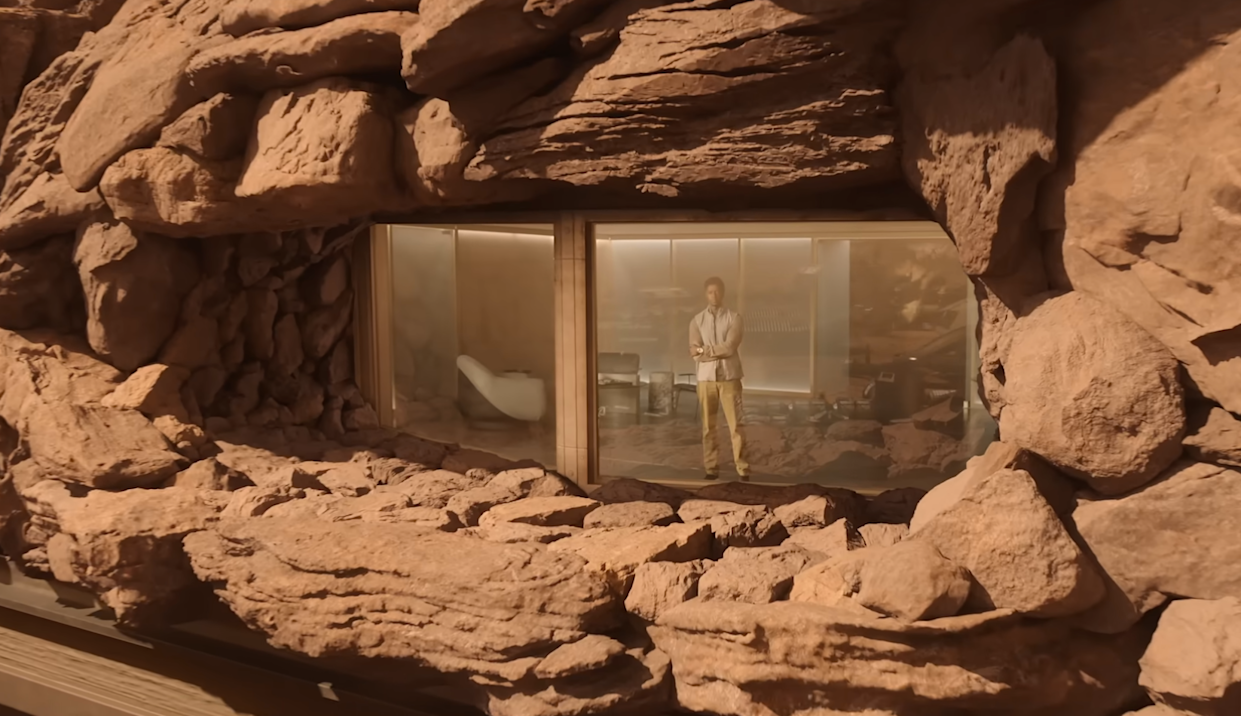
Apple just dropped a full trailer for the fifth season of its hit sci-fi show For All Mankind. This is the first real look at the upcoming batch of episodes, which premiere on March 27. We got an extremely short teaser trailer last month but that only showed a guy on a motorcycle riding across Mars.
This is the first real-deal trailer and it’s absolutely stuffed with footage indicating where the next season will take viewers. I’m going to get into some spoilers here, so read at your own risk.
For the uninitiated, For All Mankind is an alternate history show that started with a simple premise. What if Russia landed on the moon before America? That has since ballooned into all kinds of stuff which include, as mentioned above, a potential war on Mars.
For All Mankind is a show famous for its time jumps, and season five takes us all the way to an alternate version of 2012. Many of the show’s original surviving characters are still kicking around, but they are old as paste and not exactly fit for high-octane space travel. Remember, the first episode started in the 1960s. Franchise lead Ed Baldwin (Joel Kinnamen) looks particularly dusty.
Much of the footage features newer characters, including the grandson of Baldwin. Season four ended with a Mars colony asserting its independence via asteroid theft. Now it looks like Earth is striking back, which could lead to a full-scale war. This is giving me The Expanse vibes, which is never a bad thing.
The show must be clocking good numbers for Apple TV+, as the streamer recently announced a spinoff called Star City. Details are scant, but it looks to cover similar events of the mainline show from Russia’s perspective.
New episodes of For All Mankind air each Friday. This season will feature ten episodes and concludes on May 29.
As spicy as the PlayStation State of Play that took place a couple of weeks ago was overall, there was one major first-party game that was notably absent from the showcase: Marvel’s Wolverine. Insomniac Games’ latest superhero blockbuster was already slated for a fall release and now the studio has revealed exactly when you’ll be able to get your claws on it. Marvel’s Wolverine is coming to PS5 on September 15.
That’s it. That’s the announcement. There’s no new trailer to accompany the news, other than a six-second release date reveal video that popped up on YouTube. Insomniac previously said it would reveal more details about Marvel’s Wolverine this spring.
Technically, this release date means that Marvel’s Wolverine will debut in the last week of summer rather than in the fall. Still, it’s one of the relatively few blockbuster games you can expect in the tail end of this year because many major developers and publishers will be staying well clear of GTA VI.
Insomniac’s game will have a couple of months of breathing room before GTA VI soaks up all of the air in the gaming world when it arrives on November 19 — assuming Rockstar doesn’t announce another delay. However, parent company Take-Two plans to rev up its marketing machine for the game this summer, so it’s looking like GTA VI’s release date will hold this time.
Apple still hasn’t revealed a foldable iPhone, but the steady drip of leaks suggests the project is moving closer to reality. Over the past few months, analysts and supply-chain watchers have continued to fill in key details, with most reports still pointing to a launch sometime in the second half of 2026. While Apple hasn’t confirmed anything publicly, the overall picture is starting to look more consistent.
As always, plans for unreleased Apple hardware can change at any time. Features may shift, timelines can slip and some prototypes may never ship. Even so, recent reporting gives us the clearest sense yet of how Apple’s first foldable could take shape and where it might fit in the broader iPhone lineup.
Below, we’ve rounded up the most credible rumors so far, and we’ll keep this guide updated as new details emerge.
When could the iPhone Fold launch?
Rumors of a foldable iPhone date back as far as 2017, but more recent reporting suggests Apple has finally locked onto a realistic window. Most sources now point to fall 2026, likely alongside the iPhone 18 lineup, with some supply-chain hints suggesting mass production could begin in mid-2026 if development stays on track.
Some reports still claim the project could slip into 2027 if Apple runs into manufacturing or durability issues, particularly around the hinge or display. Given Apple’s history of delaying products that it feels aren’t ready, that remains a real possibility.
What will the iPhone Fold look like?
Current consensus suggests Apple has settled on a book-style foldable design, similar to Samsung’s Galaxy Z Fold series, rather than a clamshell flip phone.
When unfolded, the iPhone Fold is expected to resemble a small tablet like the iPad mini (8.3 inches). Based on the rumor mill, though, the iPhone Fold may be a touch smaller, with an internal display measuring around 7.7 to 7.8 inches. When closed, it should function like a conventional smartphone, with an outer display in the 5.5-inch range.
CAD leaks and alleged case-maker molds suggest the device may be shorter and wider than a standard iPhone when folded, creating a squarer footprint that better matches the aspect ratio of the inner display. Several reports have also pointed to the iPhone Air as a potential preview of Apple’s foldable design work, with its unusually thin chassis widely interpreted as a look at what one half of a future foldable iPhone could resemble.
If that theory holds, it could help explain the Fold’s rumored dimensions. Thickness is expected to land around 4.5 to 4.8mm when unfolded, according to analyst Ming-Chi Kuo, putting it in a similar range to the iPhone Air, and roughly 9 to 9.5mm when folded, depending on the final hinge design and internal layering.
iPhone 17 Pro, iPhone Air (Engadget)
Display and the crease question
The display is arguably the biggest challenge for any foldable phone, and it’s an area where Apple appears to have invested years of development.
According to these reports, the panel combines a flexible OLED with a laser-drilled metal support plate that disperses stress when folding. The goal is a display with a nearly invisible crease, something Apple reportedly considers essential before entering the foldable market.
If Apple does use this panel, it would mark a notable improvement over current foldables, which still show visible creasing under certain lighting conditions.
Cameras and biometrics
Camera rumors suggest Apple is planning a four-camera setup. That may include:
Two rear cameras (main and ultra-wide, both rumored at 48MP)
One punch-hole camera on the outer display
One under-display camera on the inner screen
Several sources claim Apple will avoid Face ID entirely on the iPhone Fold. Instead, it’s expected to rely on Touch ID built into the power button, similar to recent iPad models. This would allow Apple to keep both displays free of notches or Dynamic Island cutouts.
Under-display camera technology has historically produced lower image quality, but a rumored 24MP sensor would be a significant step up compared to existing foldables, which typically use much lower-resolution sensors.
iPhone Fold’s hinge and materials
The hinge is another area where Apple may diverge from competitors. Multiple reports claim Apple will use Liquidmetal, which is a long-standing trade name for a metallic glass alloy the company has previously used in smaller components. While often referred to as “liquid metal” or “Liquid Metal” in reports, Liquidmetal is the branding Apple has historically associated with the material.
Liquidmetal is said to be stronger and more resistant to deformation than titanium, while remaining relatively lightweight. If accurate, this could help improve long-term durability and reduce wear on the foldable display.
Leaks from Jon Prosser also reference a metal plate beneath the display that works in tandem with the hinge to minimize creasing — a claim that aligns with reporting from Korean and Chinese supply-chain sources.
Battery and other components
Battery life is another potential differentiator. According to Ming-Chi Kuo and multiple Asian supply-chain reports, Apple is testing high-density battery cells in the 5,000 to 5,800mAh range.
That would make it the largest battery ever used in an iPhone, and competitive with (or larger than) batteries in current Android foldables. The device is also expected to use a future A-series chip and Apple’s in-house modem, with some reports pointing specifically to a next-generation C2 modem as part of Apple’s broader push to reduce reliance on Qualcomm.
Estimates currently place the price between $2,000 and $2,500 in the US. Bloomberg has said the price will be “at least $2,000,” while other analysts have narrowed the likely range to around $2,100 and $2,300. That positions the iPhone Fold well above the iPhone Pro Max and closer to Apple’s high-end Macs and iPads.
Despite years of rumors, there’s still plenty that remains unclear. Apple hasn’t confirmed the name “iPhone Fold,” final dimensions, software features or how iOS would adapt to a folding form factor. Durability, repairability and long-term reliability are also open questions. For now, the safest assumption is that Apple is taking its time and that many of these details could still change before launch.
A common theme in online age verification laws is the tension between user privacy and preventing children from accessing harmful or inappropriate content. Now the UK is sending a not-so-subtle message to Reddit on the subject, to the tune of £14.5m ($19.6 million). The nation’s Information Commissioner’s Office (ICO) accused the company of using children’s data and potentially exposing them to inappropriate content.
“Children under 13 had their personal information collected and used in ways they could not understand, consent to or control,” UK Information Commissioner John Edwards wrote in a statement. “That left them potentially exposed to content they should not have seen. This is unacceptable and has resulted in today’s fine.”
In July 2025, Reddit began requiring age verification to access adult content in the UK, in compliance with the Online Safety Act. However, that’s only used to block under-18 users from sexually explicit, violent or other mature posts. The platform also prohibits users under 13 from accessing it altogether — and enforcement of that policy is lax. It merely requires users to declare, when signing up, that they’re over 13. The ICO (accurately) described the method as “easy to bypass.”
In its defense, Reddit told the BBC that it “didn’t require users to share information about their identities, regardless of age, because we are deeply committed to their privacy and safety.” The company said it would appeal the decision. “The ICO’s insistence that we collect more private information on every UK user is counterintuitive and at odds with our strong belief in our users’ online privacy and safety,” the spokesperson added.
“It’s concerning that a company the size of Reddit failed in its legal duty to protect the personal information of UK children,” Edwards said. “Companies operating online services likely to be accessed by children have a responsibility to protect those children by ensuring they’re not exposed to risks through the way their data is used. To do this, they need to be confident they know the age of their users and have appropriate, effective age assurance measures in place.”
“Reddit failed to meet these expectations,” he added. “They must do better, and we are continuing to consider the age assurance controls now implemented by the platform.” The ICO also accused Reddit of failing to conduct a data protection impact assessment by January 2025.
The Guardiannotes that the £14.5m fine is the third-largest handed down by the ICO. It trails only a £20m fine for British Airways involving a data breach disclosure and an £18.4m penalty for Marriott Hotels for exposing over 300 million customer records in a hack.
YouTube is adding new features to its Premium Lite plan. The tier will offer background play and downloads for the mostly ad-free plan. The update comes a year after YouTube first launched the lower-cost plan.
The Premium Lite tier is notable because for $8 per month you get most videos ad-free, emphasis on most. Currently, it still uses ads for YouTube music (along with random other videos), but the new update is bringing more Premium tier features without the $14 per month price tag.
As a Lite user, you will be able to use background play on most videos. Notably, this announcement comes less than a month after Google cracked down on free workarounds to access background play on YouTube. “Background playback is a feature intended to be exclusive for YouTube Premium members. While some non-Premium users may have previously been able to access this through mobile web browsers in certain scenarios, we have updated the experience to ensure consistency across all our platforms,” Google told Android Authority. Now, it’s for Premium Lite users as well.
YouTube Premium Lite users are also getting access to downloads. They can watch — here it comes again — most videos offline. These new features will roll out starting today and in the coming weeks to Premium Lite subscribers.