Back-to-school season is here, and you can never be too prepared (to save money). From laptops to tablets to eReaders, we’ve gathered some of the best discounts over at Best Buy that’ll help you (or your student) to succeed in the classroom. There are some notable brands, including Amazon, HP, Lenovo, and more. We’ll be updating this list regularly as the weeks go on, so be sure to check back in!
Dyson Deals
Cool CF1 Desk Fan
Dyson Cool CF1 Adjustable Bladeless Desk Fan
10 fan speeds, 12-inch fan diameter, 2-year warranty
$249.99
at Best Buy
$379.99
Save $130.00
Get Deal
When you move out of the dorms and into your first apartment, you’ll need to start paying your own electricity bills. Your roommates may not want the air conditioner on to save money even though it’s hot outside! That’s where this desk fan comes in. This Cool F1 desk fan blasts 370 liters of cool airflow per second, keeping you comfortable and chill for long periods of time. Plus, it won’t disturb your roommates either, as it’s super quiet at 29dB. It even has sleep mode too. It doesn’t have any spinning blades, so it’s safe to have around nearby, and as a result, it’s easy to clean with just a cloth. You can even tilt the fan and set its oscillation so you can find the perfect position for you.
If you’re looking for alternatives, check out the Dyson Purifier Cool TP07 and the Dreo CF714S Circulator Fan.
McAfee Deals
Total Protection Antivirus Software
McAfee Total Protection (5-Device) Antivirus Software
5 device coverage, 1-year subscription, 1.3GB download
$34.99
at Best Buy
$109.99
Save $75.00
Get Deal
Your laptop is practically your lifeline in college. You do homework, turn in assignments, watch videos, and take notes on it. But what if something happens to it? You might unknowingly install some sort of virus that could render it useless. You’ll have to shell out hundreds if not thousands for a new one, and might have to wait for it to come in. That’s where McAfee Antivirus comes in. It can protect you from all sorts of threats, including scams and cyber attacks. It can also help monitor your identity and provide a secure VPN to keep you safe. With this Total Protection package, you can install the software on five devices and have access to 24/7 customer support. Nothing gets left behind!
Our expert, Neil J. Rubenking, awarded it a “Good” rating. In our in-depth review, he said, “McAfee Total Protection offers security, VPN, and password management on all popular platforms, but unlimited device licensing and a variety of expected features are excluded.”
Roborock Deals
Q10 Series Robot Vacuum & Mop
Roborock Q10 Series Robot Vacuum & Mop
10000Pa suction, 7-week dust bag, 2.7 gallon bin capacity
$259.99
at Best Buy
$399.99
Save $140.00
Get Deal
It’s inevitable that your room will get dirty while you’re in school. You might think to yourself that you don’t have time to clean it while you’re studying, but that’s what a robot vacuum is for! It can go around your room by itself while you tackle assignments. This Roborock Q10 robot vacuum and its dust bag can store up to seven weeks of debris before automatically emptying itself out, ensuring that you won’t have to do any of the heavy lifting. It uses its navigation system to avoid any obstacles and maps out your home to determine the most efficient cleaning route. Whether it’s pet hair, dirt, or food crumbs on the carpet, this robot vacuum uses its impressive 10,000 Pa suction power to make sure nothing is left behind.
You can check out our Roborock reviews, including the Saros 10 and the S8 MaxV Ultra, both of which we came away impressed with. So you can trust us here!
F25 ACE Combo Stick Vacuum Mop
Roborock F25 ACE Combo Stick Vacuum Mop
20000PA suction, 10.5 pounds, 120 volts
$419.99
at Best buy
$549.99
Save $130.00
Get Deal
This 5-in-1 mop vacuum combo can do everything. It can clean up carpets, upholstery, and get into tiny crevices to clean hard-to-reach spots. With 20,000PA suction, it can take care of any mess, whether it’d be spilled drinks, pet hair, or stains! It’s flat and slim design also makes it ideal for reaching under furniture. The dual-scraper system ensures that hair doesn’t get tangled up inside, and the self-cleaning system breaks down grease with high temperatures. It can last up to 60 minutes when set to eco mode, giving you plenty of time to clean up your space.
More Robot Mop Deals
*Deals are selected by our commerce team
TP Link Deals
Deco 7 Pro BE1100 Home Mesh Router System
TP-Link Deco 7 Pro BE11000
7600 square feet coverage, 688MB per second speeds, 200 supported devices
$399.99
at Best Buy
$599.99
Save $200.00
Get Deal
Once you move out of the dorms and into your first apartment, you’ll need internet! This three-mesh system covers up to 7,600 square feet and supports over 200 devices with seamless connection. With speeds up to 688MB per second, you’ll be able to play games, stream, and watch movies without sacrificing performance. This setup uses AI-Roaming technology to analyze algorithms to optimize speeds as you walk around your home. Your network connection will be protected too, thanks to TP-Link’s HomeShield, which provides parental controls and real-time IoT security. This way, you won’t have to worry about any inappropriate content from nefarious parties popping up.
PCMag’s router expert John R. Delaney awarded it an “Excellent” rating. In our in-depth review, he said, “TP-Link’s easy-to-use Deco 7 Pro mesh system brings the latest 6GHz Wi-Fi 7 technology to your home — every inch of your home — with superb throughput and signal strength.”
Anker Deals
Soundcore Sleep A20 Earbuds
Anker Soundcore Sleep A20 Earbuds
14-hour battery life, 18-month warranty, 0.15 pounds
$130.99
at Best Buy
$199.99
Save $69.00
Get Deal
It’s normal to have roommates in college, and they won’t always be the quietest, so that’s where these earbuds come in! Their four-point noise masking system blocks out noise so that you can have a restful night of sleep before classes or an exam. Plus, they’re great for side sleepers, as the ergonomic design makes them feel comfortable and doesn’t exert pressure, even when you’re resting on your side. The earbuds also have up to 14 hours of battery life, ensuring that they’ll last you through the entire night. They can track your sleeping positions and movement, so that you can analyze your habits and adjust them if needed.
Soundcore Liberty 5
Anker Soundcore Liberty 5
12-hour battery life, 18-month warranty, 0.13 lbs
$89.99
at Best Buy
$129.99
Save $40.00
Get Deal
These earbuds are great when it comes to tuning out background noise so you can study. The adaptive noise cancellation system adjusts every 0.3 seconds to provide you the most optimal experience. They also don’t compromise on sound, as there are custom mode profiles for music, podcasts, and movies. Plus, the earbuds support formats like Dolby Audio, LDAC, and Hi-Res so you can enjoy your audio however you’d like. They sound crisp too, as the six-mic array ensures that your voice remains crystal clear on calls. And with 12 hours of battery life on a single charge, they’ll last you throughout the entire school day.
Contributor Christian de Looper awarded them an “Excellent” rating. In our in-depth review, he said, “The Anker Soundcore Liberty 5 true wireless earbuds offer effective noise cancellation at an affordable price, along with clear audio, a comfortable fit, and long battery life.”
HP Deals
Smart Tank 5101 Printer
HP Smart Tank 5101 Printer
12 black pages per minute, 5 color pages per minute, 1-year warranty
$169.89
at Best Buy
$259.89
Save $90.00
Get Deal
This printer is perfect for anyone who works from home or is a student. It can print up to twelve black pages and five color pages per minute. With HP AI, you won’t have to worry about your documents and printouts looking funky. It keeps the layouts neat and precise, so you don’t waste any paper. Plus, the ink is easily replenished by plugging bottles into the tank and letting them drain. You also get three years of original HP ink, so you can print as soon as you set the printer up.
Our expert M. David Stone awarded it a “Good” rating. In our in-depth review, he said, “With unremarkable features and output quality for the price, HP’s Smart Tank 5101 All-in-One Printer might seem an odd entry-level pick for homes and home offices. But its low running cost means you shouldn’t count it out.”
OmniBook X Flip 2-in-1 Laptop
OmniBook X Flip 2-in-1 Laptop
16-inch display, 16GB RAM, 23-hour battery life
$889.00
at Best Buy
$1,199.99
Save $310.99
Get Deal
The HP OmniBook X Flip 2-in-1 laptop sports a 16-inch 2K touchscreen, allowing you to interact with it in different ways, whether you’re taking notes in class or watching video lectures. You can also use Copilot to enhance your productivity by getting quick answers to questions. It’s also powered by Intel, where the top-tier performance and media generation tools help make your presentations stand out amongst everyone else. The laptop is lightweight and sleek, coming in at under five pounds and less than an inch thick. It fits perfectly in your bag and is easy to carry with you as you walk towards your classroom. And with up to 23 hours of battery life, it’ll last you through the entire school day.
PCMag contributor Jorge Jimenez awarded the 14-inch version a “Good” rating. In our in-depth review. “HP’s OmniBook X Flip 14 is a well-designed 2-in-1 laptop with a lovely 120Hz OLED display,” he said. “Its battery life and graphics performance don’t impress, but when discounted, this convertible is worth a look.”
More College Laptop Deals
*Deals are selected by our commerce team
Apple Deals
AirPods 4 Earbuds
Apple AirPods 4
5-hour battery life, H2 chip, IP54 water-resistance rating
$99.99
at Best Buy
$129.99
Save $30.00
Get Deal
Need to listen to a lecture in the library or just walk to class? The AirPods 4 earbuds are powered by Apple’s H2 chip, making sound quality and audio pristine when taking calls or listening to music. Plus, with spatial audio and dynamic head tracking, your immersion will shoot through the roof. They’ve also been redesigned with a refined contour and shorter stem so they have more stability in your ears. With five hours of battery life on a single charge and 30 hours total with the charging case, you’ll be able to get plenty of playtime before plugging them back in. These earbuds are also rated IP54, meaning that they’re dust, sweat, and water-resistant. So whether you’re in the gym or on a hike, they’ll withstand most physically intensive activities.
Audio expert Tim Gideon awarded them an “Excellent” rating. In our in-depth review, he said, “The AirPods 4 are Apple’s most affordable wireless earbuds and offer exceptional audio performance for an open-ear design.”
Apple Watch Ultra 2
Apple Watch Ultra 2
49mm display, 64GB storage, 36-hour battery life
$629.99
at Best Buy
$899.00
Save $269.01
Get Deal
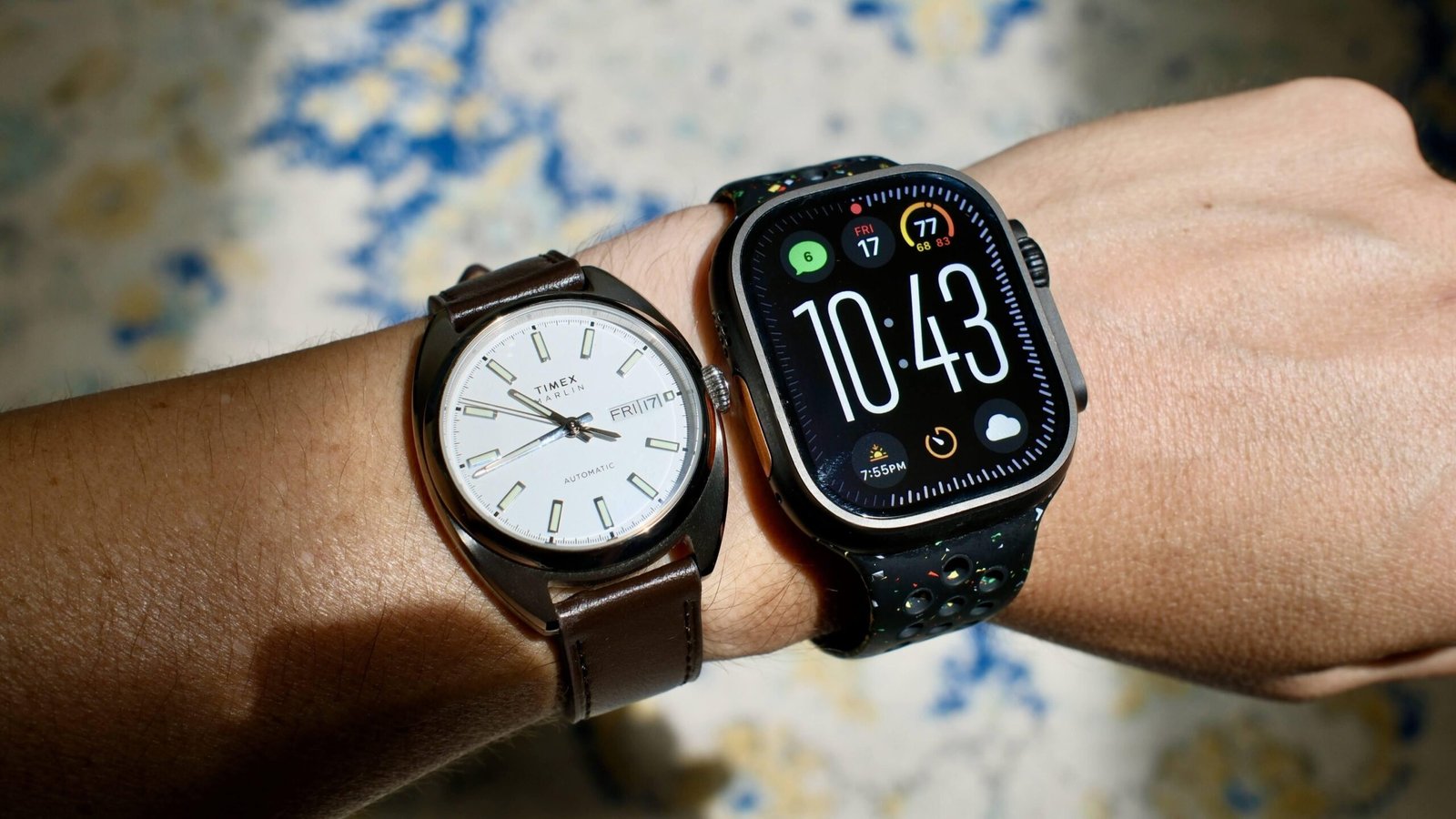
When you’re in the middle of class, you don’t want to be distracted by your iPhone. If you really need to check on your notifications, then having an Apple Watch is handy. It’s easier to whip out than a phone, and won’t bother your fellow classmates around you. You’ll still be able to see notifications on the 49mm screen. The Apple Watch Ultra 2 is also quite rugged, as its titanium casing is corrosion-resistant. And with up to 36 hours of battery life when used normally, it’ll last you throughout class. Outside of the room, it’s great for keeping track of your exercise habits, especially if you’re a cyclist, hiker, or swimmer.
Our expert awarded it an “Excellent” rating. In our in-depth review, she said, “The Apple Watch Ultra 2 offers minor refinements over the last generation, including a brighter display and a faster processor, with the same rugged design, battery life, and price, making it another excellent adventure companion.“
More Smartwatch Deals
*Deals are selected by our commerce team
Pencil Pro
Apple Pencil Pro
6.53 inches, 0.68 ounces, 1-year warranty,
$99.99
at Best Buy
$129.00
Save $29.01
Get Deal
The Apple Pencil Pro is a handy stylus for students to use with their iPads to take notes and watch videos. The new squeeze gesture is particularly useful for artists, and the haptic feedback feels responsive to help confirm your actions. It’s also supported by Apple’s Find My network, meaning that if you lose it, you can track it down and retrieve it. While it only works with the latest iPads, particularly the ones with M2, M3, M4, and M5 chips, along with the iPad mini (A17 Pro), it’s by far the best stylus for them.
Our expert awarded it an “Outstanding” rating. In our Apple Pencil Pro review, he said, “The Apple Pencil Pro is the stylus that serious artists and creators should get for the latest iPad Pro or iPad Air thanks to its advanced writing features and controls.”
MacBook Pro M4 Laptop
Apple MacBook Pro M4 Laptop
22-hour battery life, M4 chip, 2TB storage
$2,999.00
at Best Buy
$3,899.00
Save $900.00
Get Deal
This premier laptop gives you the ultimate power and performance when it comes to MacBooks. The M4 Pro chip provides more than enough juice to power through demanding tasks, like coding and 3D rendering. So if you’re a computer science or engineering major, this laptop is perfect for you. It’s 14.2-inch display quite stunning, as it contains 1600 nits peak brightness, allowing whatever is playing on screen to look vibrant and colorful. It also works seamlessly with your other Apple devices, including your iPhone, such as letting you send texts straight from the laptop. And with 22 hours of battery life, this laptop will last through your entire day.
Our expert Brian Westover awarded it an “Excellent” rating. In our in-depth review, he said, “It’s a dead ringer for 2023’s model, but Apple’s M4 MacBook Pro remains a portable content-creation powerhouse, thanks to a beefed-up processor, smart AI features, and seemingly endless battery life.”
Lenovo Deals
Yoga Slim 7x 2K Snapdragon X2 Laptop
Lenovo Yoga Slim 7x 2K Snapdragon X2 Laptop
14-inch display, 16-hour battery life, 512GB storage
$799.99
at Best Buy
$1,299.99
Save $500.00
Get Deal
This laptop is powered by the Snapdragon X2 Plus processor to deliver an impressive performance that’ll help you get your work done, whether it’s making a presentation or editing a video. It also includes Copilot, so you can be more efficient and productive with features like locating past content and interacting with texts and images through the touchscreen display. Speaking of which, the 14-inch display comes in at 2K resolution and 600 peak nits of brightness, ensuring that you see amazing color and detail uniformly throughout. The battery also lasts up to 16 hours so it’ll get you through the entire school day.
Our expert Brian Westover awarded a similar model an “Excellent” rating. In our in-depth review, he said, “The Lenovo Yoga Slim 7x is a slick ultraportable laptop with a vibrant OLED screen and 20 hours of battery life. While Windows on Arm app compatibility makes us wary, it’s undoubtedly a well-made device.”
More Laptop Deals
*Deals are selected by our commerce team
Tab One
Lenovo Tab One
64GB storage, 8.7-inch display, 16.5 battery life
$99.99
at Best Buy
$169.99
Save $70.00
Get Deal
This Android-powered tablet has a bright 8.7-inch display with up to 480 nits for lots of brightness. It weighs only 320 grams, making it perfect for taking with you to your classes. This tablet’s compact form factor easily lets it slip into your bag, and you can even hold it in one hand, freeing up the other to do something else, like opening doors or carrying a water bottle. Plus, it’s made with 35% post-consumer recycled plastic materials. If you’re environmentally conscious, then this tablet will fit into your lifestyle.
Our mobile expert, Kim Gedeon, awarded a similar model a “Good” rating. In our in-depth review, she said, “The Lenovo Idea Tab Plus Android tablet impresses, thanks to its large, bright display, quality design, and low price, making it a good choice if you’re seeking a slate for basic browsing and media consumption.”
More Tablet Deals
*Deals are selected by our commerce team
Bose Deals
QuietComfort Headphones
Bose QuietComfort Headphones
24-hour battery life, 30 feet maximum range, 2.5-hour charge time
$254.99
at Best Buy
$359.99
Save $105.00
Get Deal
If you need a pair of noise-canceling headphones to keep focused while you study, then the Bose QuietComfort headphones are the perfect fit. These headphones have two different listening modes: Quiet and Aware. The former keeps background noise out so you can concentrate, while the latter lets it come in if you need to be aware of your surroundings. The plush over-ear cushions ensure that the headphones stay comfortable during long study sessions, and the durable headband securely keeps them snug on the top of your head while you’re walking around. With up to 24-hours of battery life, they’ll definitely last throughout the day. Just 15 minutes of quick charging will also restore 2.5 hours of playback, so they’re always ready to go whenever you are.
Recommended by Our Editors
Our audio expert Tim Gideon awarded them an “Excellent” rating. In our in-depth review, he said, “The Bose QuietComfort Headphones offer excellent active noise cancellation and a refined audio signature in a comfortable fit.”
Ultra Open Ear Earbuds
Bose Ultra Open Ear Earbuds
30 feet maximum wireless range, 7-hour battery life, 1-hour charge time
$199.00
at Best Buy
$299.00
Save $100.00
Get Deal
These earbuds are fantastic for walking around your school or campus. Not only do you get to listen to your audio, but you’re also able to keep aware of your surroundings. If a friend says hi or a teacher asks you for something, you’ll be able to hear and address them right away. They don’t compromise on audio either, as Bose Immersive Audio uses spatialized music to give you a better listening experience. With up to seven hours of battery life, these earbuds will last the entire class day. Plus, they’re rated IPX4, meaning that they’re water-resistance. So if it’s raining outside, you won’t have to worry.
Our expert awarded them a “Good” rating. In our in-depth review, he said, “The pricey Bose Ultra Open Earbuds produce expansive sound and have a unique design that lets you stay aware of your surroundings.”
Samsung Deals
Galaxy Buds 3 Pro
Samsung Galaxy Buds 3 Pro Earbuds
5-hour talk time, 2-programmable buttons, 6-hour battery life
$159.99
at Best Buy
$249.99
Save $90.00
Get Deal
These Samsung Galaxy Buds 3 Pro earbuds deliver impeccable sound thanks to Crystal Sound and Adaptive Equalizer. So whether you’re in at the campus gym or listening to a video lecture, you’ll be able to hear your music and professors clearly. Adaptive Equalizer adjusts your audio based on how the earbuds sit in your ears, optimizing the sound so you have a more personalized experience. They also use Galaxy AI, which helps with noise cancellation and blocks out outside sounds so you can stay focused on studying. And with a six-hour battery life, they’ll last you through all of your classes.
Our expert awarded them an “Excellent” rating. In our in-depth review, he said, “The Galaxy Buds 3 Pro’s comfortable fit, quality sound, and clever AI features make them compelling for Samsung phone users, though their noise cancellation isn’t quite as strong as similarly priced competitors.”
JBL Deals
Endurance Peak 3 Earbuds
JBL Endurance Peak 3 Earbuds
800 feet maximum range, 10-hour battery life, 2-hour charge time
$84.99
at Best Buy
$109.95
Save $24.96
Get Deal
Keeping your body in shape is just as important as training the mind! When you’re not studying and want to hit the gym or run around campus, the Endurance Peak 3 earbuds will get you through a tough workout. They have punchy bass and stay comfortably secure on your ears with their ear-hook design. The earbuds are also rated IP68, which means that they’re waterproof and dustproof, so you won’t have to worry about them in the rain or when you’re sweating at the gym. They boast impressive battery life too, as they last about 10 hours with an additional 40 hours in the charging case. The fast charge lets you get up to an hour of playtime with only a 10 minute charge, so they’re always ready in a pinch.
Audio expert Tim Gideon awarded it an “Excellent” rating. In our in-depth review, he said, “The budget-friendly, fully waterproof JBL Endurance Peak 3 earphones are ideal for exercise thanks to their secure fit and serious bass thump.”
Flip 7 Portable Speaker
JBL Flip 7 Portable Speaker
16-hour battery life, 1-year warranty, 1.25 lbs.
$99.99
at Best Buy
$149.95
Save $49.96
Get Deal
College isn’t all about studying. It’s important to have fun too! If you’re hanging out with your friends or going to a party, bringing a speaker like the JBL Flip 7 is a great way to liven up the atmosphere. With Auracast, you can pair other Flip 7 speakers for a wider soundstage, letting you set the mood even more. It’s rated IP68, meaning that it’s dust- and waterproof, meaning that you won’t have to worry about getting it wet or dirty outdoors. The new PushLock feature lets you switch accessories around, such as the included loop and carabiner, to carry it around easier. And with 16 hours of battery life, you know the speaker will last the entire night.
Contributor Mark Knapp awarded it a “Good” rating. In our in-depth review, he said, “The JBL Flip 7 is a minor upgrade to its predecessor, for a compact and portable Bluetooth speaker that produces respectable sound for its size.”
More Outdoor Speaker Deals
*Deals are selected by our commerce team
Oral-B Deals
iO Series 3 Electric Toothbrush
Oral-B iO Series 3 Electric Toothbrush
3 smart brush modes, 2-minute timer, 3.6 volts
$59.99
at Best Buy
$89.99
Save $30.00
Get Deal
When you’re going back to school, you’re thinking of things like books and laptops, but don’t forget the hygienic essentials! When you’re meeting with people or making new friends, you definitely don’t want your breath to stink. But with Oral-B‘s iO Series 3 electric toothbrush, you won’t have to worry about that. It has three smart modes for brushing, including Daily Clean, Whiten, and Sensitive. This way, you’ll be able to personalize your experience and goals for brushing. It also has a two-minute timer to ensure that you properly brush your teeth for a comprehensive clean. Additionally, it has a pressure sensor to notify you whether you’re pressing down too hard to protect your teeth from any potential damage. An electric toothbrush is also more efficient than a regular one, being able to remove up to 400% more plaque.
GE Deals
1.1 Cu. Ft. Countertop Microwave
1.1 Cu. Ft. Countertop Microwave
950 watts, 6 preset programs, 30 pounds
$114.99
at Best Buy
$175.99
Save $61.00
Get Deal
Admittedly, it’s been a while since I’ve been in college, but I didn’t have a microwave in my dorm room! I had to go into the communal kitchen in order to use one. Having one is super convenient, especially during late study nights when you just want to heat up some leftovers without leaving your room. This GE microwave is easy to use and can even defrost your food based on weight and time. Just enter the weight and the microwave will automatically set the optimal time and power. It’s also got one-touch instant operation for quick heating as well as a control lockout that prevents accidental use. If your little sibling comes to visit you, you can rest assured that they can’t use it thanks to the two-step child lock.
12,000 BTU Smart Window Air Conditioner
GE 12000 BTU Smart Window Air Conditioner
550 square feet coverage, 5 cool settings, 3 fan speeds
$329.99
at Best Buy
$474.99
Save $145.00
Get Deal
When you move into your new space, you’d better hope you have air conditioning, or else summer days will be unbearable! You definitely don’t want any distractions while you’re doing homework or studying. But this GE smart window air conditioner can help you out. It’s got 12,000 BTU of cooling capacity for rooms up to 550 square feet, keeping you refreshed during any heat wave. With the SmartHQ app, you’re able to monitor this air conditioner and control it from anywhere. It’s also compatible with Amazon Alexa and Google Assistant, so you can enjoy a hands-free experience. These options give you unbridled flexibility within your habits. This has an Eco Mode that turns it off automatically when the room is cool enough, helping you save money on utilities, too. Plus, its geofence technology can tell when you’re almost home and automatically adjust the settings for when you come back.
Our expert awarded a similar model an “Outstanding” rating. In our in-depth review, he said, “The GE Smart Heat/Cool AWGP12 window air conditioner works with voice and app commands, effectively cools and heats rooms of up to 550 square feet, and tells you how much power it’s using.”
More Appliance Deals
*Deals are selected by our commerce team
Be sure to also check out our other Best Buy deals and other amazing new tech deals as they come in. We’ll also continually update this list, so come back soon!