Category: Sport

  • 4 takeaways: Cavaliers limit turnovers and hit timely 3s in Game 5 win

    4 takeaways: Cavaliers limit turnovers and hit timely 3s in Game 5 win

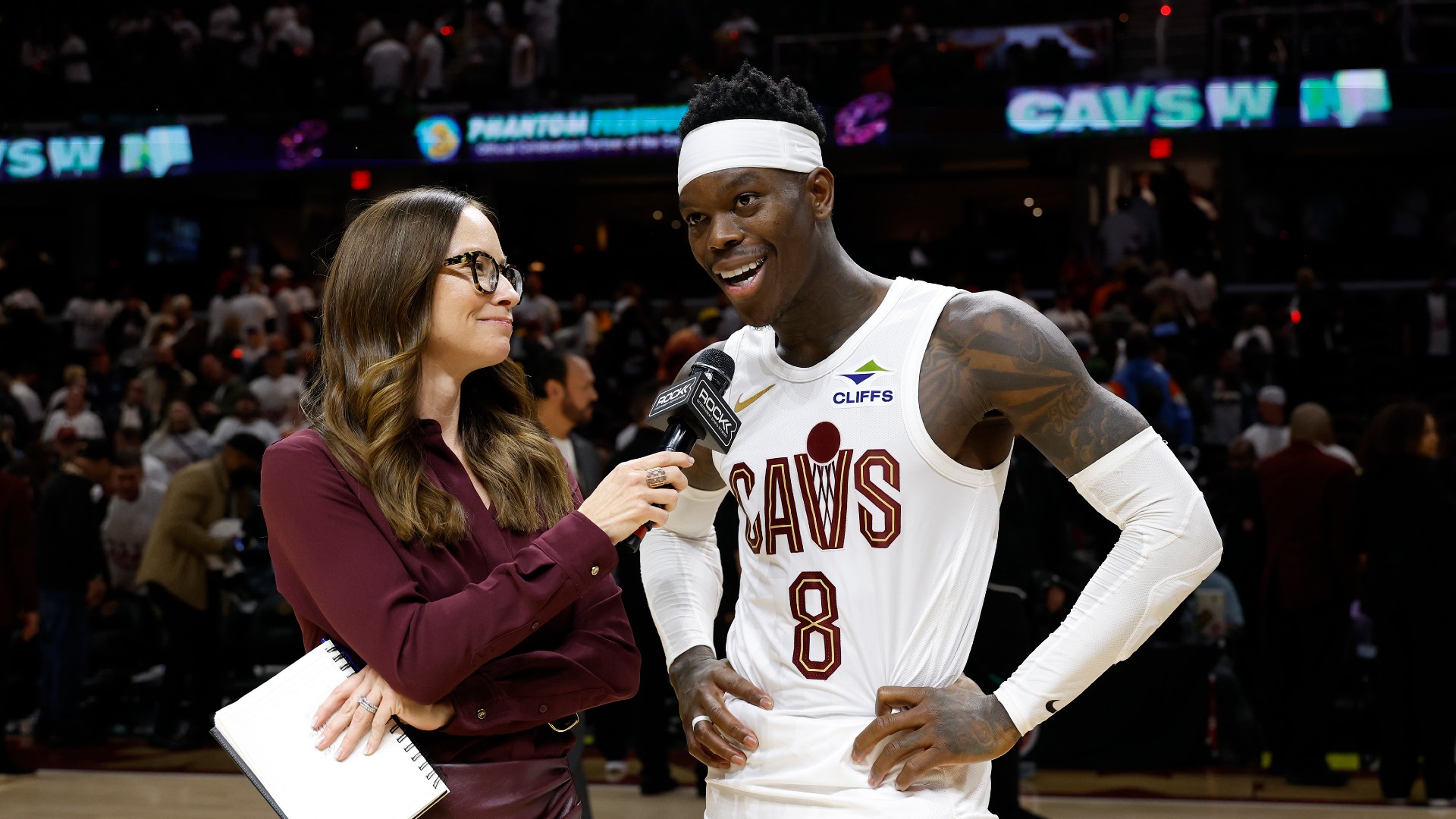
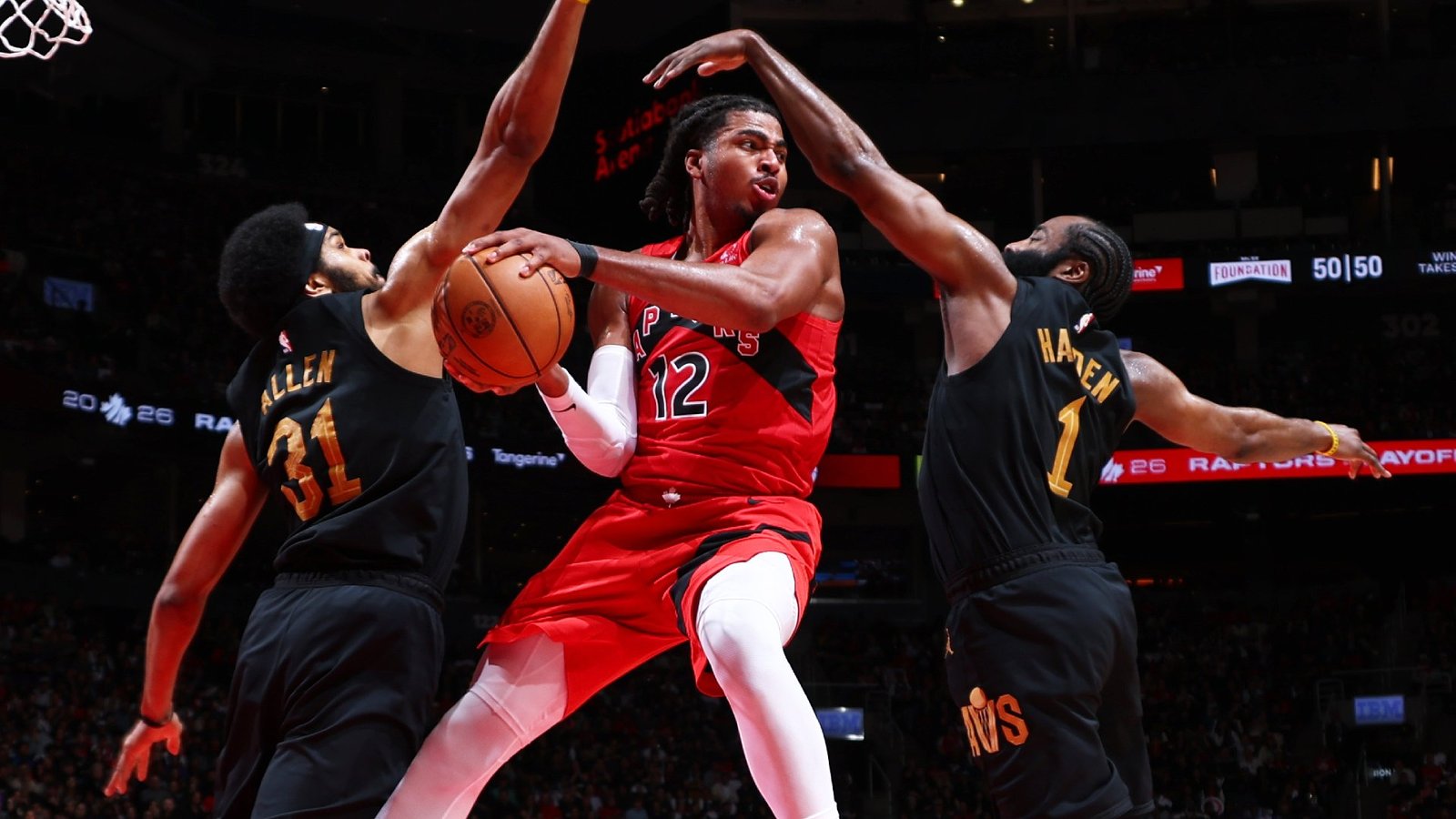
    Dennis Schröder led the Cavaliers’ charge in the final period, scoring 11 of his 19 points.

    • Download the NBA App

    It’s been said that every game in a playoff series is different. And indeed, Game 5 of the first round series between the Cleveland Cavaliers and Toronto Raptors was a totally different experience than Game 4.

    By the end of the third quarter on Wednesday, the two teams had combined to score 21 more points than they totaled over 48 minutes just two nights earlier. The 3s were falling, transition opportunities were abundant, and neither team could get stops.

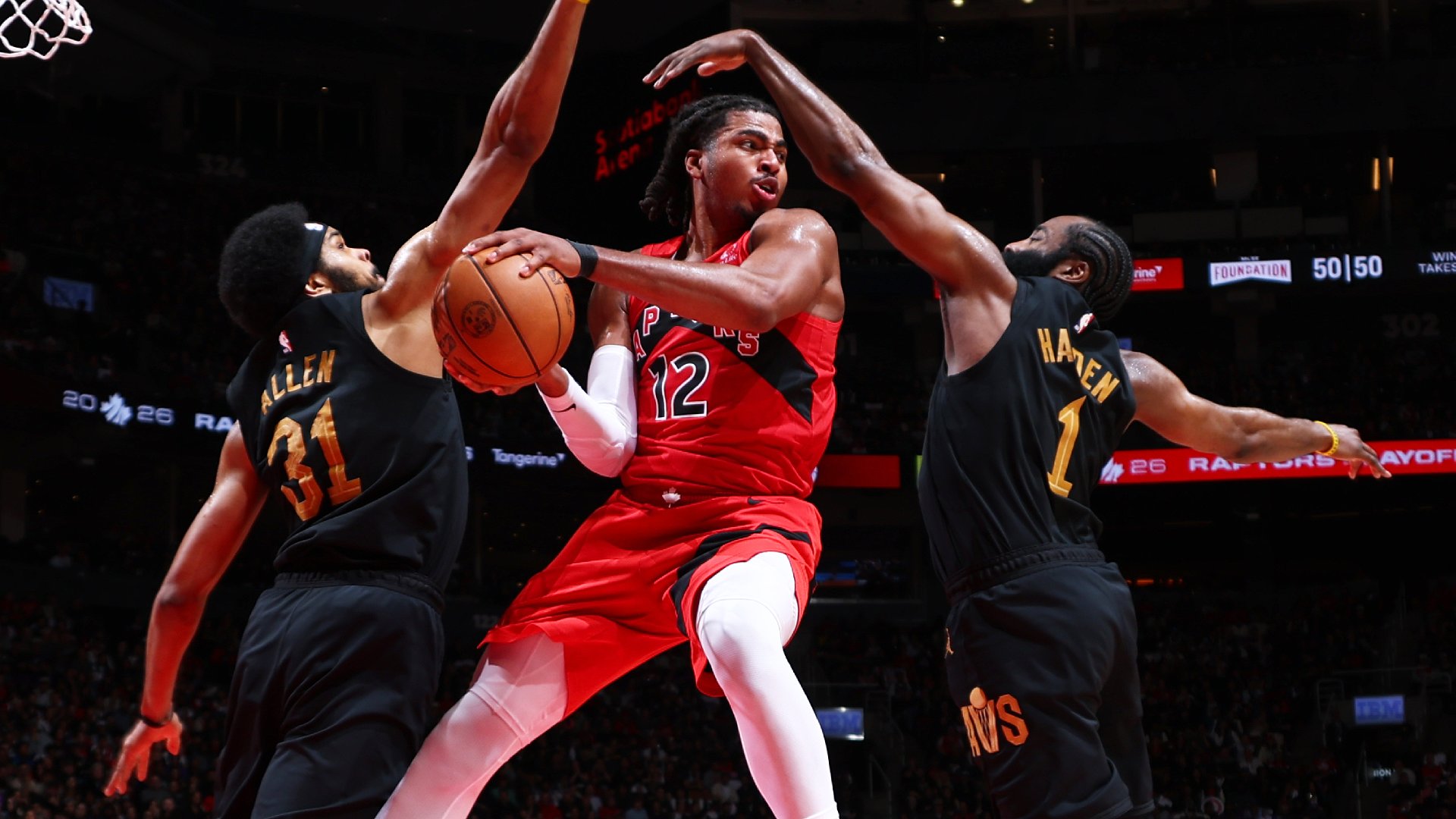
    But the Raptors went cold in the final period, the Cavs finally took care of the ball, and Cleveland escaped with a 125-120 victory to take a 3-2 series lead.

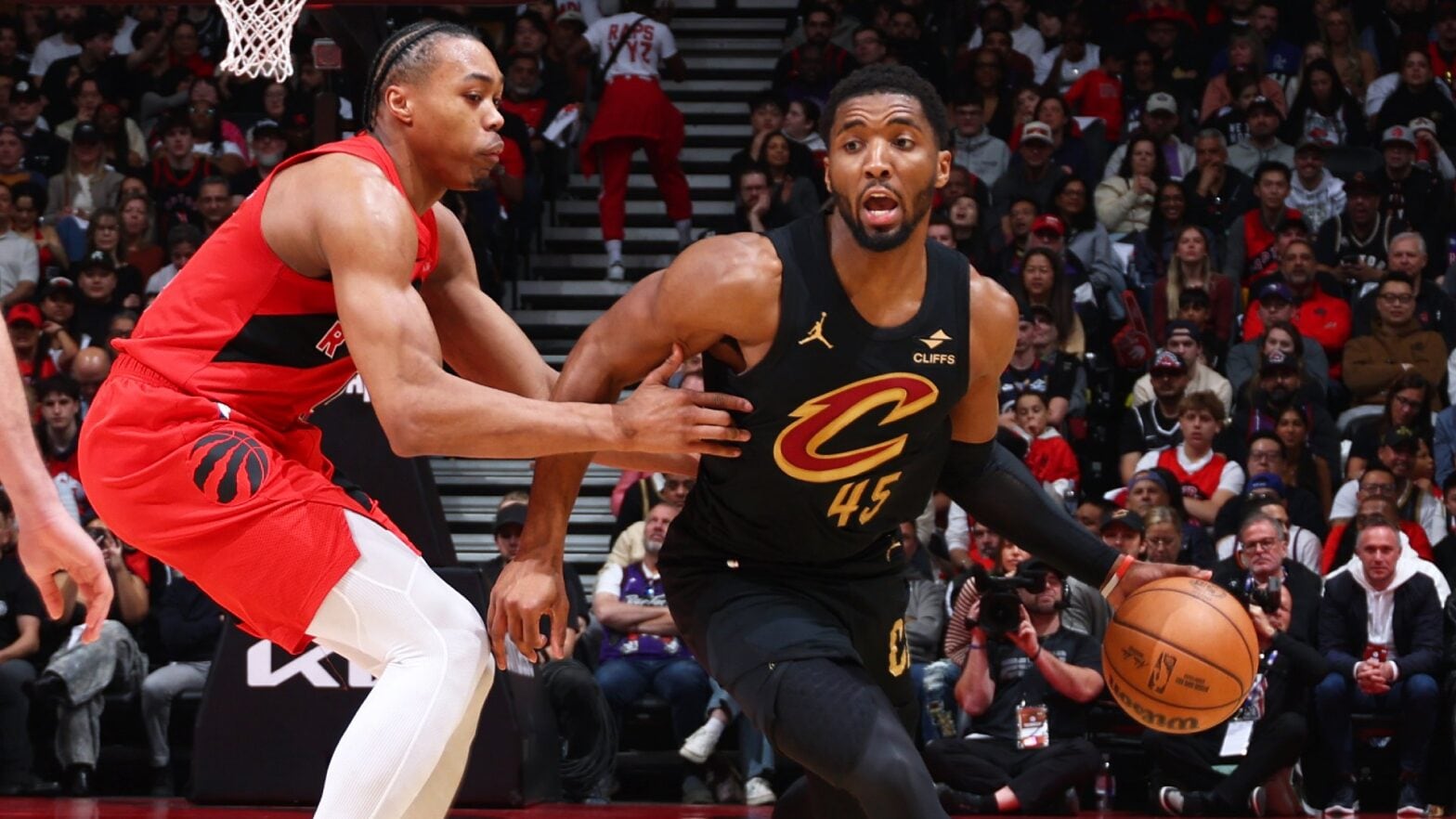
    James Harden and Evan Mobley led the Cavs with 23 points apiece, while Donovan Mitchell and

    each finished with 19. The Raptors lost Brandon Ingram to a heel injury, but they still had six guys in double-figures.

    Here are some notes, quotes, numbers and film as the home team improved to 5-0 in this series:


    1. Cavs finally take care of the ball down the stretch

    This has been a lopsided series in regard to the transition game. According to Synergy tracking, the Raptors have outscored the Cavs by 79 points (139-60) in transition over the five games.

    The Raptors were pushing off rebounds and even getting some early offense after made shots on the other end of the floor on Wednesday.

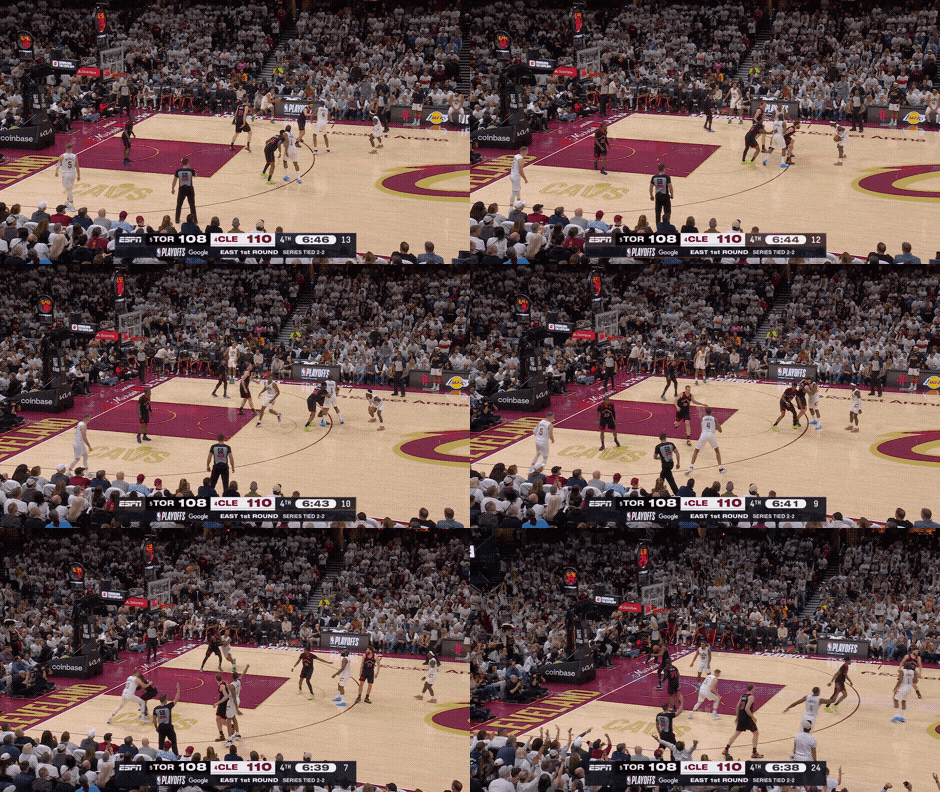
    But what really fueled their transition game were live-ball turnovers, and the Cavs had nine of them through the third quarter. Each of those nine live-ball turnovers led directly to a Toronto layup or 3-pointer in transition, 22 points total …

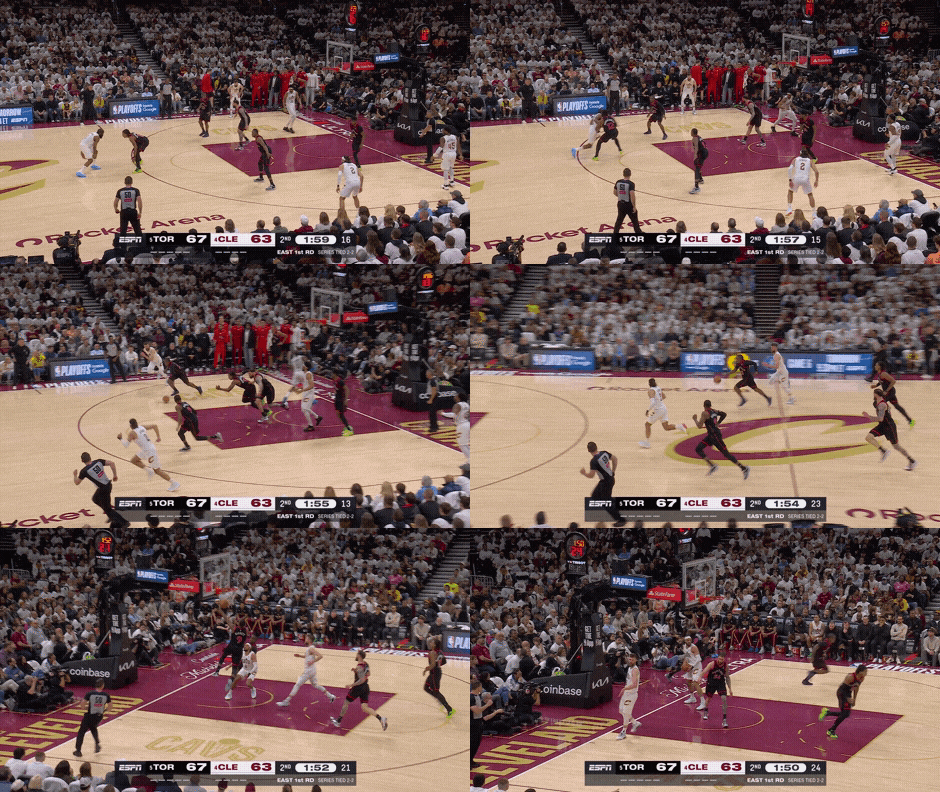
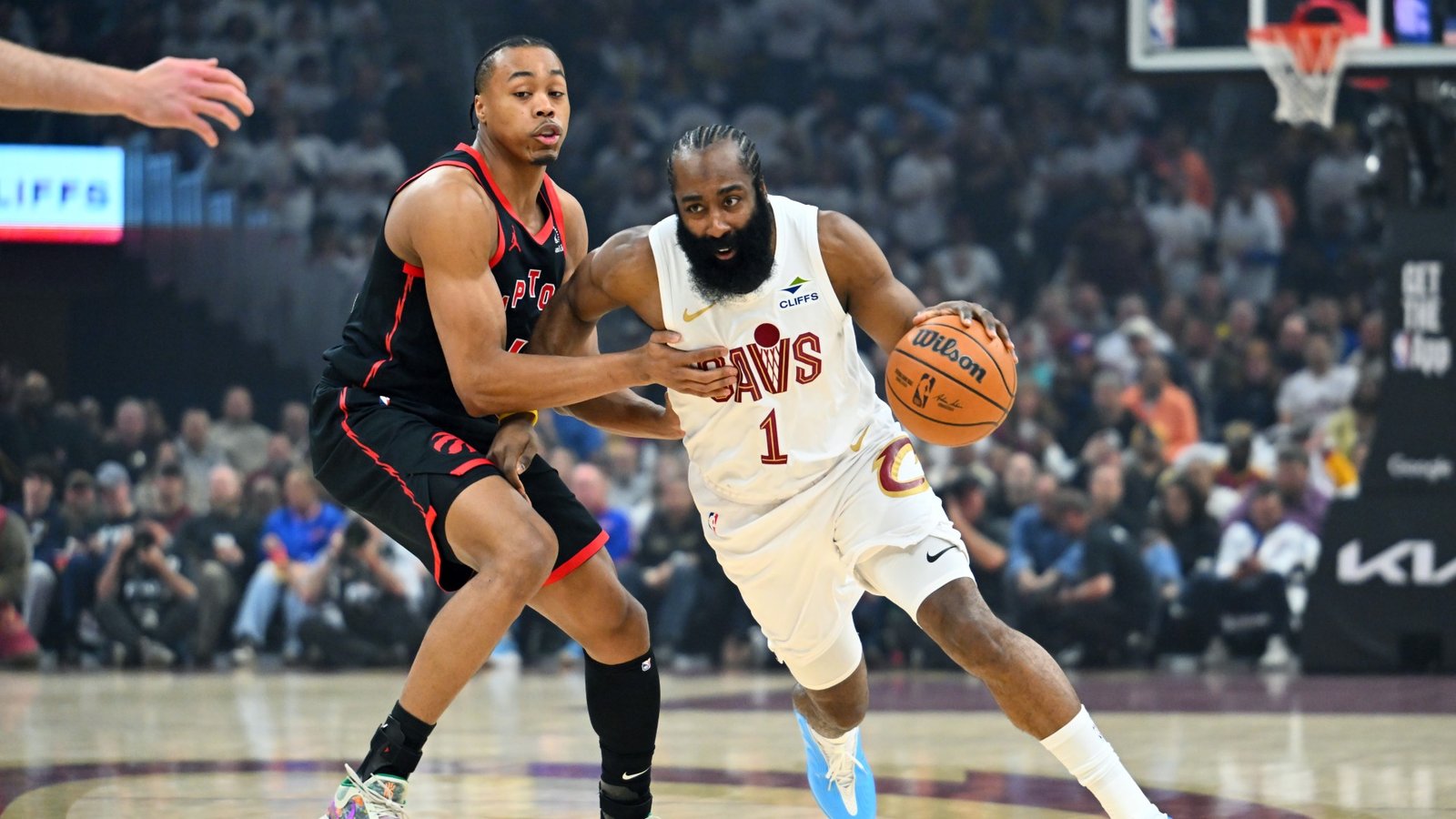
    James Harden turnover leads to Raptors fast break

    The Cavs’ final live-ball turnover of the night came with 7:03 left in the third quarter. It led directly to a wide-open corner 3-pointer for Jamal Shead. Cleveland had three more turnovers after that, but they were all dead balls.

    The Raptors got a couple of half-court scores after the Shead 3, and at that point, they had scored 92 points on just 66 possessions (1.39 per). But when the Cavs’ live-ball turnovers stopped, the Toronto offense slowed down. The Raptors missed some open 3s in the fourth quarter, but they had just five transition points in the final period and scored only 28 points over their final 35 possessions (0.80 per).

    “It gets their momentum going,” Cavs head coach Kenny Atkinson said about the live-ball turnovers. “We still haven’t figured out a way to clean that up. If we want to win on the road, we gotta find a way.”


    2. Schröder and Strus make big plays

    Harden and Mitchell combined to score only one of the Cavs’ 25 points in the fourth quarter. Instead, other guys made the big plays and big shots on that end of the floor.

    One reason the Cavs traded for Schröder at the deadline was his big-game experience, both in the NBA and for the German National Team.

    “When we were talking about trading for him, that’s one of the things that came up,” Atkinson said. “This type of game fits him.”

    Schröder led the charge in the final period, when he scored 11 of his 19 points.

    The first bucket was the most impressive. It was late in the shot clock and Schröder was matchup up one-on-one with Scottie Barnes, one of the best defenders in the league.

    But he beat him going right and unfurled a scoop shot just out or Barnes’ reach that put the Cavs up five …

    Dennis Schröder drive vs. Scottie Barnes

    After another drive past Ja’Kobe Walter, Schröder had the Raptors on their heels.

    And they then gave him space to hit a pair of pull-up jumpers before finishing his night with a tough floater over Barnes.

    Through the first four games, the Cavs had scored an anemic 82 points on 93 possessions (0.88 per) with Schröder on the floor. But he’s always capable of giving them some juice off the dribble, and he was critical to their fourth-quarter offense in Game 5.

    Schröder remains a reserve, but Max Strus was in the starting lineup in Game 5, replacing Dean Wade. Atkinson said afterward that it wasn’t about any issues with Wade, but that Strus gave them better spacing and additional playmaking.

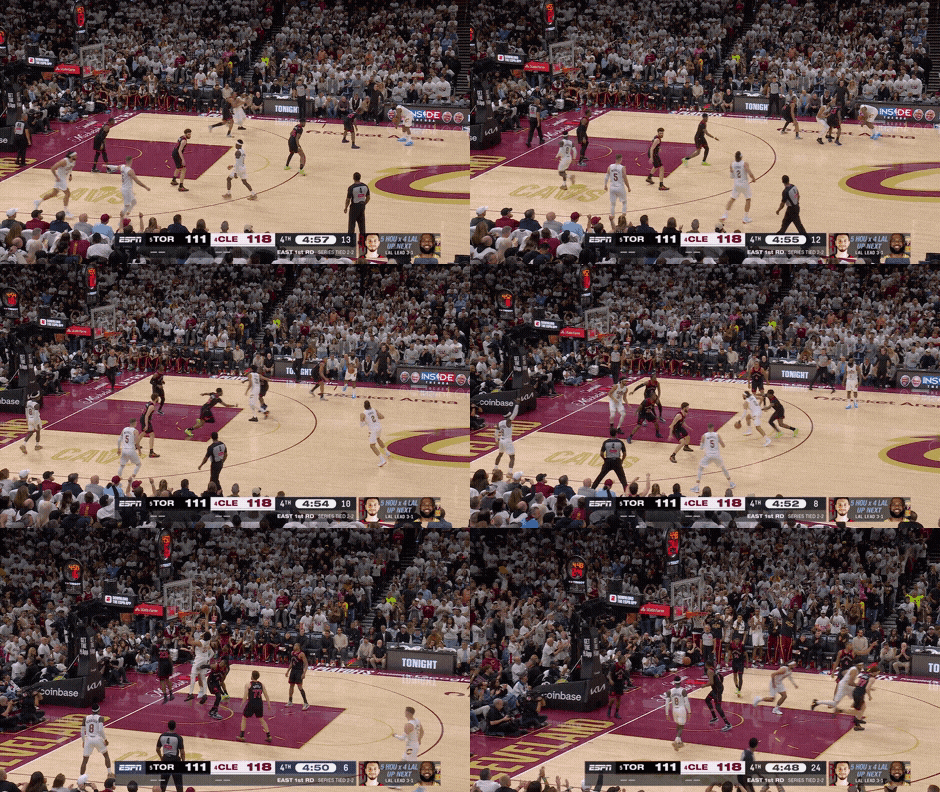
    Indeed, Strus made a couple of huge plays off the dribble in the fourth quarter. First, he attacked a Walter close-out, drew help, and dropped off a pass to Jarrett Allen …

    Max Strus drive and assist to Jarrett Allen

    And on the very next possession, he attacked another Walter close-out and drew a foul in the paint.

    Neither Schröder nor Strus had any of the Cavs’ 15 turnovers on Wednesday. And if they can continue to provide secondary playmaking, they can relieve some of the pressure on Harden and Mitchell.


    3. Mobley hits timely 3s

    Last season, Mobley seemed to have found his jumper, shooting 37% from beyond the arc and making more 3-pointers in 2024-25 (85) than he had in his first three seasons combined (67). But this season, he dropped back down below 30%, and his long-distance shot often looked uncomfortable.

    Through the first four games of this series, Mobley was 2-for-11 from beyond the arc. And through the first 35 minutes on Wednesday, he hadn’t attempted a 3-pointer.

    And then, as the Raptors went cold on the other end of the floor, Mobley shot 3-for-3 from 3-point range over the final 13 minutes. After three scoreless possessions, he gave the Cavs some life with a wide-open 3 from the left wing off a baseline out-of-bounds play in the final minute of the third.

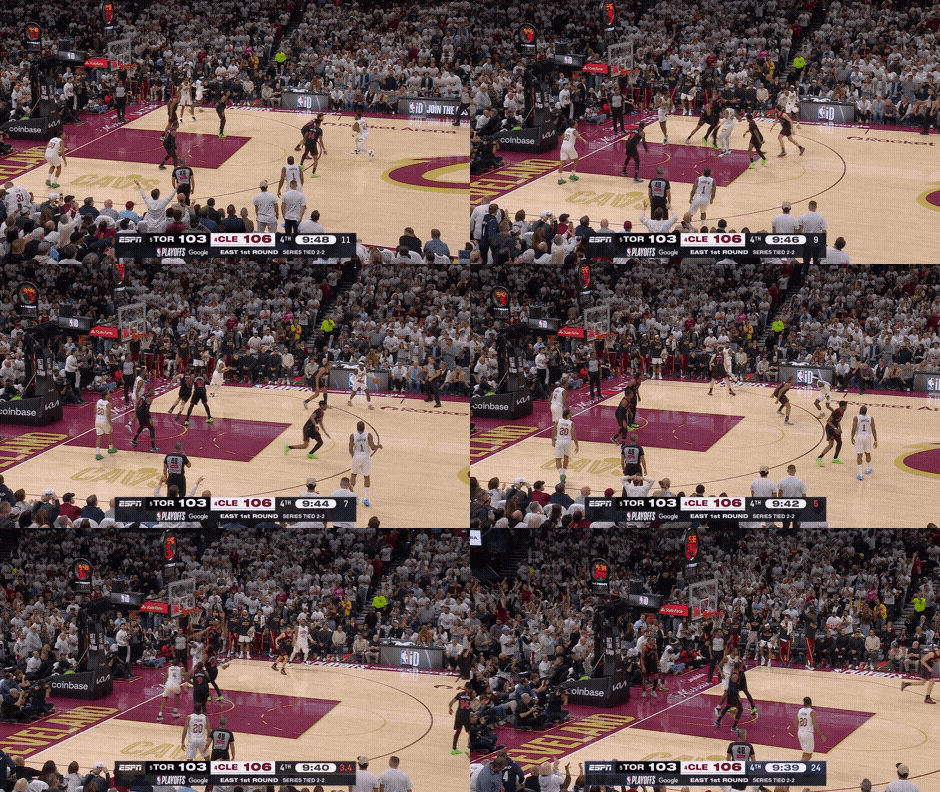
    Early in the fourth, Collin Murray-Boyles helped off of Mobley in the strong-side corner, and Mobley made him pay. A few minutes later, Mobley was seemingly just trying to get out of the way of a Schröder-Harden ball-screen. But Schröder passed him the ball as he cleared out to the left wing. Jakob Poeltl closed out slow and Mobley let it fly …

    Evan Mobley 3-pointer

    “We needed them,” Atkinson said of Mobley’s three 3s. “I know that’s not his bread and butter, but he hit ’em with confidence. I thought those 3s were really timely.”

    It’s more important that Mobley plays big and finds ways to score inside. But it’s very likely that the Raptors will keep daring him to shoot, and sometimes, that will be the best option.


    4. Raptors lose Ingram, lose the bench minutes

    Ingram left midway through the second quarter after re-aggravating a heel issue that’s been bothering him.

    A.J. Lawson started the second half in his place but played just two minutes.

    Both in the regular season and in this series, the Raptors have been much better with Barnes on the floor without Ingram, who is now shooting just 19-for-58 (33%) in the playoffs. But his absence obviously compromises the Raptors’ ability to creates shots in their half-court offense.

    With Toronto also missing Immanuel Quickley, its depth is also being tested. And in a little less than 19 minutes with either Barnes or RJ Barrett on the bench on Wednesday, the Raptors were outscored by 14 points.

    The biggest benefit of the Cavs having both Harden and Mitchell is that they can have at least one on the floor for all 48 minutes, and the same goes for Mobley and Jarrett Allen.

    They should continue to have the advantage when both teams have reserves on the floor, and they’ll look to close out the series when it moves back to Toronto for Game 6 on Friday (7:30 p.m. ET, Prime Video).

    * * *

    John Schuhmann has covered the NBA for more than 20 years. You can e-mail him here, find his archive here and follow him on Bluesky.

  • Raptors dealing with injuries to All-Stars Scottie Barnes and Brandon Ingram

    Raptors dealing with injuries to All-Stars Scottie Barnes and Brandon Ingram

    The Raptors are hopeful Scottie Barnes (quadriceps) can heal in time for Game 6.

    CLEVELAND (AP) — On the heels of his team blowing a 12-point, second-half lead Wednesday night, Toronto coach Darko Rajakovic has bigger problems as the Raptors look to stave off elimination.

    All-Star guard Scottie Barnes was kneed in the quadriceps by Thomas Bryant during the first half of Game 5 of the Raptors’ first-round series against the Cleveland Cavaliers. Barnes was also poked in the eye during the first half on a play underneath the basket.

    Meanwhile, All-Star forward Brandon Ingram didn’t play the second half because of right heel inflammation. And reserve center Sandro Mamukelashvili did not play the final 12 minutes after appearing to tweak his knee on a 3-point attempt to end the third quarter.

    With Barnes hobbled and Ingram sidelined, the Raptors missed their first 12 shots of the fourth quarter and fell to the Cavaliers 125-120.

    “Obviously, it had some effect. I couldn’t play with that same pace that I was trying to play with,” Barnes said about the quad injury, which occurred on a drive to the basket.

    Barnes — who had 17 points and 11 assists in Game 5 — is averaging 24 points and eight assists in the series. RJ Barrett is the Raptors’ leading scorer in the playoffs, averaging 24.4 points.

    Ingram has been dealing with the heel injury for a couple of weeks. Raptors trainers tried to retape his foot during the second quarter before Ingram was ruled out for the rest of the game.

    Ingram was 0-for-2 from the field and had one point, one rebound and two assists in 11 minutes. He is averaging 12 points in the series and was coming off a 23-point effort in the Raptors’ Game 4 victory on Sunday.

    Ingram averaged 21.5 points while playing a career-high 77 games during the regular season.

    “Obviously, we need him out on the floor. His playmaking ability and his defense and everything he brings,” Barnes said.

    Point guard Immanuel Quickley hasn’t been available during the series due to a strained right hamstring.

    Barnes said he would play in Game 6 Friday night as the Raptors look to stave off elimination, but Rajakovic took a more cautious view.

    “Tomorrow, we’ll know more. It’s 48 hours until the next game. I’m hopeful we’re going to have guys available,” Rajakovic said.

  • Live Updates: 2026 NBA Playoffs, R1 | Magic look to eliminate Pistons

    Live Updates: 2026 NBA Playoffs, R1 | Magic look to eliminate Pistons

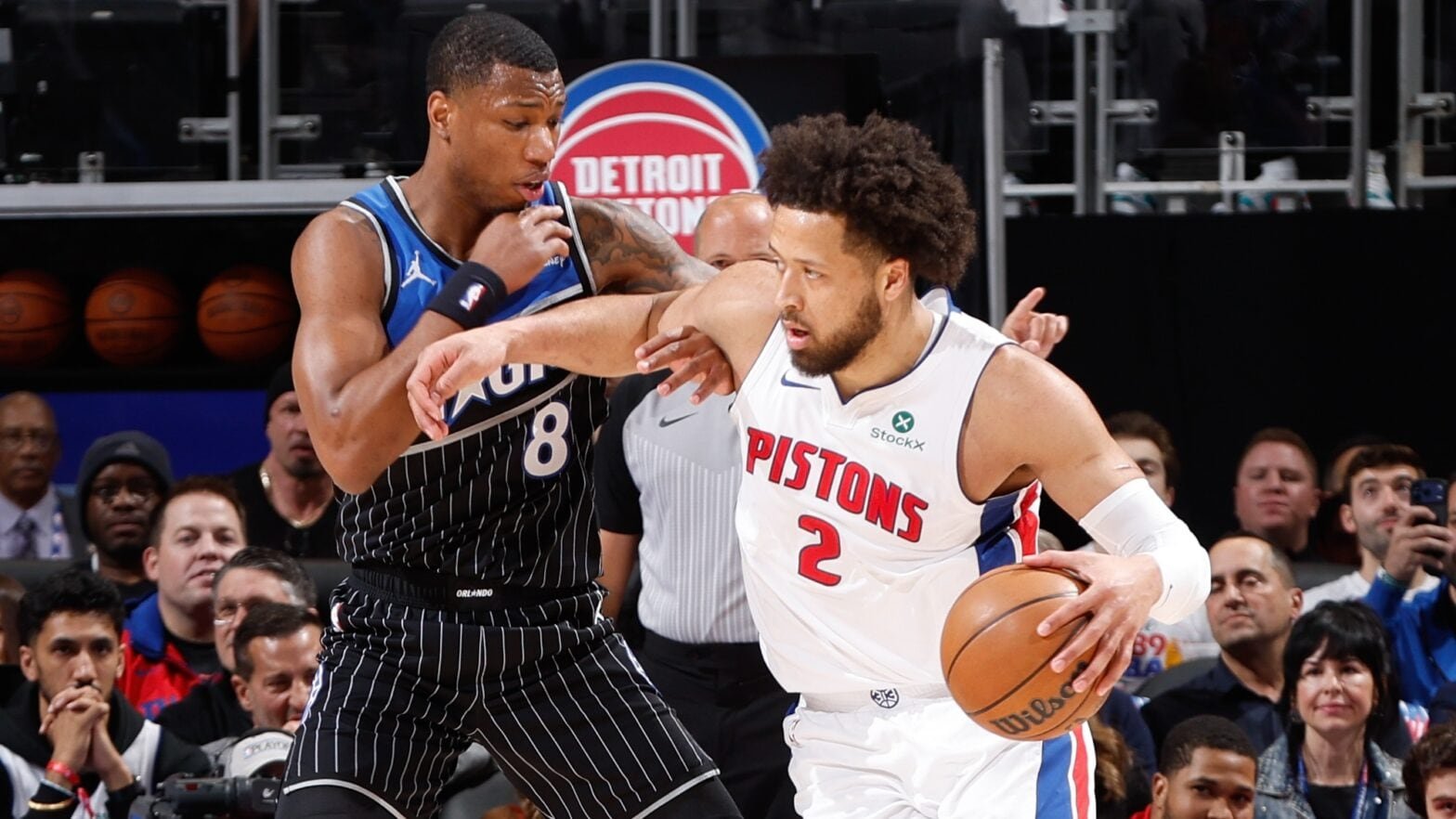
    Cade Cunningham and the Pistons are looking to stave off elimination against the Magic on Prime.

    Welcome to Wednesday night!

    Enjoy the best of the 2026 NBA Playoffs, presented by Google, with the NBA.com live blog, featuring all of the meaningful moments, performances, observations, news and highlights from tonight’s action.

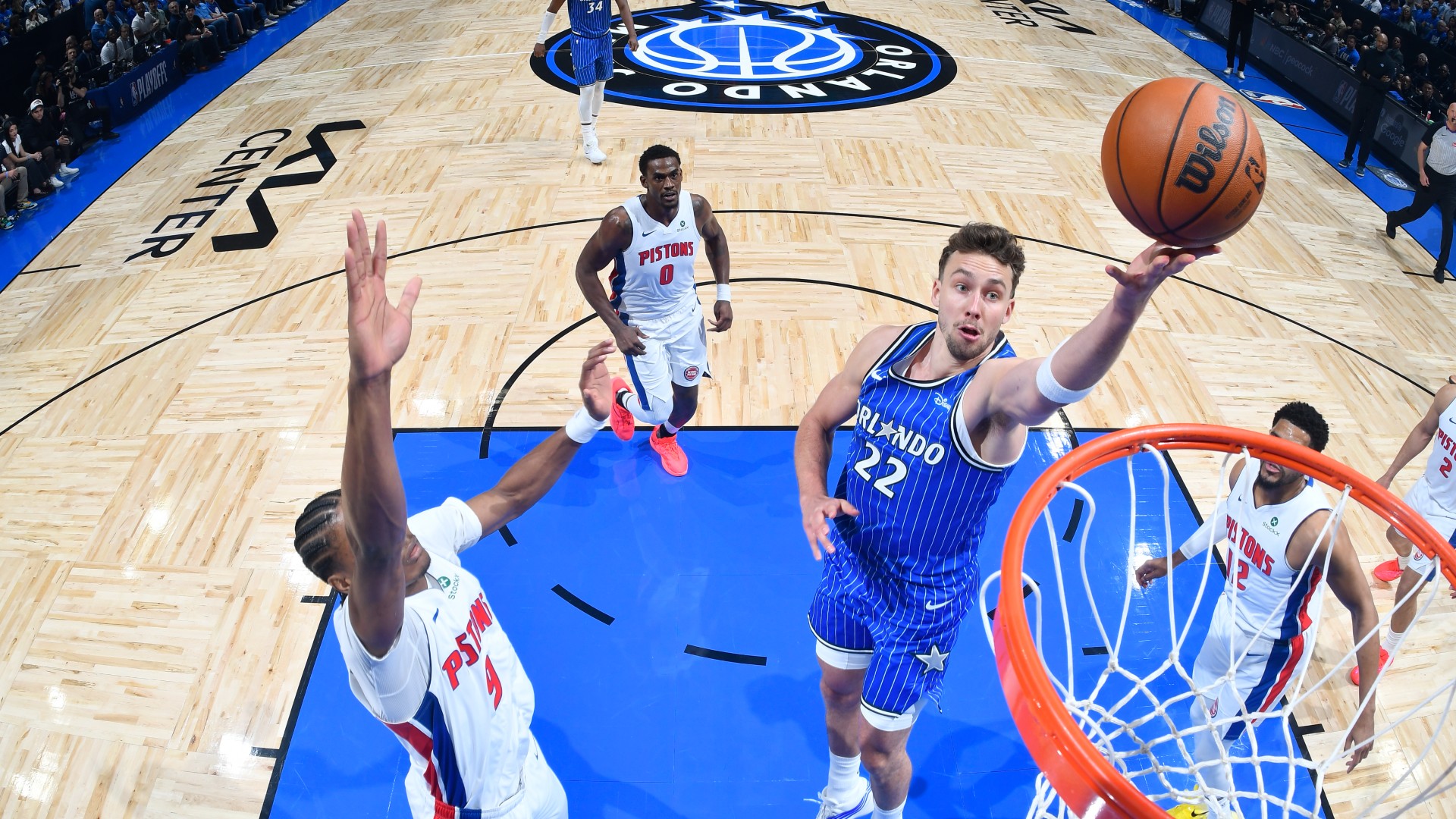
    Our slate tonight begins with Paolo Banchero’s Magic looking to become the seventh No. 8 seed to knock off a No. 1 seed by defeating Cade Cunningham’s Pistons (7 ET, Prime).

    That’ll be followed by a pivotal Game 5 in the Raptors-Cavaliers series (7:30 ET, ESPN) and LeBron James’ Lakers looking to advance to the second round by beating the Rockets (10 ET, ESPN).


    APRIL 29, 2026 / 8:08 ET

    Cavs on a 14-2 run

    Cutting the Raptors lead to 27-24 with 2:57 to go in the first quarter.

    Sandro Mamukelashvili (3 pts) just cooly hit a 3-pointer, validating our pick-to-click analysis, while James Harden (11 pts) is off to a hot start.


    APRIL 29, 2026 / 8:04 ET

    Feistiness in Magic-Pistons

    Desmond Bane and Ausar Thompson just got entangled, prompting the Pistons and Magic to go chest-to-chest.

    “This is the way Playoff basketball should be,” said Stan Van Gundy. “Especially when you get to Game 5… the first few games, you’re just playing basketball. Now, you’re tired of the other people.”

    50-41 Pistons with 5:37 to go in the half.


    APRIL 29, 2026 / 7:44 ET

    Donovan Mitchell and Scottie Barnes lead the Cavaliers and Raptors into a pivotal Game 5 tonight on ESPN.

    Toronto:

    • PG Scottie Barnes
      • The Raptors do-it-all wing shifts to the point tonight. He’s averaging 20.0 ppg and 6.3 apg in this series.
    • SG Ja’Kobe Walter
      • The Baylor alumni had seven rebounds and three steals in Game 3 as he entered the starting lineup.
    • SF Brandon Ingram
      • Ingram’s shooting just 33.9% from the field in this series.
    • PF RJ Barrett
      • The former No. 3 pick is shooting 47.6% from 3-point range in this series — a huge factor for the Raptors.
    • C Jakob Poetl
      • Poetl has to continue to hold up against the Cavs’ front line of Jarrett Allen and Evan Mobley.

    Cleveland:

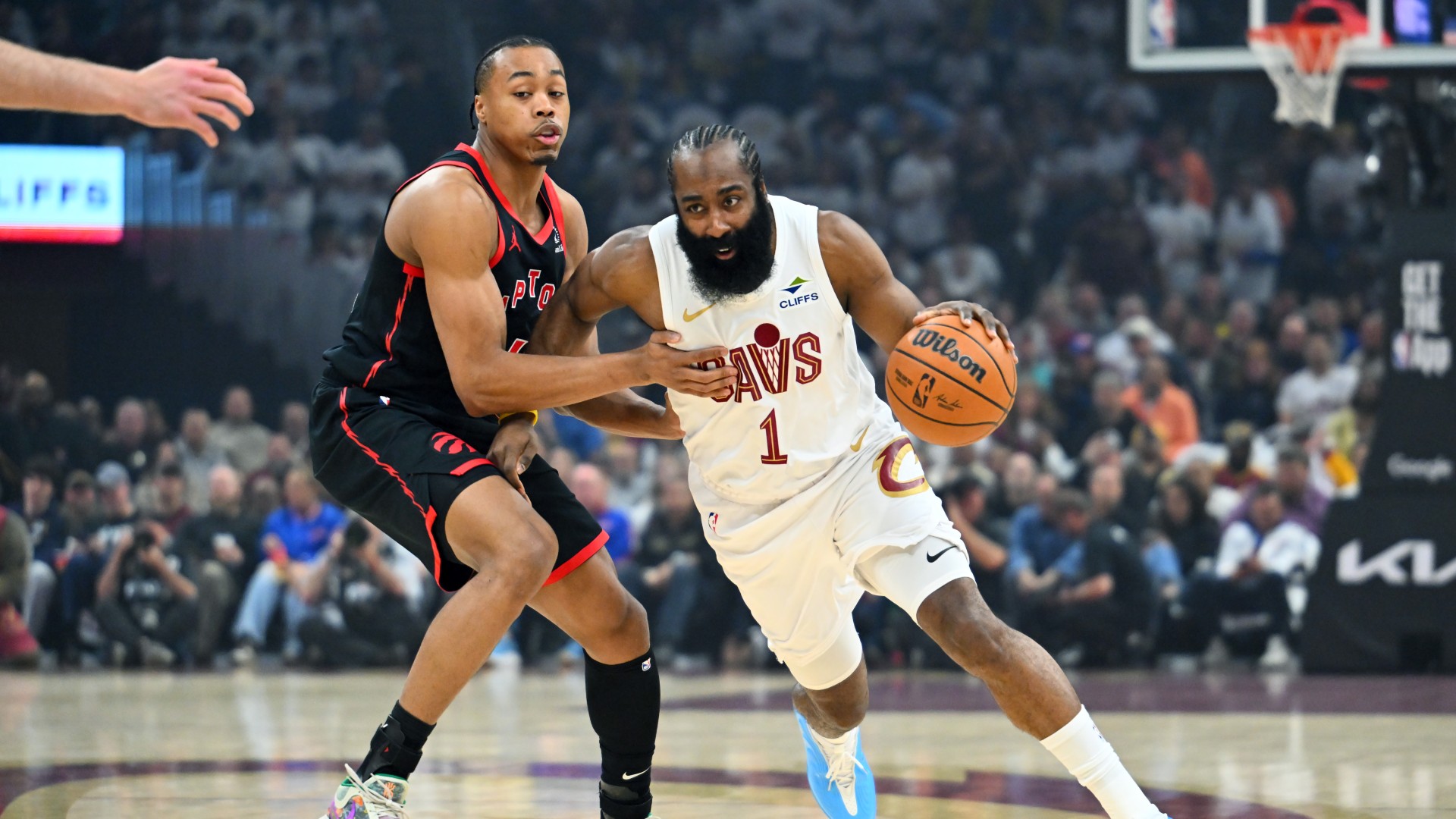
    • PG James Harden
      • Harden is playing in his 178th career Playoff game — one behind Michael Jordan for 20th all-time.
    • SG Donovan Mitchell
      • Spida’s averaged 17.5 ppg over the last two games, both Cavs’ losses, well below his season average of 27.9 ppg.
    • SF Max Strus
      • The sharpshooter shifts into the starting lineup for Game 5. He’s averaging 11.5 ppg on 43.5% 3-point shooting in the series.
    • PF Evan Mobley
      • Mobley’s defensive impact has limited Brandon Ingram in this series. His length and shiftiness are hard to find in someone his size. But he could step up his offensive impact — it’s always huge for Cleveland.
    • C Jarrett Allen
      • Allen is averaging 8.8 ppg in this series — he’ll need to find his chemistry with James Harden on the pick-and-roll to make things comfortable for Cleveland.

    Keep an eye on Sandro Mamukelashvili off the Raptors’ bench. The former Spurs big man has looked very comfortable dealing with the Playoff stage.


    APRIL 29, 2026 / 7:39 ET

    Detroit up 38-26 after one

    The Pistons have 12 second chance points so far.

    They’ve earned a 21-9 advantage on the boards, earning their largest lead of the game as the quarter expired.


    APRIL 29, 2026 / 7:31 ET

    Pistons extend lead

    32-20 Detroit with 2:57 to go in the first.

    Paolo Banchero (10 pts, 3 reb, 2 ast) leads all scorers, but the Pistons are shooting 63.2% from the field to counter him. Seven of their eight players have scored so far.


    APRIL 29, 2026 / 7:17 ET

    Pistons up early

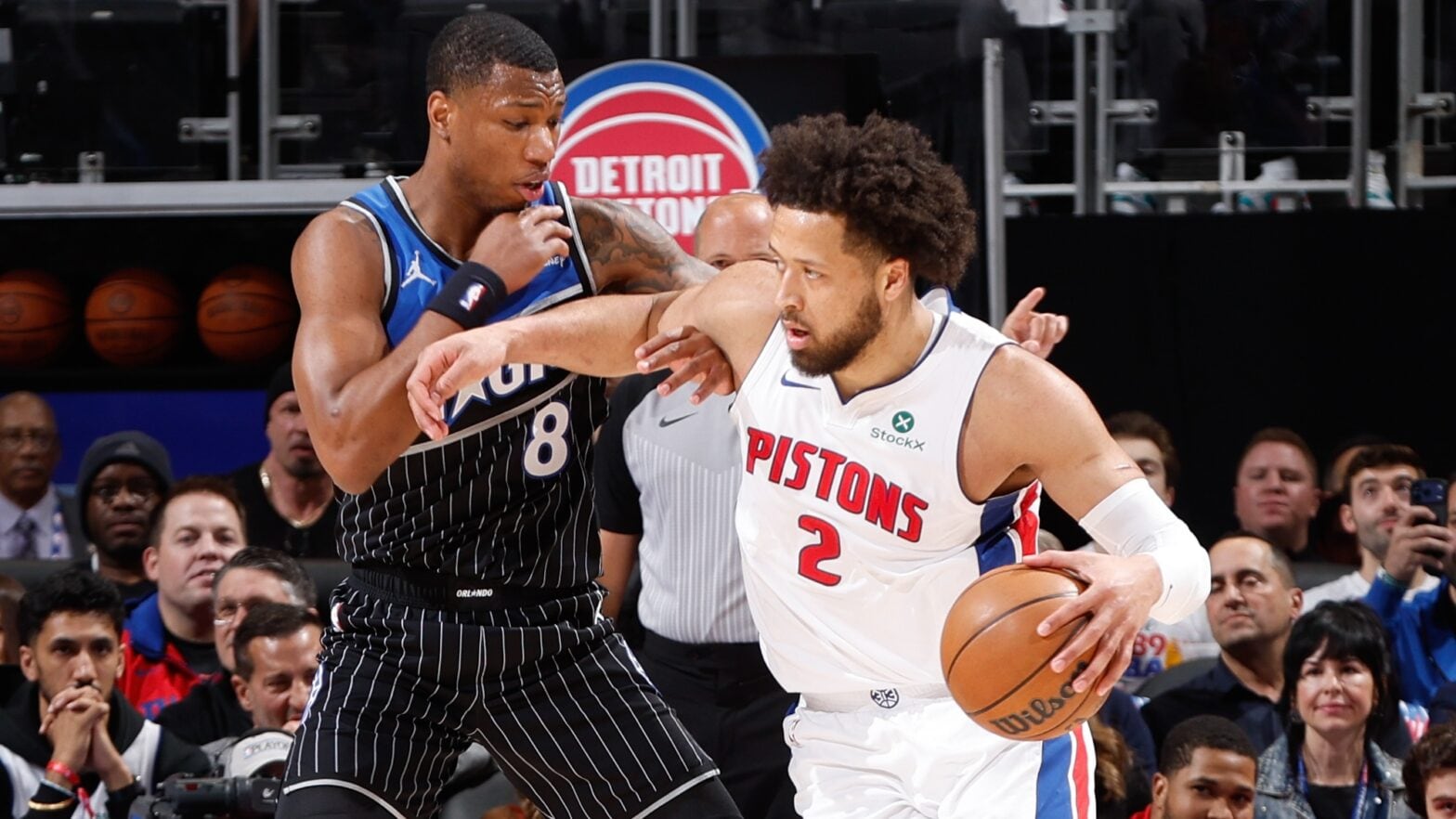
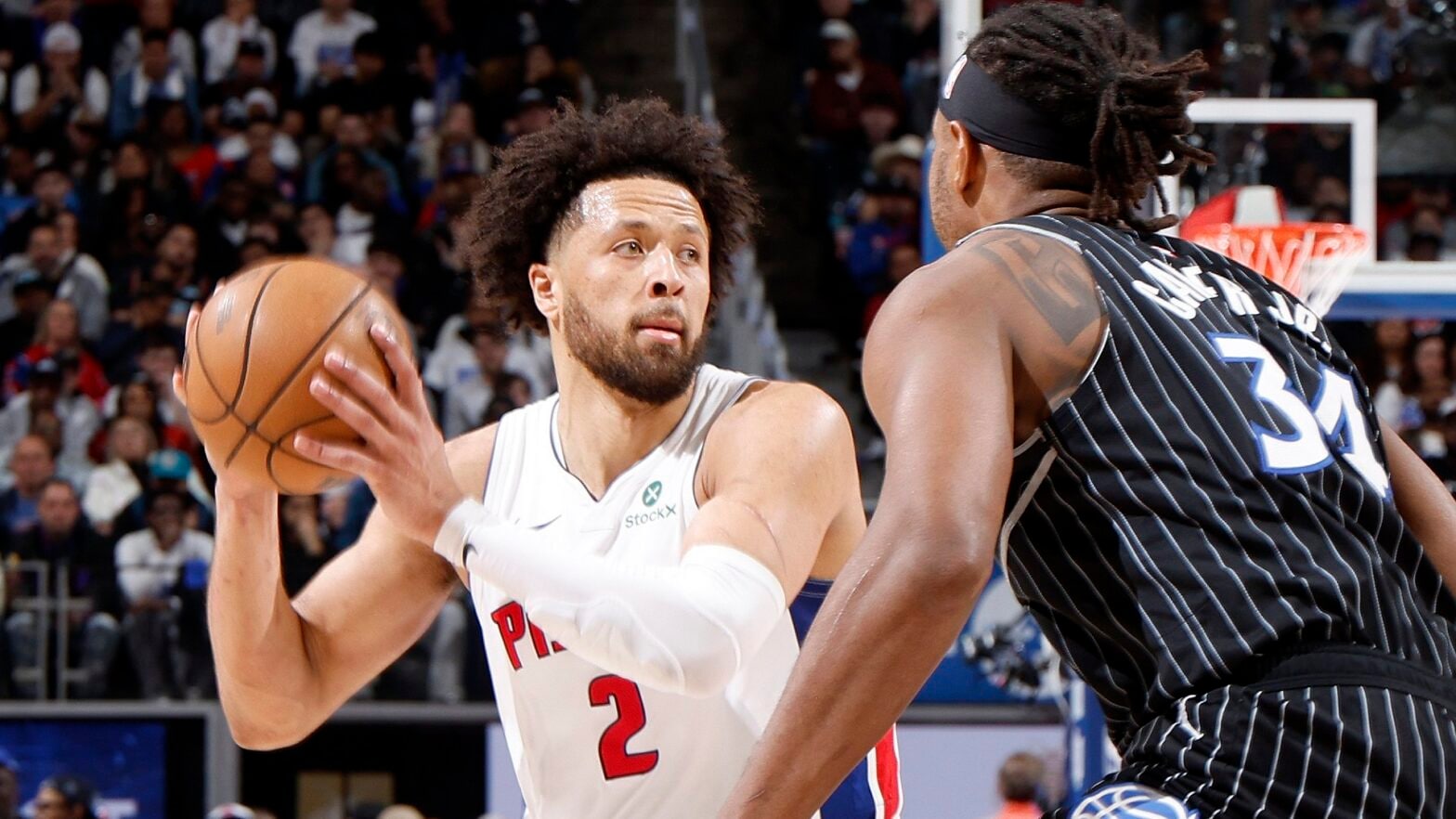
    Cade Cunningham (2 pts, 1 ast) was able to take Jamal Cain into the paint for a fadeaway jumper, taking advantage of an option that’s been difficult to access with Franz Wagner on the floor.

    Jaren Duren (7 pts, 3 reb) has continued his hot start, while Desmond Bane (7 pts) and Paolo Banchero (6 pts) are out of the gates fast for Orlando.

    18-13 Pistons with 6:05 to go in the first.


    APRIL 29, 2026 / 7:10 ET

    Duren starts the game on the attack

    Jalen Duren (2 pts) starts the game by posting up Wendell Carter Jr. on the block, spinning to draw the foul. The Pistons need him to be aggressive.

    Duren’s averaging 9.8 ppg in this series — down from his season average of 19.5 ppg.


    APRIL 29, 2026 / 6:30 ET

    Cade Cunningham and the Detroit Pistons look to keep their season alive against the Orlando Magic tonight on Prime.

    Orlando:

    • PG Jalen Suggs
      • The Magic floor general is an athletic, defensive pest, but his shooting comes-and-goes. 
    • SG Desmond Bane
      • Bane has been a terror from 3-point range throughout this series — his spacing is key for Orlando.
    • SF Jamal Cain
      • Cain’s huge slam was a game-changer in Game 4. He’s an athletic, prototypical wing — how will this stage suit him?
    • PF Paolo Banchero
      • Banchero is shooting just 37.3% from the field this series, but he remains a threat for the Pistons to counter.
    • C Wendell Carter Jr.
      • Watch the Magic center — he’s outplayed Jalen Duren throughout this series, swinging the momentum.

    Detroit:

    • PG Cade Cunningham
      • The Pistons’ leader is grinding his way to his stats, but needs help from his supporting cast.
    • SG Duncan Robinson
      • Robinson came up huge for the Miami Heat during past playoff runs. Can he summon that energy tonight for Detroit?
    • SF Ausar Thompson
      • Thompson’s two-way impact is meaningful, but his lack of burst scoring has hampered Detroit’s attack.
    • PF Tobias Harris
      • The former Magic has been a steadying for Orlando in this series, but hasn’t been able to punch above his weight.
    • C Jalen Duren
      • The first-time All-Star has a big game ahead of him tonight. Can he rally his squad?

    Watch Caris LeVert off the Pistons’ bench — Detroit could use a big game from a swing scorer in this defensive, physical series.


    APRIL 29, 2026 / 6:00 ET

    Wednesday’s injury report

    Jonathan Isaac and Franz Wagner are out for Orlando. Kevin Huerter is out for Detroit.

    Immanuel Quickley is out for the Raptors.

    Kevin Durant is out for the Rockets, as is Luka Dončić for the Lakers. Austin Reaves is questionable.

  • Magic forward Franz Wagner (calf) out against Pistons in Game 5

    Magic forward Franz Wagner (calf) out against Pistons in Game 5

    Franz Wagner had 19 points in two-plus quarters before he departed late in the third quarter of Game 4 with the injury.

    DETROIT (AP) — Orlando Magic forward Franz Wagner is out of the lineup with a strained right calf against the Detroit Pistons in Game 5 of their first-round playoff series on Wednesday night.

    “It changes things in a big way,” Magic coach Jamahl Mosley said.

    Wagner had 19 points in two-plus quarters before he departed late in the third quarter of Game 4 with the injury. Orlando went on to beat Detroit 94-88 on Monday night, putting the Eastern Conference’s top-seeded team on the brink of elimination.

    He averaged nearly 17 points and 5.5 rebounds over the first four games of the series. The former Michigan star, who is from Germany, was limited to 34 games during the regular season due to injuries and averaged 20.6 points per game.

    Wagner was replaced in Game 4 by Jamal Cain, who had a powerful dunk over Jalen Duren early in the fourth quarter and a one-handed tip-in dunk that put the Magic ahead with 4:55 remaining.

    “We have to make sure we’re at our best no matter who they put on the floor,” Pistons coach J.B. Bickerstaff said.

  • The Athletic: Caleb Wilson could make this a Big 4 at the top in latest Mock Draft

    The Athletic: Caleb Wilson could make this a Big 4 at the top in latest Mock Draft

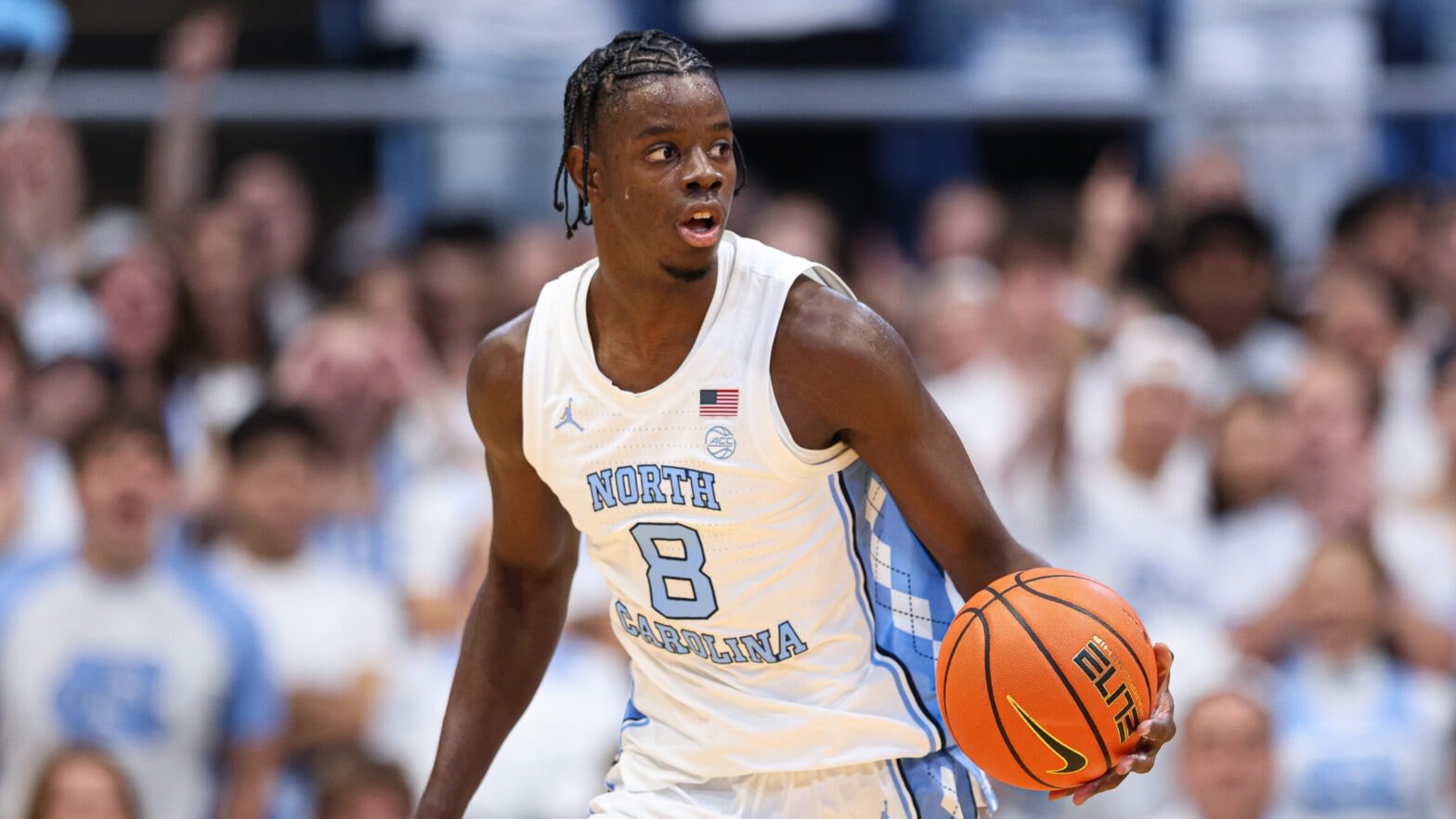
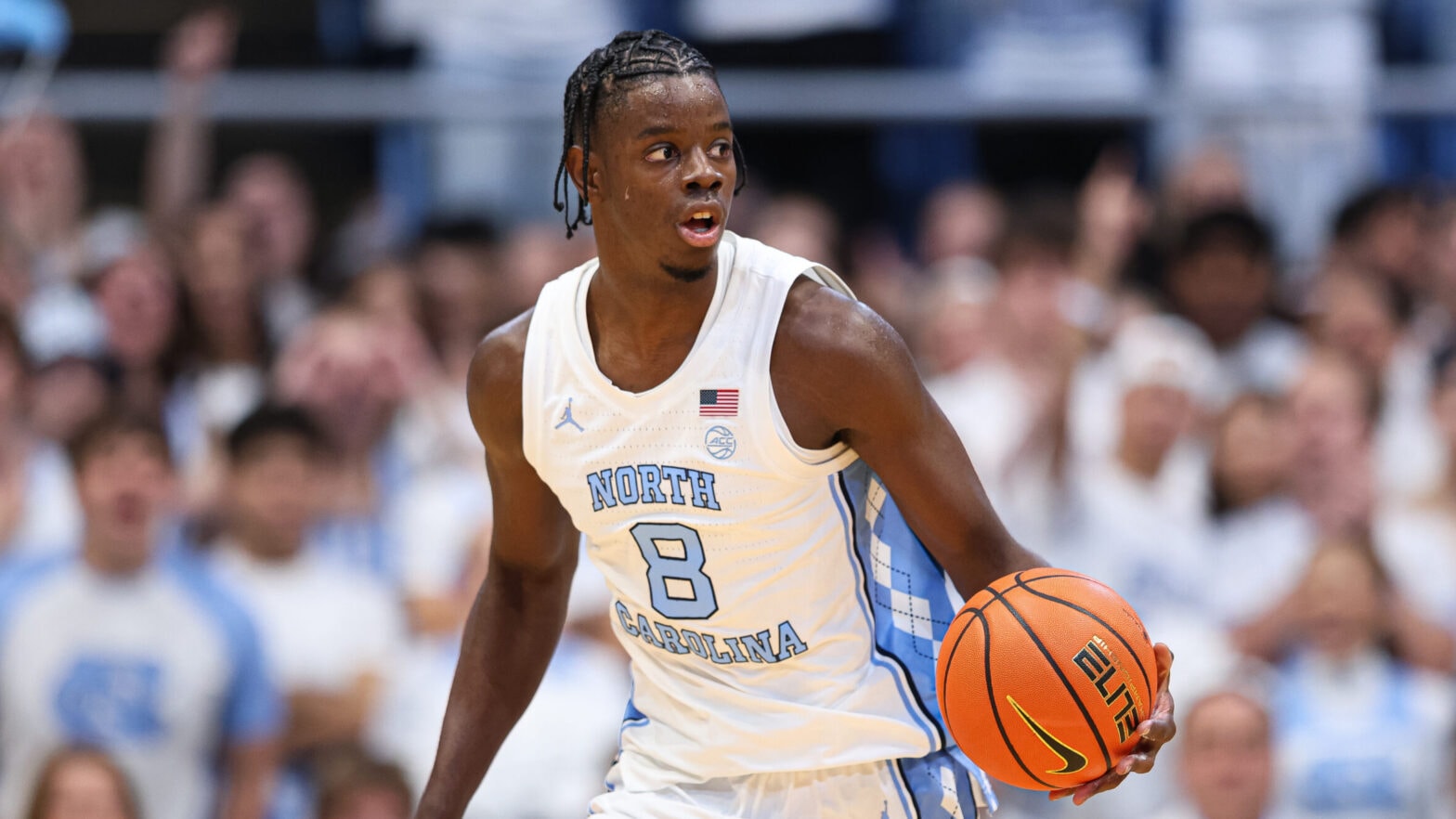
    Despite missing the last month of the college season with hand injuries, UNC’s Caleb Wilson is No. 4 in the latest Mock Draft.

    Editor’s Note: Read more NBA coverage from The Athletic here. The views on this page do not necessarily reflect the views of the NBA or its teams. 

    ***

    2026 NBA Draft: Complete coverage

    As NBA teams have made clear through their tanking measures, scouts are very excited about the top end of this class. With Kansas’ Darryn Peterson, BYU’s AJ Dybantsa, Duke’s Cameron Boozer and North Carolina’s Caleb Wilson, at least four teams are going to walk away from the lottery with serious levels of excitement.

    Scouts are also excited about the guard group from No. 5 to No. 10, including Louisville’s Mikel Brown Jr., Arkansas’ Darius Acuff Jr., Illinois’ Keaton Wagler, Arizona’s Brayden Burries and Houston’s Kingston Flemings. From there, the draft starts to get complicated. From No. 10 or so down through No. 25-ish, there is very little consensus among scouts.

    The biggest discussion surrounding the depth involves the name, image and likeness (NIL) marketplace and transfer portal. How many players will risk being a late-first or early second-round pick when they have potentially $4 million waiting for them if they return to school? We already have a partial answer on that, as only 71 players decided to declare for the draft as early entrants, the lowest number in years. The reality is that many players decided to lock in their money now and stay in school, knowing that colleges might not keep their roster spot available through May. Now the question shifts to here: How many NBA teams will give first-round promises to prospects and their agents? Typically, promises are difficult to receive. But will more teams in the 30s look to try to promise surprising players to try to keep them in the class?

    Strategic draft considerations on both the player and team side are shifting under our feet. The finances in college have become so great that draft decisions are no longer as automatic as, “If you’re projected as a first-round pick, you should leave.” We’re set for what will be a wild game of chicken when it comes to prospects over the next month.

    A few other notes:

    • Every time I do one of these, I get asked where certain players are. If a freshman isn’t in the consensus top 35 based on the feedback I get from teams, I did not place them here. It would be a poor decision for such prospects to leave, given the three years of earning potential in college they would be passing up for an uncertain fate. Additionally, I’m going a bit off feel and intel that I’ve gathered at this point as to whether or not players are staying in the draft. The players I have not included here who have declared for the draft early include Tyler Tanner, Flory Bidunga, Billy Richmond III and Rueben Chinyelu, among others. My guess is that players like this will simply have better options available to them financially by returning to college in today’s ecosystem. If they decide to stay in the draft past the early-entry withdrawal date, I will mock them at that point.

    • Ages are as of draft night in 2026 (June 23).

    • Heights for college freshmen are what their schools list.

    • Draft order is based on standings at the end of the regular season, while also doing a spin of the lottery wheel provided by the good folks over at Tankathon. I did one spin, and this was the order it spat out.

    • Scouts were granted anonymity in exchange for speaking freely about prospects.


    FIRST ROUND

    1. Utah Jazz
    AJ Dybantsa | 6-9 wing | 19 years old | BYU

    Dybantsa is the name I get most at No. 1. He’s a dynamic, explosive scorer whose three-level scoring ability at 6 feet 9 shone brightly this season. Dybantsa averaged 25.5 points, 6.8 rebounds and 3.7 assists while shooting 51 percent from the field, 33.1 percent on 3-pointers and 77.4 percent from the free-throw line while getting there 8.5 times per game. He and Michael Beasley are the only two freshmen in college basketball history — stretching back to 1953-54, per Basketball-Reference — to average 25 points, shoot 50 percent from the field and take at least eight free-throw attempts per game.

    He plays with serious bend mixed with explosiveness, allowing him to consistently get into the teeth of the defense as a straight-line driver. In transition, he’s a menace. His midrange game has become a serious weapon. He’s also not a finished product. It’s clear where the improvement areas are for him. His jumper will get better as he ages. He improved drastically as a passer this season but has even more room for growth there when he plays next to more talented NBA players. And defensively, Dybantsa is not nearly as impactful as his measurements suggest he could become.

    Dybantsa is seen as having extremely high upside with a tremendously high floor. He’s a safer pick than Peterson. His offensive game is more well-rounded than Wilson’s. And scouts believe his athletic upside gives him a stronger chance to be a No. 1 option than Boozer.


    2. Washington Wizards
    Darryn Peterson | 6-5 guard | 19 years old | Kansas

    Peterson’s strange collegiate journey complicated his evaluation. He did play at least 28 minutes in each of his last nine games, and scouts aren’t all that worried about why he was only playing halves of games. Scouts connected with Kansas were always much less concerned about that than the media, as Peterson was dealing with legitimate injuries. NBA teams will also see Peterson’s medical testing at the draft combine, which should provide more answers.

    Peterson’s talent as a shot-making scorer is undeniable. He averaged 20.2 points while shooting 43.8 percent from the field, 38.2 percent from 3 and 82.6 percent from the line. He drilled an incredible number of difficult pull-up jumpers from all levels. However, his ability to get to the rim has come into question, as scouts wonder if life will be more difficult for him creating easy shots at the next level. Part of these issues at Kansas could have simply been because of his injuries; he looked less explosive than he was in high school. Another part could have been the Jayhawks’ lack of spacing. It was not dissimilar to what Anthony Edwards looked like at Georgia.


    3. Atlanta Hawks (via NOP)
    Cameron Boozer | 6-9 forward | 18 years old | Duke

    The Hawks move up in my lottery spin for this pick, acquired from the New Orleans Pelicans in last year’s draft-night trade.

    Boozer is the safest bet in the class to become a highly productive player. The consensus around the NBA that the son of Carlos Boozer will follow in his father’s footsteps as an All-Star. The consensus falls apart over whether he profiles as a No. 1 option.

    Boozer’s games in both the ACC and NCAA tournaments raised questions for scouts about building their team around him. In Duke’s seven postseason games, Boozer shot just 44 percent from the field and 32 percent from 3. He was remarkably productive, but his below-the-rim finishing ability was messy against players with legitimate NBA interior size such as Virginia’s Ugonna Onyenso.

    If Boozer were as tall as Nikola Jokić, this evaluation would be much easier. Jokić entered the league around 6-11 in shoes with a 7-3 wingspan; Boozer is expected to measure more in the 6-9 range with a 7-foot wingspan. He’s more the size of Kevin Love than Jokić, whose height and length allow him to use his special touch to get shots off from wild angles. Can Boozer consistently separate and draw help defenders in the NBA the same way he did in high school and college?

    Still, he averaged 22.5 points, 10 rebounds and four assists on his way to the national player of the year award, largely because of the myriad ways Duke proved that you can use him.


    4. Memphis Grizzlies
    Caleb Wilson | 6-10 wing | 19 years old | North Carolina

    Wilson missed the final month of the season with a broken right thumb and a broken left hand. Before that, he averaged 19.8 points, 9.4 rebounds, 2.7 assists, 1.5 steals and 1.4 blocks and was good in just about every game he played.

    It’s all about power and explosiveness for Wilson. He plays with terrific bend and balance as a driver. Combine that with his strength and leaping ability, and you get a special player who can dominate at the rim. The further into the cycle we get, the more I hear from scouts who see Wilson in the same group as Peterson, Dybantsa and Boozer, with some even ranking him as a top-three player in the class. It didn’t hurt Wilson’s case that he outperformed all three of those players when North Carolina played them this season (in Dybantsa’s case, in the preseason, but still).

    Wilson’s flaws are easier to scout than the others’, though. He doesn’t take many 3s (he was just 7-of-27 shooting on the season), although his mechanics looked good from the extended midrange area. Defensively, the block and steal numbers are strong, but he’s not as twitchy on the ball as you’d expect for an athlete of his caliber; plus, he’s messy off the ball with his rotations and with how quickly he reacts. Most of his assists come on pre-ordained reads within structure, rather than when he’s on the move and reacting. But the reality is that few players consistently play with his type of motor and aggressiveness. He has many similarities to Pascal Siakam, who has made multiple All-NBA teams.


    5. LA Clippers (via IND)
    Keaton Wagler | 6-6 wing | 19 years old | Illinois

    The Clippers received this pick from the Indiana Pacers in my spin after a creatively structured pick protection in the Ivica Zubac trade. LA gets this pick if it falls from No. 5 to No. 9.

    If the Clippers end up here, they would be in a tricky spot. Most of the players projected in this range are lead guards such as Acuff, Flemings, Wagler and Brown. However, the team already has its long-term lead guard signed to a large contract in Darius Garland.

    Wagler is probably the best fit with his size and ability to shoot off the catch. He is unequivocally this year’s biggest draft riser and maybe the biggest draft riser in the one-and-done era after leading Illinois to the Final Four.

    Wagler is not very quick-twitch with his first step, and he has very little vertical explosiveness. He’s also not all that strong. But he uses the threat of his pull-up jump shot better than any player in the class and plays with an incredibly rhythmic, well-paced tempo that makes it hard for opponents to stay in front of him.


    6. Brooklyn Nets
    Darius Acuff Jr. | 6-2 guard | 19 years old | Arkansas

    Acuff earned first-team All-America status by dominating games down the stretch. Over his final 13 games, he averaged an absurd 28 points per game and 6.7 assists while getting to the line 7.5 times per game. He was efficient and sharp, shooting 48 percent from the field and over 40 percent from 3.

    Acuff might be the most polished freshman guard prospect I’ve ever evaluated. His footwork and balance are pristine, and he tends to make efficient decisions. He plays off two feet and moves well without the ball to set up his on-ball moves. His passes are always crisp and on-target, even if his vision isn’t always elite.

    But can he consistently get paint touches against NBA length, and can he guard anybody? In terms of the former, he’s done just about everything in his power to make me a believer that he can separate, thanks to the threat of his shot and elite pace. But the latter is another story. Even though Acuff is stocky and strong, he’s easily the worst defender among the top 10 prospects. He struggles to get through screens and shows a lack of off-ball engagement too regularly.


    7. Sacramento Kings
    Kingston Flemings | 6-4 guard | 19 years old | Houston

    Flemings is a wildly explosive and powerful lead guard, using a lightning-quick first step to get by defenders with ease. Despite playing in an offense in which he had precious little space around him, he averaged 16.1 points and 5.2 assists while shooting 47.6 percent from the field and 38.7 percent from 3. You can see his burst every time he touches the court. He’s also an excellent decision-maker who improved defensively throughout the season.

    The main concerns revolve around his jumper consistency and the way that he scores. Flemings’ percentages dropped in Big 12 play. In his final 14 games, he shot just 41.3 percent from the field and got to the line only three times per game. Scouts wonder if he can consistently get to the rim. Houston’s rim pressure this season was among the worst in the country, and Flemings only averaged 51.2 percent at the rim in half-court settings, per Synergy. Was that a function of Flemings settling, or is it a flaw in his game? Flemings needs to improve his footwork on his gathers around the rim, but scouts should still be excited about how his speed and decision-making will translate to the next level, where he will get the kind of pace and space that will transform his game.


    8. Dallas Mavericks
    Brayden Burries | 6-4 guard | 20 years old | Arizona

    Burries was the leading scorer on one of the top three teams in the country, despite a slow start that saw him average just 7.8 points in his first five games. From that point, he averaged 17.3 points while shooting 51 percent from the field, 41 percent from 3 and 81 percent from the foul line in his final 34 games. He’s also an aggressive rebounder who grabbed 5.5 boards per game in that time, while averaging 2.4 assists as a solid ball mover who didn’t take many bad shots.

    The question is about separating from his man consistently, as he’s more of a power guard who uses the threat of his shot to keep defenders off-balance. Burries turned into a really good defender by the end of the year and averaged 1.5 steals. If Dallas plans to kickstart its rebuild around Cooper Flagg with Kyrie Irving as the point guard, Burries would be a great fit between them.


    9. Milwaukee Bucks
    Mikel Brown Jr. | 6-4 guard | 20 years old | Louisville

    Brown’s best flashes were those of a top-five pick. He dropped 45 points with 10 made 3s in a game against NC State, then followed it up with 29 points, six assists and three rebounds against Baylor and 29 points, five rebounds and four assists against SMU. When Brown had it rolling, there was not a more dynamic ball-screen playmaker in college basketball. He has range out to 30 feet, and his vision as a playmaker for others exceeds everyone in the class when playing in a screen. If anyone in this deep draft class could average nine or 10 assists per game in the NBA, it’s Brown.

    So why does he slip to No. 9? Some negative aspects of his game resemble the issues LaMelo Ball has, while he’s not quite as dynamic as Ball is in his best moments. First and foremost, Brown is extremely wild. The turnovers are an issue. He hasn’t figured out how to moderate his decision-making. Second, his defense is a work in progress. He’s a serious negative in switch situations against stronger players, and his off-ball instincts are hit or miss. Brown’s back injury recurred later in the season, too, causing him to miss the postseason. He got very little time off from the end of his high school season to the start of his college season, going from the all-star circuit directly into the under-19 World Cup and then into Louisville’s preseason. Scouts want to know if Brown’s back is merely a short-term issue from overuse or if it could be a long-term problem.


    10. Chicago Bulls
    Aday Mara | 7-3 big | 21 years old | Michigan

    Mara, by far, helped himself the most in the NCAA Tournament. I had a vote for Final Four Most Outstanding Player and chose Mara because of how he dominated the semifinal against Arizona (going off for 26 points, nine rebounds, three assists and two blocks) and how he completely changed the geometry defensively against Connecticut with his ability to guard Tarris Reed Jr. on an island while also shutting down the interior for drivers.

    Three years into his college career, Aday Mara has rediscovered his joy — and emerged as one of the nation’s best defenders.
    Mara combines two skills NBA teams seek in their centers: the ability to shut down the paint and the ability to read the court out high as a passer. Opponents shot 54.5 percent at the rim this season when Mara was on the court compared to better than 60 percent when he was off it, per CBB Analytics. Opposing teams also shot just 36 percent on 2-pointers from the paint when Mara was on the court. On offense, Mara is terrific at using his height and feel for the game to dissect what is happening and make the right passing reads, be it a simple handoff or a more complex reaction to find a cutter at the rim. He dished out 2.4 assists per game and shot 66.8 percent from the field. Mara’s hands can be an issue with bobbles and turnovers, and his lateral foot speed is concerning. But the Bulls desperately need a defensive anchor.


    11. Golden State Warriors
    Yaxel Lendeborg | 6-9 big | 23 years old | Michigan

    Even though Lendeborg gutted through an ankle injury in the Final Four, he led Michigan to a title and transformed his game. His counting numbers were down from his heights at UAB, but he averaged 15.1 points, 6.8 rebounds and 3.2 assists while playing aggressive defense. He showcased serious switchability, often picking up lead ballhandlers at the point of attack as well as playing against power forwards when Mara or Morez Johnson Jr. would leave the court. He’s also an active help defender with excellent hands.

    He drilled 37.4 percent of his 3s for the season, thanks to a hot streak at the end of the year in which he made 48.1 percent over his final 16 games — and that includes a 0-of-5 mark when he was clearly hobbled against UConn in the title game. The Warriors could use another big wing next to Stephen Curry and Draymond Green as they near the end of their careers.


    12. Oklahoma City Thunder (via LAC)
    Nate Ament | 6-10 wing/forward | 19 years old | Tennessee

    Ament’s season was a true roller coaster, and his draft stock is a bit funky as a result. He averaged 14.7 points, 6.5 rebounds and 2.6 assists per game in his first 15 games but was only shooting 40 percent from the field and 27 percent from 3. Those numbers were also buoyed by big games against bad teams, like his 23 points against Northern Kentucky, his 19 against Rice and North Florida and his 20 against Rutgers. Then, over 12 games before he sprained an ankle in Tennessee’s game against Alabama, few players were better in high-major conference play. He averaged 22 points, 6.8 rebounds and 2.5 assists while shooting 44 percent from the field, 38 percent from 3 and 84 percent from the line while getting there a ridiculous nine times per game in that run. But when he returned for postseason play, he clearly wasn’t 100 percent. He averaged just 13.3 points while shooting 31.3 percent from the field, including 28.6 percent from inside the arc as he had zero lift.

    Still, that issue with his scoring inside the arc showcases problems with his game. He’s still quite skinny, and scouts aren’t sure how his frame will fill out. He added a lot of good weight in the offseason leading into his freshman year, which allowed him to at least deal with the rigors of college basketball. However, he doesn’t have a ton of athletic explosiveness. His finishing at the rim has been concerning when he doesn’t get fouled, as he made a ridiculously low 42 percent of his shots at the rim at 6-10, per Synergy.

    The 6-foot-10 sharpshooter struggled early in his freshman season but has recently shown what all the preseason top-5 buzz was about. Teams that I’ve spoken with are divided on Ament. Some scouts see him as an option in the top eight, while others see him outside the top 20 because of his lack of strength and explosiveness.


    13. Miami Heat
    Labaron Philon Jr. | 6-3 guard | 20 years old | Alabama

    Philon returned to school at the last minute last May, and he took advantage of his extra year. He stepped into Alabama’s lead guard role and averaged 22 points, 3.5 rebounds and five assists per game while shooting 50 percent from the field, 39 percent from 3 and 80 percent from the foul line. Though his defense took a step back from last season, when he was terrific while playing next to Mark Sears and only sharing the on-ball responsibilities, he was one of the best offensive players in the country.

    So why is he not higher? First, this class is loaded with truly elite point guards like Brown, Acuff and Wagler. Second, teams worry about his frame and that he seemingly has not put on much mass this year after returning to school. Third, Alabama’s scheme is clearly favorable to him and gives him the space and time he desires to operate, both in half-court and transition settings.


    14. Charlotte Hornets
    Hannes Steinbach | 6-11 big | 20 years old | Washington

    Steinbach is the next center on the board whom scouts feel strongest about. The best rebounder in the draft, Steinbach has massive hands that he uses to his utmost potential both in ball screens and on the glass. He averaged 11.8 rebounds per game this year, including a monstrous 4.2 offensive rebounds per game that would fit incredibly well with what the Hornets are building scheme-wise under Charles Lee, as they care immensely about the possession battle. Steinbach also moves very fluidly and has huge, broad shoulders that he uses well in screens and also has strong timing as a roller.

    He averaged 18.5 points this year for Washington, a team that had horrendous point guard play and even less spacing around him, as they shot just 31.5 percent from 3. And yet still, Steinbach shot 62 percent from 2-point range and 58 percent from the field. He also showcases potential as a shooter, having made 34 percent of his two 3-point attempts per game. Defensively, Steinbach doesn’t move well laterally in space, and I didn’t think he was an overly impactful rim protector. His range seems to be in the N0. 10 to No. 20 part of the draft.


    15. Chicago Bulls (via POR)
    Cameron Carr | 6-6 guard | 21 years old | Baylor

    Carr had a nuclear hot start to the season and then largely settled in as one of the best high-major scorers in the country. He averaged 18.9 points per game while shooting 49.4 percent from the field, 37.4 percent from 3 and 80.1 percent from the foul line. Carr is a terrific shooter with great straight-line slashing instincts, using his long strides and length to cover ground quickly before getting to the rim.

    It’s very difficult to find players who are in the ballpark of 6-6 with incredibly long arms like Carr’s who can shoot. His lack of physicality and his high waist show up defensively, as he still doesn’t impact the game unless he’s rotating across for a weakside contest. Carr needs to keep putting on weight and getting stronger and also has to work on playing with more bend and accessing leverage better.


    16. Memphis Grizzlies (via PHX)
    Koa Peat | 6-8 wing | 19 years old | Arizona

    Peat prompts a wide range of opinions from NBA scouts. On the plus side, he has won everywhere he’s been and is one of the most decorated players in his age group. He won state titles and four gold medals with Team USA in youth events, then helped carry Arizona to a Final Four. He averaged 14.1 points while shooting 53 percent from the field and is a tough, physical rebounder. He passes well and makes excellent decisions to keep his team in the flow of the offense, be it in short rolls out of ball screens or on the wing. If you need him to score, he can do that as we saw in the NCAA Tournament, where he averaged 17.2 points and 7.6 rebounds while shooting 48.5 percent from the field and taking a bigger offensive load. Or, he can slide into a role as a tough, physical defender who takes on different matchups and then makes quick reads.

    Yet, the flaws jump off the page. He’s not really a shooter, as he’s only taken 20 3-point attempts and made seven of them while hitting just 62.3 percent of his attempts at the foul line — basically in line with his averages at lower levels. Defensively, he’s not overly fast, and there are possessions when you see him get beaten laterally by quicker players, although I did think he was a good defender by the end of the season. Ultimately, it’s going to take a team that really values his winning attributes, which the Grizzlies would as they look to build out their core around Cedric Coward, Zach Edey and others.


    17. Oklahoma City Thunder (via PHI)
    Morez Johnson Jr. | 6-9 big | 20 years old | Michigan

    Johnson was one of my favorite players in college basketball. He was one of the most efficient players in the country, averaging 13.1 points per game while shooting 62.3 percent from the field. He got to the foul line four times per game and made 78 percent of those. He’s a tough rebounder who is physical on the interior and crashes with his long arms. But I love Johnson the most on defense; he was the best all-around defender on one of the three best defenses in the nation, and that included Lendeborg and Mara. He’s tremendous as a post defender, flying around in help and showcasing switchability on the perimeter.

    But Johnson is undersized for his role despite his strength and doesn’t have a ton of offensive versatility. Essentially, he’s a play finisher around the interior. That skill set is reminiscent of Isaiah Stewart, and Stewart has turned into a very valuable player for the Pistons. Oklahoma City has been linked to Stewart before, and even though the Thunder took Thomas Sorber last season, they’re loaded everywhere and can afford to take another big. Teams across the league look at Oklahoma City, as well, as a team primed to likely try to combine its picks to move up or to try to move one of these picks to move out of the draft.


    18. Charlotte Hornets (via PHX)
    Christian Anderson Jr. | 6-2 guard | 20 years old | Texas Tech

    If you made me choose the best shooter in this class, it would be Anderson. He hit 41.5 percent of his eight 3-point attempts per game and is an absurd shot maker at the point guard position. He can make them going to his right or to his left, hits them off the catch after movement or off pull-ups by creating space. He’s also a terrific passer out of ball screens, averaging 7.4 assists per game.

    The two big questions are simple. First, can Anderson generate consistent paint touches and get to the rim? It was hit or miss in that respect, particularly in Big 12 play. He averaged just five attempts per game inside of 2-point range because of his lack of size and strength. That size question is also an issue on defense, where Anderson is a willing worker and fights for position but isn’t strong enough yet to hold up at the point of attack through his core and lower half. Even with the in-season acquisition of Coby White, the Hornets could use a bit more cover at the backup at the lead guard spot behind LaMelo Ball.


    19. Toronto Raptors
    Chris Cenac Jr. | 6-10 big | 19 years old | Houston

    Cenac is another polarizing prospect. Some view him as a potential lottery pick, while others think he should do another year at Houston. One of the most highly touted prospects in the 2025 recruiting class, Cenac is a flexible athlete who moves well on the perimeter and has a burgeoning offensive game on the outside to match. He played a lot of minutes at power forward for Houston, often sitting in the corners or cutting baseline to space the court. He’s become an awesome rebounder, averaging eight per game in 25 minutes per night.

    Cenac took under 1.5 attempts per game at the rim in half-court settings this year, a paltry number. He was extremely perimeter-oriented and settled far too often. He took 141 jump shots versus 47 attempts at the rim. You can certainly blame Houston’s scheme some, but he also struggled to get into those areas because of his lack of force and vertical pop. His defensive efforts were also mixed. He had positive moments with his mobility and weakside rotational ability to cover ground, but he also had several moments when he was slow to react and didn’t make the right rotations. I really like the idea of him paired with Collin Murray-Boyles long-term in the frontcourt, along with all of Toronto’s length and athleticism around him.


    20. San Antonio Spurs (via ATL)
    Karim Lopez | 6-8 wing | 19 years old | New Zealand Breakers

    Lopez’s numbers look in line with past lottery picks coming out of Australia’s NBL Next Stars program, as he’s averaging 12 points, six rebounds, two assists, a steal and a block per game. He has excellent hands, is very skilled with the ball and often operates as essentially a mismatch hybrid forward for the Breakers. He’s a physical bowling ball who can play in screens and short rolls. He can attack in a straight line from the perimeter, and he is a solid finisher.

    The 3-point shooting has been up and down in his two years in New Zealand (32 percent), but he looks to have good touch and should work through any concerns there. The bigger questions come on defense, as his lateral speed isn’t particularly good. He doesn’t have much shake on the ball offensively; on defense, his hips don’t flip quickly enough, and he can be beaten by faster guards. If he improves in those two areas as he ages, he’ll be an excellent rotation player.


    21. Detroit Pistons (via MIN)
    Dailyn Swain | 6-8 wing | 20 years old | Texas

    How about this for the Pistons, moving up from pick No. 28 to No. 21 in the Jaden Ivey deal, the best possible selection they could have received in what was a top-20 protected pick swap for a player whom the Bulls waived? The difference in value from No. 28 to No. 21 is pretty close to a late first-round pick in value, especially in this class and in the NIL era.

    Swain helped himself a lot by following his former Xavier coach, Sean Miller, to Texas. The slashing wing moved into more of a primary role and thrived, averaging 17.3 points, 7.5 rebounds and 3.6 assists per game while shooting 54.2 percent from the field and driving his way into more than five free-throw attempts per game. His style is very reminiscent of another former Xavier wing, Naji Marshall, as he is an aggressive downhill player who should have zero issue pressuring the rim, even in the NBA, but who also needs to improve as a shooter to maximize that ability. Swain also has far better overall explosiveness, and his body mechanics allow him to get into tighter areas of the court with ease.

    Swain’s shot is elongated with a slow release, meaning that opposing players can close out on him with little issue and force contested shots. While he clearly has touch and has made 80 percent of his free throws in his career, he hasn’t made shots consistently. While Swain is a ballhawk on defense who averaged 1.5 steals for his career, he’s a riverboat gambler who often misses help rotations, and he’s often a negative on the defensive end.


    22. Atlanta Hawks (via CLE)
    Ebuka Okorie | 6-2 guard | 19 years old | Stanford

    The Hawks moved Trae Young at the trade deadline, so let’s get them a potential replacement who ticks several boxes for them. This one might make me look silly in a month, as Okorie is clearly just testing his draft stock and might end up as a 2027 draft pick. Still, I’m a buyer on Okorie’s ability with the ball in his hands. He’s constantly in attack mode, averaging 23.2 points per game as a freshman while shooting solid clips of 46.5 percent from the field, 35.4 percent from 3 and 83.2 percent from the line. He’s lightning quick, with the ability to zoom in and out of tight windows in the paint. He drives an immense amount of shots at the rim thanks to that ability to slink through the little cracks in the defense.

    So why isn’t he higher? Well, he only made 52 percent of those shots at the rim in half-court settings, per Synergy, meaning he wasn’t wildly effective when he got there. He also averaged 7.3 free-throw attempts per game to make himself efficient. While he shot that solid mark from 3, teams want to see more of him as a shooter. Still, I’m betting Okorie has an impressive pre-draft process, if only because it’s hard to imagine a player more well-suited to three-on-three workouts like the ones that NBA teams employ.


    23. Philadelphia 76ers (via HOU)
    Jayden Quaintance | 6-10 big | 18 years old | Kentucky

    Quaintance only played in four games this year, as he attempted to return early from a torn ACL he suffered late last season. He looked like a potential defensive anchor for a Kentucky team that desperately needed one on the interior and played really well in the team’s win over St. John’s in his first game back. His mobility and defensive instincts jumped off the page when he was a 17-year-old at Arizona State and made the Big 12 All-Defensive team while averaging 1.1 steals and 2.6 blocks per game.

    Projecting Quaintance is a fool’s errand until we get answers at the combine on his medicals and whether he can make a full comeback by the time the NBA season starts. If he were fully healthy this year, I think he’d be the 10th pick in this class, as he reminds me a lot of Robert Williams III, who made an All-Defensive team for the Boston Celtics. But the range is extremely wide for Quaintance. For the 76ers, he ticks a lot of the boxes that they tend to value in terms of youth versus production, even with the injury history.


    24. Los Angeles Lakers
    Amari Allen | 6-8 wing | 20 years old | Alabama

    Allen is a terrific Swiss Army knife wing who excites scouts, even though it might make more sense for him to return to school. He averaged 11.4 points, 6.9 rebounds, 3.1 assists, one steal and nearly one block per game while shooting 44 percent from the field, 34 percent from 3 and 74 percent from the foul line. Like a younger Josh Hart, he does a little bit of everything without truly excelling in an area outside of rebounding. But NBA teams are always looking for wings who can dribble, pass and shoot while providing at least solid size on the defensive end.


    25. New York Knicks
    Tarris Reed Jr. | 6-11 big | 22 years old | Connecticut

    Outside of Mara, no one helped themselves more in the NCAA Tournament than Reed, whose ability to dominate the glass and score on the interior was terrific. He averaged nearly 20 points and 13 rebounds in NCAA Tournament play while leading the Huskies to the national championship game.

    Reed is a rugged rebounder on the interior and a real physical presence at 260 pounds, but more than that, he’s also versatile in ball-screen coverages defensively because he moves his feet better than you expect from someone this size. With something in the ballpark of a 7-4 wingspan, expect Reed to win the measurement game, and he will have the ability to likely perform well at the draft combine by getting second-chance opportunities and buckets.

    Mitchell Robinson is a free agent at the end of the season for the Knicks, so it would make sense for the organization to look at a strong contender for that backup center role behind Karl-Anthony Towns who provides toughness in the middle. He’d also fit the team’s desire to crash the offensive glass hard.


    26. Denver Nuggets
    Bennett Stirtz | 6-4 guard | 22 years old | Iowa

    After a slow start, Stirtz dominated while leading Iowa to the Elite Eight. In his final 25 games, he averaged 21.5 points, 4.1 assists and made 47.2 percent of his shots from the field and 33.5 percent of his eight 3-point attempts per game and 87.2 percent of his shots from the line. With his pace and skill, he was a dynamite scorer with elite-level basketball IQ for a team that wasn’t that talented by Big Ten standards. The Hawkeyes also played at one of the slowest paces in college basketball under coach Ben McCollum, making these numbers all the more impressive.

    There are some concerns about whether Stirtz can consistently get to the rim in the NBA and whether he can guard at a high-enough level. But teams always want guards who are elite shooters and who can dribble and pass, plus have a tremendous feel for the game. Minnesota, particularly, could use a point guard who gets the team in and out of its sets next to Anthony Edwards.


    27. Boston Celtics
    Henri Veesaar | 7-0 center | 22 years old | North Carolina

    Veesaar is projecting like he prefers to stay in the 2026 draft, and he’d be a pretty excellent fit as a complement for Neemias Queta with the Celtics. At 7-foot, Veesaar moves very well for his size and also has a high-end skill set that involves both passing (as he averaged 2.1 assists per game) and shooting from distance, as he hit 42.6 percent of his three 3-point attempts per game. For a Celtics organization that really values shooting from the center position — especially as a counter to Queta — Veesaar would tick a lot of boxes as a strong developmental big man who could play minutes as soon as he gets a bit stronger and tougher on the interior.


    28. Minnesota Timberwolves (via DET)
    Isaiah Evans | 6-6 wing | 20 years old | Duke

    Evans had a strong close to the season up until his final game, helping Duke reach the Elite Eight. He averaged 15 points per game while shooting 43 percent from the field and 35 percent from 3, but over his final 15 games, he averaged 16.5 points while shooting 46.7 percent from the field and 39.7 percent from 3 on over eight 3-point attempts per game. Evans is a dynamic shooter off movement who worked really well with Boozer both in ball screens and as a screener, then also ran off many off-ball screens himself.

    Evans expanded his game in a big way this year as a driver, too, going from taking 81 percent of his shots from 3 as a freshman to 65 percent of his shots from 3 while taking four attempts inside the line per game. He also got a bit more physically stronger on defense, although he still has some room to grow.


    29. Cleveland Cavaliers (via SAS)
    Meleek Thomas | 6-5 wing | 19 years old | Arkansas

    Thomas is a dynamic offensive weapon and was a strong running mate for Acuff at Arkansas. As a freshman, he averaged 15.6 points and 2.5 assists while shooting over 41 percent from 3, a strong mark that showcases his ability to make shots both off movement and off pull-up situations. He has every bit of the look of a strong sixth-man/microwave scorer in the NBA. The issues here are mostly centered around decision-making and his defensive play. Thomas had a penchant for taking wild shots a bit too often, especially from the midrange and at the rim, instead of passing. Beyond that, he struggled with his anticipation and timeliness on defense and wasn’t always in the right position, even if he did show some ability on the ball. He needs to get stronger and learn how to guard, but there is some real upside for someone to get the most out of Thomas.


    30. Dallas Mavericks (via OKC)
    Tounde Yessoufou | 6-5 wing | 20 years old | Baylor

    From a scoring perspective, Yessoufou was one of the most productive freshmen in the country. He averaged 17.8 points per game while grabbing 5.9 rebounds per night. He’s all sorts of physical and plays with an insatiable motor that never seems to stop running, and he averaged two steals per game as a physical point-of-attack defender who jumped passing lanes well.

    Teams, however, are concerned about his style of play and how it will translate. Yessoufou is largely a power-based player and has gotten a lot of recent points through mismatches against smaller players, posting them or attacking out of the midpost. That’s not a style that works in the NBA. Additionally, while Yessoufou sports a remarkably high steal rate, his overall defensive quickness and awareness are not that strong. He regularly gets beat off the bounce by quicker players. Still, there’s some excitement about his game from scouts, purely because he’s been consistently productive at every level.


    SECOND ROUND

    31. New York Knicks (via WAS): Alex Karaban | 6-7 wing | 23 years old | Connecticut

    32. Memphis Grizzlies (via IND): Allen Graves | 6-8 forward | 19 years old | Santa Clara

    33. Brooklyn Nets: Joshua Jefferson | 6-9 wing | 22 years old | Iowa State

    34. Sacramento Kings: Juke Harris | 6-7 wing | 20 years old | Wake Forest

    35. San Antonio Spurs (via UTA): Zuby Ejiofor | 6-9 big | 22 years old | St. John’s

    36. Oklahoma City Thunder (via DAL): Sergio De Larrea | 6-5 wing | 20 years old | Valencia

    37. LA Clippers (via MEM): Luigi Suigo | 7-3 center | 19 years old | Mega

    38. Chicago Bulls (via NOP): Ryan Conwell | 6-4 guard | 22 years old | Louisville

    39. Houston Rockets (via CHI): Braden Smith | 6-0 guard | 22 years old | Purdue

    40. Boston Celtics (via MIL): Maliq Brown | 6-8 big | 22 years old | Duke

    41. Miami Heat (via GSW): Alexandros Samodurov | 6-11 center | 21 years old | Panathinaikos

    42. San Antonio Spurs (via POR): Richie Saunders | 6-5 wing | 24 years old | BYU

    43. Brooklyn Nets (via LAC): Ugonna Onyenso | 6-11 big | 22 years old | Virginia

    44. San Antonio Spurs (via MIA): Baba Miller | 6-11 wing | 22 years old | Cincinnati

    45. Sacramento Kings (via CHA): Emanuel Sharp | 6-3 guard | 22 years old | Houston

    46. Phoenix Suns (via PHI): Jaden Bradley | 6-3 guard | 22 years old | Arizona

    47. Dallas Mavericks (via PHX): Trevon Brazile | 6-9 big | 23 years old | Arkansas

    48. Orlando Magic: Ja’Kobi Gillespie | 6-1 guard | 22 years old | Tennessee

    49. Toronto Raptors: Bruce Thornton | 6-2 guard | 22 years old | Ohio State

    50. Denver Nuggets (via ATL): Tyler Bilodeau | 6-8 forward | 22 years old | UCLA

    51. Washington Wizards (via MIN): Tamin Lipsey | 6-1 guard | 22 years old | Iowa State

    52. Houston Rockets: Tyler Nickel | 6-7 wing | 22 years old | Vanderbilt

    53. LA Clippers (via CLE): Duke Miles | 6-1 guard | 24 years old | Vanderbilt

    54. Golden State Warriors (via LAL): Nick Martinelli | 6-6 wing | 22 years old | Northwestern

    55. Chicago Bulls (via DEN): Izaiyah Nelson | 6-10 big | 22 years old | South Florida

    56. New York Knicks: Otega Oweh | 6-5 guard | 23 years old | Kentucky

    57. Atlanta Hawks (via BOS): Jaden Henley | 6-6 wing | 22 years old | Grand Canyon

    58. New Orleans Pelicans (via DET): Felix Okpara | 6-10 big | 22 years old | Tennessee

    59. Minnesota Timberwolves (via SAS): Trey Kaufman-Renn | 6-9 forward | 23 years old | Purdue

    60. Washington Wizards (via OKC): Kashie Natt | 6-3 guard | 23 years old | Sam Houston State

    ***

    Sam Vecenie covers the NBA Draft, college basketball and the NBA for The Athletic. His podcast, the Game Theory Podcast, is regularly ranked among the top podcasts on iTunes. Previously, he worked for CBS Sports, SB Nation, Sporting News, and Vice. Follow Sam on Twitter @Sam_Vecenie
  • Pelicans’ DeAndre Jordan named Twyman-Stokes Teammate of the Year

    Pelicans’ DeAndre Jordan named Twyman-Stokes Teammate of the Year

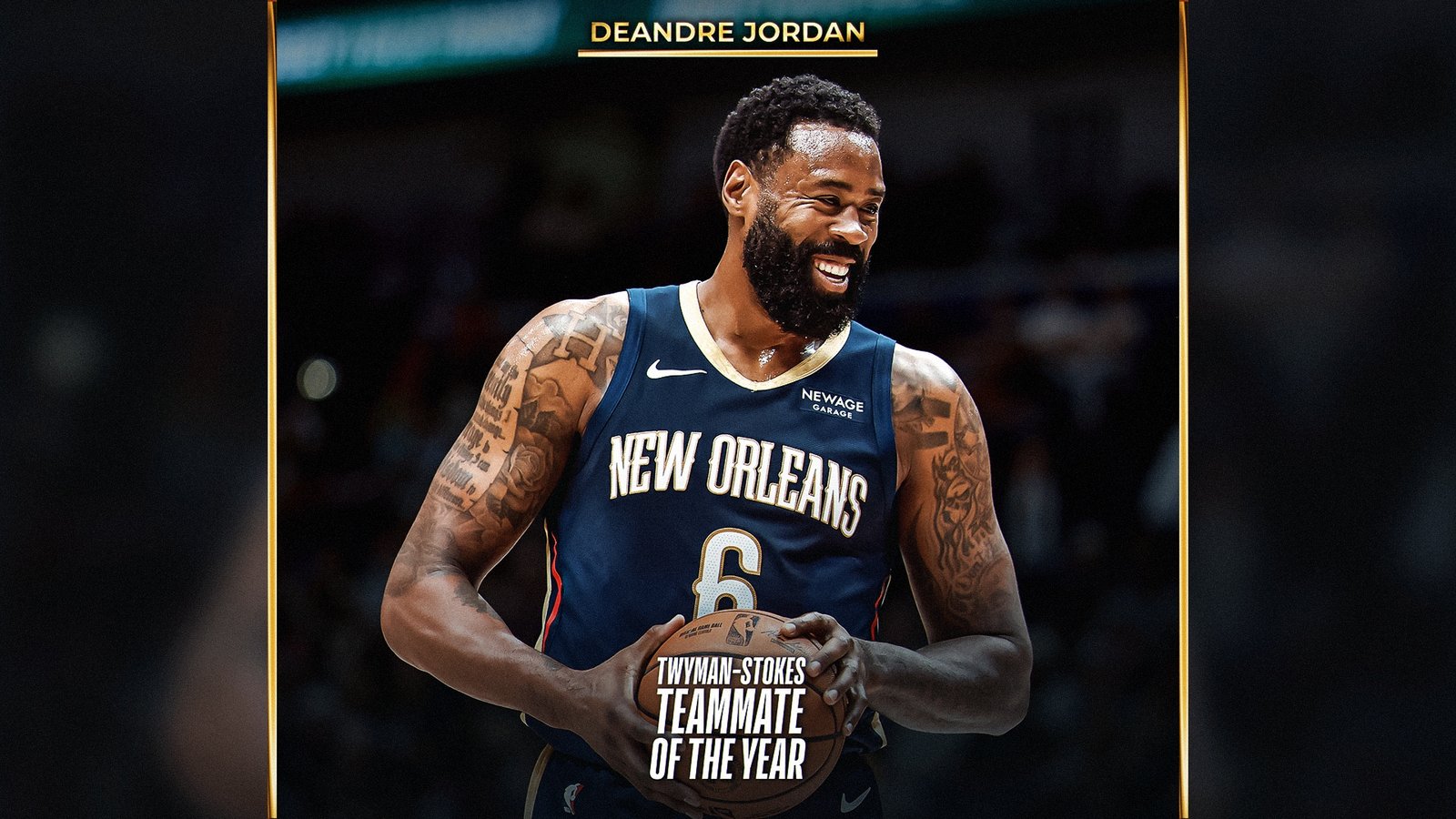
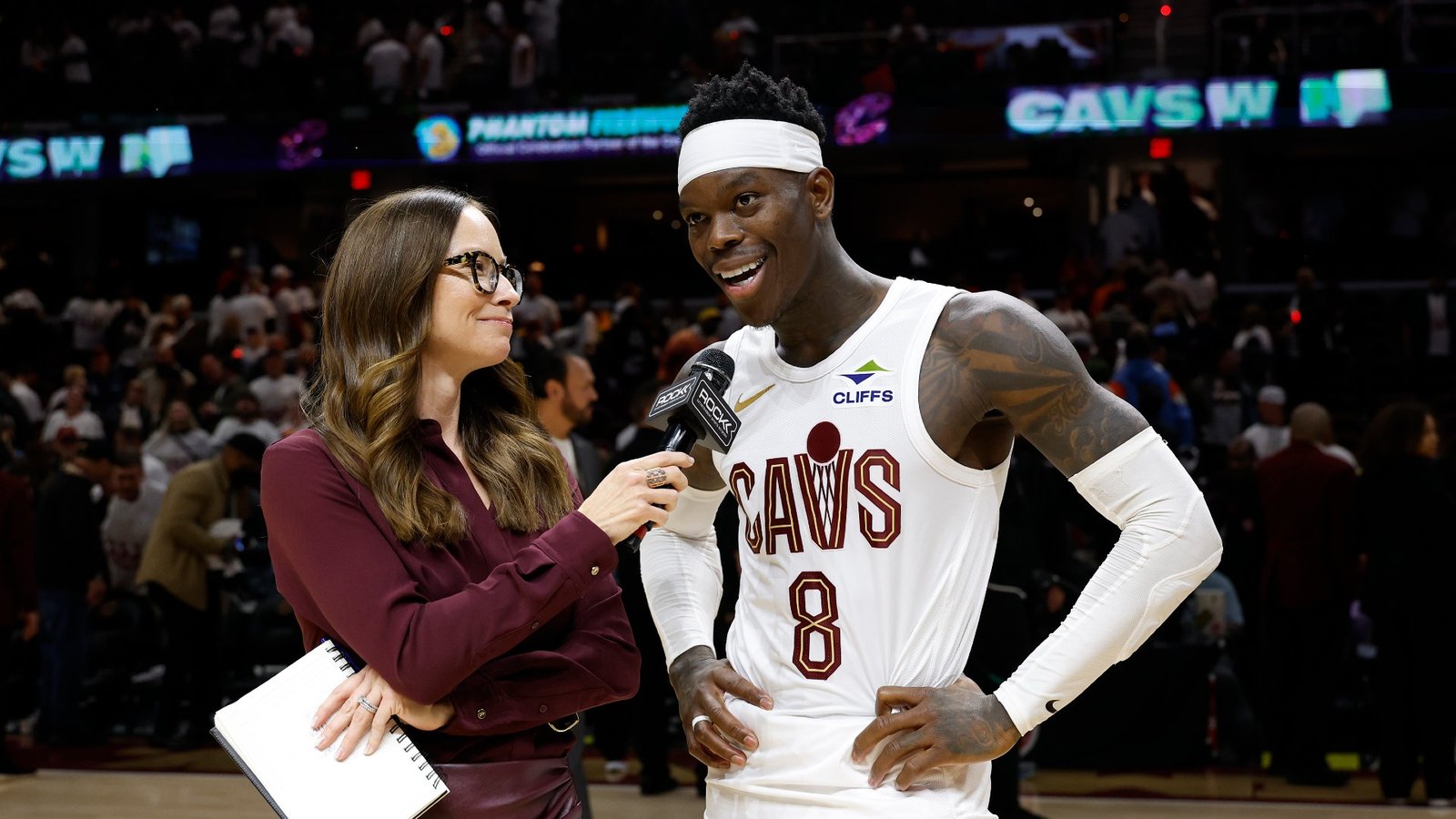
    DeAndre Jordan is the Twyman-Stokes Teammate of the Year for the 2025-26 season.

    New Orleans Pelicans center DeAndre Jordan has been named the 2025-26 Twyman-Stokes Teammate of the Year.

    Presented annually since the 2012-13 season, the Twyman-Stokes Teammate of the Year Award recognizes the player deemed the league’s best teammate, based on selfless play, leadership on and off the court as a mentor and role model to other NBA players, and commitment to the team.

    A panel of league executives selected 12 finalists (six from each conference) for the honor.  Current NBA players then selected the winner from that group of finalists.  The complete voting results are available here.

    Jordan has won the Twyman-Stokes Teammate of the Year Award for the first time.  The 18-year NBA veteran is a three-time Kia All-NBA Team selection, a two-time Kia NBA All-Defensive Team honoree and a 2017 NBA All-Star.  He won an NBA championship with the Denver Nuggets in the 2022-23 season and a gold medal with the USA Men’s National Team at the 2016 Summer Olympics.

    The Twyman-Stokes Teammate of the Year Award is named for Jack Twyman and Maurice Stokes, whose storied friendship transcended their Hall of Fame accomplishments.

    Twyman and Stokes were teammates on the Rochester/Cincinnati Royals for three seasons from 1955-58.  In the final game of the 1957-58 regular season, Stokes sustained an injury that led to his falling into a coma days later and becoming permanently paralyzed.  He was diagnosed with post-traumatic encephalopathy, a brain injury that damaged his motor control center.  Twyman became his legal guardian and lifelong advocate.

    Twyman helped organize the NBA’s Maurice Stokes Memorial Basketball Game, which raised funds for Stokes’ medical care and, after his death in 1970 at age 36, for other players in need.  After years of lobbying by Twyman, Stokes was enshrined in the Naismith Basketball Hall of Fame in 2004.  Twyman, inducted in 1983, died in 2012.

  • The Athletic: Bickerstaff, Mosley put ‘family’ aside in playoffs

    Close friends off the court, Pistons coach J.B. Bickerstaff and Magic coach Jamahl Mosley mutually agreed on no contact between them during their first-round series.

    Editor’s Note: Read more NBA coverage from The Athletic here. The views on this page do not necessarily reflect the views of the NBA or its teams. 

    ***

    It all began at Grg’s in the early 2000s.

    Tim Grgurich, the longtime assistant coach renowned inside NBA circlesbut almost anonymous outside them, and who is generally credited with creating the NBA’s modern, year-round player development culture, was holding his annual summer development camp in Las Vegas. At the Grg Camp, NBA players from every team came to get better. With Grg, there was no agenda. But Grg’s camps didn’t just help players reach the next level; they also served as a pipeline for up-and-coming coaches, all looking to find their footing and their place among their peers.

    That’s where J.B. Bickerstaff and Jamahl Mosley really became friends.

    “When we hit Vegas, we would go to dinners,” Mosley recalled last week.

    “Right from then, it was, you’re around each other a little bit. And you go out a couple times, and it might have been the first or second year of Vegas camp. Once we connected and started hanging out, it was a real thing. And then it was just constant conversations, talking to each other.”

    “We all broke down drills,” Bickerstaff said. “We all did one-on-one with the guys. We did all, like, all the sweat equity we could possibly build, is what we were doing there, to help young guys get better, and to teach the game. He and I, just personality-(wise), just fit, just matched. And we just continued to grow our relationship. Now, our families vacation together. Our wives are good friends. His kids call me Uncle J.B.; my kids call him Uncle Jamahl. We’re family at this point.”

    Normally, though, you don’t compete against your family at work, knowing that if you succeed, it may cost your family member their job. But for the second time in three years, that’s where Bickerstaff and Mosley, both 47, are now, with their teams facing each other in the first round of the playoffs.

    Bickerstaff is trying to continue the Pistons’ incredible metamorphosis from the league’s laughingstock two years ago to one of the favorites to win it all, after a 60-22 regular season that gave Detroit the top seed in the Eastern Conference. Mosley, in his fifth season as head coach in Orlando, is dealing with the expectations of trying to break through in the postseason after losing in the first round two straight years. It’s no secret around the league that Mosley’s future in Orlando is up in the air, a situation that would change significantly if the eighth-seeded Magic can pull off the upset over Detroit.

    Magic take 3-1 series lead over Pistons

    There’s no contact between them during the series, a mutually agreed-upon choice. They FaceTimed each other the day before Game 1 but won’t talk again until after the series ends.

    “When it’s done, it’s done,” Mosley said. “After our Game 7 (in 2024, when Bickerstaff’s Cavaliers beat Mosley’s Magic) in Cleveland, hugged it out, said ‘I love you, go do your thing against Boston, you’re my guy.’ That’s it. That’s what it turns into. We’re in a dogfight, we’re gonna be mad at each other, we’re gonna try to beat the other person. The business we’re in causes that competitive nature to kick in, no matter what.”

    Or, as Bernie Bickerstaff, J.B.’s father and the longtime NBA coach and executive, put it last week: “They genuinely care about each other’s success. Like, if Jamahl’s having a hard time, (J.B.)’s gonna call him. When you play basketball, you play against your best friends. Or, like the (Thompson) twins playing against each other. Once you step off the line, you’re good. But you’re not going to go, ‘Oh, that’s my brother; I’m gonna let him kick my ass.’”

    Coaching circles are just that — circles. They often overlap.

    J.B. Bickerstaff had a conventional route to the craft. His father won a championship in Washington in 1978 as an assistant on Dick Motta’s Bullets staff. When J.B. Bickerstaff was injured late during his playing career at the University of Minnesota, he knew he’d get into the family business. After a season in Minnesota doing color commentary on Timberwolves’ radio broadcasts, where he got to see pro systems and players up close, J.B. Bickerstaff went to work in Charlotte, on his father’s staff, as an assistant coach. Bernie Bickerstaff also gave Brown his first job in the NBA.

    Mosley played at Colorado, then overseas, before being hired by George Karl in Denver as a scout and assistant.

    “He knew a lot more than I did, because of his dad,” Mosley said of J.B. “He had been in the industry; I hadn’t been in the industry like that. He actually was a veteran in that regard, because he had seen the ups, the downs, the ins, the outs, the moving, all those things. That’s how I leaned on him. But it was constantly talking about us as assistant coaches, the relationships that we had with players, what that looked like for us, getting better. How we could improve. What does that look like?”

    Growing up, J.B. Bickerstaff had seen the hours his dad put in, sitting in his office, watching tape. He saw how his father was with everyone, regardless of their station. Bernie Bickerstaff was fair and helpful to any number of people breaking into the business, but he didn’t suffer fools. There was no sugar coating, even for the young assistant who shared his surname.

    “I think it was best that way,” J.B. Bickerstaff said. “Because it never looked like he was playing favorites. He would tell me what it was in the moment, so everybody knew — this is the standard we’re holding ourselves to. And regardless of who you are, I’m going to hold you to that standard. He always knew the right way to balance so that you heard the message. He would be hard on you sometimes, but then sometimes, he’d love you up and let you know when you did a good job. It wasn’t like he was always just going at you.”

    Mosley, with Karl, was also starting his climb up the ranks. He and J.B. continually stayed in touch. And J.B. Bickerstaff also had another group of friends, many who’d played at Arizona for the late, great Lute Olsen: Luke Walton, Richard Jefferson and Channing Frye, along with Jesse Mermuys, who’d been director of operations at Arizona before starting his own rise up the NBA assistant ranks. (Mermuys is now in Phoenix as an assistant coach for Jordan Ott.) Walton and Jefferson were fast friends growing up.

    Jefferson also introduced Bickerstaff to another friend of his from school.

    “J.B. was rehabbing an injury coming out of college, and that’s the same place I’m getting ready for the (2001) draft,” Jefferson, now a lead analyst for ESPN after his 17-year NBA career, recalled last week.

    “So I meet J.B. … He’s 22; I’m 21. I don’t know him. We just kind of become friends, kind of hang out. And Luke is still in college. So we start becoming friends, because we’re both just kind of stuck in Phoenix. Fast forward. We’re out at night, and he’s like, ‘Who’s that girl?’ And I’m like, ‘Oh, that’s Nikki Jones; she played soccer at Arizona. That’s my homie. She’s been my homie for years.’ He’s like, ‘Oh.’ Now, they’re married, and they have three kids.”

    The young coaches got onto the coaching track. Bickerstaff went to Minnesota, then Houston; Mosley went to Cleveland, then Dallas. They started interviewing for head coaching jobs. Bickerstaff got his first shot as the Rockets’ interim coach in 2015 after Houston fired Kevin McHale 11 games into the 2015-16 season.

    Coaches always talk about “the 12 inches” — the distance between an assistant coach’s seat and the head coach’s chair. Those 12 inches are a chasm — in pay, to be sure. But also in responsibility and pressure, both external and internal. If you want a friend, get a dog. Because almost no one else cares.

    Early in Bickerstaff’s interim stint in Houston, the Rockets played the Knicks. After the game, he called his father. His mother, Eugenia, was also on speakerphone.

    “And I was telling my dad, I was like, ‘Man, this s—t is hard,’” he said. “And my mom, in the background, said, ‘Boy, put your big-boy pants on and go to work.’ And that was it. And it was the mindset from that point forward, just do the job that’s in front of you every single day.”

    Their peers started breaking through to the big chair, too. The Grizzlies hired Fizdale as head coach in 2016. The Hawks hired Pierce in 2018. Mosley, finally, got his shot in 2021. He was in Mexico with his family when the last round of interviews with the Magic began. His family included the Bickerstaffs.

    “I was like, listen, I’ve been turned down nine times, 10 times, from different interviews,” Mosley said. “I was like, I’m going on vacation with my family, like we always do every summer. We’re going to go with the Bickerstaffs, we’re going to go with the Mermuyses, we’re going to go with the Waltons. We’re going to go on our vacation together, because that’s what we do.

    “So I think I did one of the interviews with the Magic while I was there. And we were together. … that’s just how we did things. I was looking back to our kids’ photos. We would go see them at All-Star break when they were in Houston. I’ve got a picture of us looking super young, when we both had hair.”

    They no longer do. Job casualty.

    Bickerstaff is, like his father, stoic on the sideline. He’ll jump his guys when necessary, but his trait is being even-keeled in moments of challenge. There wasn’t a lot of yelling from him in the two days after Orlando came to Little Caesars Arena and out-toughed Detroit in Game 1.

    “It’s very calming,” Pistons center Jalen Duren said. “He’s a guy that doesn’t add on extra pressures. He’s a guy that kind of mellows everything out and says, ‘OK, this is what’s happening, we’re going to deal with it, and we’re going to get through it. And we’re going to learn from it together.’ It’s been great all season.”

    Two years removed from being fired by the Cavs, Bickerstaff is a finalist for NBA Coach of the Year honors with his team soaring behind emerging superstar Cade Cunningham. Mosley is just trying to survive, despite having his own No. 1 overall pick in forward Paolo Banchero and his role in resurrecting a moribund Orlando franchise over the last five seasons. His Magic have, in the last 10 days, responded to the moment, routing Charlotte in the last Play-In Tournament game before going toe-to-toe with the top-seeded Pistons. But they probably have to finish the job for their coach to keep his.

    During this series, Mosley and Bickerstaff often stand just a few feet apart on the sidelines. But they will not speak with each other. Not now.

    “He’s one of my closest friends,” Mosley said. “And this is why us playing this playoff series is hard. He’s one of my closest friends. And we talk all the time. He gives advice. We talk about things — what’s real, what’s not real, what’s the league like. We talk about all the things that we go through. … He’s now moved into that realm. When the Houston thing happened, we talked about what’s next moves, and what are you going to do here, and then Cleveland happened, and then we’re playing each other in the playoffs. And we didn’t talk. And once it was done, we talked.

    “Knew all the things going on there and the realities of the NBA. We talked. The advice he gives, what he listens to, being supportive, and me supporting him, it’s real. We’re friends and family before any of this basketball stuff.”

  • 3 things to watch in Pistons-Magic Game 5

    3 things to watch in Pistons-Magic Game 5

    Detroit’s interior play has been better in this series when Isaiah Stewart plays more minutes.

    • Download the NBA App

    Orlando finds itself with a rare opportunity heading into Game 5 of its series against Detroit on Wednesday (7 p.m. ET, Prime Video).

    Twice previously in NBA playoff history (since the first round went to best-of-seven in 2003), a lower-seeded opponent led 3-1 against a team that won 60 games or more in the regular season. Both of them – the Golden State Warriors vs. Dallas Mavericks in 2007 and the Memphis Grizzlies vs. San Antonio Spurs in 2011 – won those series in six games.

    None of that has anything to do with the Magic beyond coincidence, of course. Their 3-1 lead over Detroit has been built on scrappier defense, some timely scoring in what has largely been a rock fight, and the Pistons’ struggles at times to get out of their own way.

    Back at home for Game 5, the Pistons are determined not to have their postseason end so abruptly, not after all the work and success they put into the prior seven months. Meanwhile, the Magic will try not to replicate what the Warriors and Grizzlies achieved, because they’d rather not let Detroit even force a Game 6.

    Here are three things to watch for as the Pistons fight for playoff survival:


    1. More Stewart, less Duren

    If this were baseball and Jalen Duren was on the mound for the Pistons, manager J.B. Bickerstaff would have given him the hook several innings ago. Duren, an All-Star and one of the NBA’s most improved players this season, has regressed in this series, offering Detroit far less offensively and defensively than he did during the first 82 games.

    Getting him out of harm’s way would help in two ways: first, sparing Duren further trauma before he and his coaches can try to get him back on track, either before their next series or (gulp) during a longer-than-expected summer. And second, minimizing the damage being done while he’s out there.

    Bickerstaff, at that point, to continue the analogy, would ball up his fists and raise them to his chin, his signal to the bullpen to send in burly big man Isaiah Stewart. Stewart has been a force inside for Detroit, a factor in Orlando’s dismal shooting (38.7%) in the series.

    The Magic missed 62 of 92 shots in Game 4 in part because “Beef Stew” was feasting on a bunch of them – his career-high eight blocks were the most by a defender logging less than 20 minutes since 2004. In one sequence late in the winnable game, he blocked Jalen Suggs and Wendell Carter Jr. in rapid succession and his defensive rating through four games is 87.7.

    If the Pistons can’t get the 19.5 ppg Duren brought from October into April, they need to keep the scores down and protect the paint. Stewart’s brawn and intensity bring a little intimidation, too, at a time when Duren – chiseled as he is – is playing small.

    Starting Stewart would be an adjustment worth exploring.

    2. A more careful Cade

    Here’s the good news: Detroit point guard Cade Cunningham, though he hasn’t backed up the reputation yet, is arguably the best player involved in this series. He and Duren, for instance, are the only two likely to end up on All-NBA teams when those honors are announced in the coming days.

    And Cunningham has joined some elite company … for a regrettable reason. He has claimed a dubious NBA playoffs record with 24 turnovers in the past three games, the most over three games since the league began tracking turnovers in 1977-78. What’s quirky about it is that most of the players Cunningham surpassed are downright legends: James Harden (who held the mark with 23), Larry Bird, Nikola Jokić, Trae Young, Dwyane Wade, Joel Embiid, LeBron James, Steve Nash and Paul Pierce.

    The lesson: You’ve got to be awfully good for your team to want the basketball in your hands even when you’re treating it like it’s a tarantula.

    That said, the lost possessions have been a problem. Detroit has 72 turnovers to Orlando’s 53, a game’s worth. Points scored off turnovers have favored the Magic 83-66, with the teams separated by just 10 points overall in the four games.

    Cunningham’s status as Detroit’s only real offense creator has enabled Orlando to crowd him and use extra bodies to close lanes to the basket. But he also has been culpable, gifting the Magic via hurried passes or reckless decisions. Short of a tether, Cunningham is going to have to treat the ball much more carefully.

    3. History looms for Orlando

    There’s a skeleton lurking in Orlando’s postseason closet just waiting to leap out to haunt the team and its fans. Back in 2003, the eighth-seeded Magic were facing the top-seeded Pistons in the first round and grabbed a surprising 3-1 series lead behind Tracy McGrady.

    (McGrady says his long-quoted phrase after Game 4 of “for me, a guy who has never experienced playing in the second round, this is great,” is a myth.)

    The motivated Pistons fired back with three straight victories, snuffing out Orlando’s potential upset.

    Some folks have peeked into the closet already, based on the similarity of the 3-1 series pace. But if the Pistons start to close the gap Wednesday night, Ol’ Bones will be out and rattling loudly while this Magic squad tries to sleep. That’s why coach Jamahl Mosley and most of the players have been meticulous in talking only about “the next game” and the difficulty of winning four times against a team from which they’ve already won three.

    No one wants to step in it, and the surest way to avoid that is to end this series now.

    * * *

    Steve Aschburner has written about the NBA since 1980. You can e-mail him here, find his archive here and follow him on X.  

  • 3 things to watch in Lakers-Rockets Game 5

    3 things to watch in Lakers-Rockets Game 5

    Austin Reaves, out nearly 4 weeks, could provide the Lakers a big boost in Game 5.

    • Download the NBA App

    The Los Angeles Lakers haven’t won a playoff series since 2023, when they reached the Western Conference Finals as the No. 7 seed. 

    They lost in the first round in 2024 and 2025 but are one victory from the conference semifinals. Despite the absence of leading scorers and essential playmakers Luka Dončić and Austin Reaves due to injuries, the Lakers have taken a surprising 3-1 series lead in their first-round matchup against the Houston Rockets. 

    LeBron James, at 41 years old, has been (mostly) sensational, and the Lakers have received greater-than-expected production from Luke Kennard and Marcus Smart, who were thrust into the starting lineup with Dončić and Reaves sidelined. 

    Can James pull the Lakers to another victory? Game 5 is Wednesday in Los Angeles (10 p.m. ET, ESPN). The winner of the Rockets-Lakers series will play Oklahoma City in the conference semifinals. The Thunder swept Phoenix to advance. 

    Here are three things to watch in Game 5 of Rockets-Lakers:


    1. Does James have a bounce-back game?

    In the first three games of this series, James averaged 25.3 points, 9.7 rebounds, 8.7 assists and 2.0 steals and shot 47.4% from the field and 43.8% on 3-pointers. It helped the Lakers to a 3-0 series lead. 

    In Houston’s 115-96 Game 4 victory, James had 10 points on 2-for-9 shooting (0-for-3 on 3-pointers), nine assists, four rebounds and eight turnovers. 

    James’ teams are 41-14 in closeout games, according to statmuse.com, and with his team one victory from clinching a series, James has not lost two closeout games consecutively since 2006. In those 55 closeout games, James averaged 28 points, 9.1 rebounds and 7.1 assists. 

    2. Injury updates for Lakers, Rockets

    Rockets star Kevin Durant missed Game 1 with a bruised right knee and missed Games 3-4 with a left ankle sprain and bone bruise and has been listed as out for Game 5

    Reaves (strained left oblique) is getting closer to getting back on the court. He was upgraded to questionable before Game 4 but did not play. He’s listed as questionable for Game 5. There is a chance he plays in Game 5, and it’s unlikely Dončić (strained left hamstring) plays in the Rockets series.  

    Reaves (23.3 points, 5.5 assists per game) would give the Lakers another ballhandler and playmaker to help James. 

    3. Can the Rockets make the series interesting?

    Winning Game 5 and going back to Houston with a chance to tie the series and force a Game 7 would turn up the pressure on the Lakers, who jumped to a 3-0 series lead. They played well enough to win Game 3 without Durant and took Game 4 with him on the bench. In the last game, Houston found defensive success by switching and forcing turnovers, and its starting five produced 95 of the team’s 115 points, led by Amen Thompson’s 23 and Alperen Sengun’s 19. 

    It won’t be easy against James and the Lakers in Los Angeles, but the Rockets are talented enough and young enough not to dwell on what has amounted to insurmountable odds for a team trailing 3-0 in an NBA playoff series. No team has come back from a 3-0 deficit to win a series. Teams trailing are 0-159. 

    * * *

    Jeff Zillgitt has covered the NBA since 2008. You can email him at jzillgitt@nba.com, find his archive here and follow him on X.

  • 3 things to watch in Cavaliers-Raptors Game 5

    3 things to watch in Cavaliers-Raptors Game 5

    Rookie Collin Murray-Boyles has played a key role in Toronto tying up its first-round series vs. Cleveland.

    • Download the NBA App

    This series is deadlocked and so is the momentum. It’s anyone’s guess as to which team moves on to the Eastern Conference semifinals, and in that sense, the Cleveland Cavaliers must be feeling a bit dizzy right now.

    They built a 2-0 lead and looked dominant while doing so, only to flutter helplessly in Toronto and allow the Raptors to pull even. That’s more of an indictment against the Cavs, who do have the advantage of home court, which could swing in their favor, starting with Game 5 on Wednesday (7:30 p.m. ET, ESPN).

    Much will fall on the reputations and shoulders of Donovan Mitchell and James Harden. The duo worked so wondrously in the first two games … and then, at times, became victims of their own mistakes and missed shots in the two Cleveland losses.

    The Raptors have shown they can take a punch and not only survive, but give a strong response. And they still haven’t seen Brandon Ingram’s A-game yet.

    If he starts connecting, and he’s certainly due, the Raptors might find themselves going home with a chance to close out the series.

    Yes, the situation is that delicate between the Cavs and Raptors. Here’s what to watch for Game 5 in Cleveland:


    1. Will Raptors’ strategy work?

    What has happened since the first two games, which were dominated by the Cavs? The Raptors paid extra attention to Mitchell and Harden and dared their Cavs teammates to step into those big roles. And none have so far.

    Mitchell and Harden create so much for themselves and their teammates because of their ball dominance that when Evan Mobley, Jarrett Allen and the rest of the rotation must fend for themselves, the offensive output can be minimal at times.

    The obvious third wheel in the equation is Mobley, who has made steady improvement at both ends since his rookie season … except for this season, when he flatlined. And that has carried over into this first-round series as Mobley has had one impactful game. He’s averaging 16.3 points and 7.5 rebounds per game vs. Toronto.

    The Raptors must be aware of the Harden and/or Mitchell response, especially at home. Harden will look to secure the ball better; he’s averaging six turnovers per game. Also, Toronto might need to be mindful of a level-up by a Cleveland rotational player. Max Strus and Jaylon Tyson could have their game of the series and put Cleveland one step closer to winning this round.


    2. Why 3s are the magic number

    Both teams are coming off a Game 4 where points and efficiency took a back seat. That means the Raptors and Cavaliers are due for a bounce-back.

    And it might come down to long-distance shooting.

    Which team seems most capable?

    As for the Cavs, who are at 34% in the series, Strus, Harden and Sam Merrill must take charge. They’re the most efficient of the bunch, and in the case of Strus and Merrill, it might be time for them to shoot often. As a duo, they’re barely taking more combined than Mitchell does in a game, and Mitchell’s efficiency is streaky.

    The Raptors don’t emphasize 3-point shooting mainly because it’s not their strength, especially with Immanuel Quickley out for the series with an injury. Grady Dick was supposed to be the designated specialist, but he has regressed and isn’t even in the rotation. Except for RJ Barrett, none of Toronto’s top scorers are volume shooters from deep.

    Should the Raptors make 3s, that would be a bonus for them and send the Cleveland defense scrambling. Should the Cavs make 3s, that could make it hard for Toronto to win.


    3. Shead, Murray-Boyles stepping up

    What’s impressive about the Raptors in this series is how two players taken in the last two drafts are coming up large at times. That would be Jamal Shead and Collin Murray-Boyles, who are demanding and getting ample playing time.

    How many guards who average six points and don’t control the ball can earn 30 minutes a night in the playoffs? Shead is on the floor because of his intense defense, relentless hustle and he’s not intimidated by the moment.

    Harden and Mitchell know that Shead will be in their grill constantly.

    As for Murray-Boyles, he’s the best paint player in the series, bringing energy and blue collar, more impactful than Mobley and Allen, two more experienced and accomplished players. Murray-Boyles is attacking the glass and supplying a skill that has diminished in the NBA over the last decade or so — offensive rebounding. Those second-chance possessions are giving the Raptors multiple scoring opportunities.

    “He changes games,” said Barnes.

    * * *

    Shaun Powell has covered the NBA since 1985. You can e-mail him at spowell@nba.com, find his archive here and follow him on X.