Category: Business

  • Japanese Financial Giant SBI Holdings Accelerates Cryptocurrency Investments! Here Are the Companies They Invested In

    Japanese Financial Giant SBI Holdings Accelerates Cryptocurrency Investments! Here Are the Companies They Invested In

    SBI Holdings, one of Japan’s leading financial groups, has drawn attention in recent months with its multi-billion dollar investments in cryptocurrencies. In just the last few weeks, the company was the sole investor in Gauntlet’s $125 million Series C funding round and also participated in EDX Markets’ $76 million Series C funding.

    In addition to agreeing to acquire Japanese cryptocurrency exchange Bitbank for approximately $289 million, SBI also acquired a controlling stake in Singapore-based Coinhako earlier this year.

    SBI also invested in Digital Asset’s $355 million funding round, Morpho’s $175 million token funding, and Circle’s $222 million token presale for its Arc blockchain. Last month, it launched JPYSC, Japan’s first yen stablecoin backed by a trust bank.

    According to company officials, the common goal of these investments is to build an end-to-end “onchain finance” ecosystem. SBI aims to offer all financial services on the blockchain, from exchanges and asset tokenization to payment infrastructure and digital asset management. The company predicts that the token economy will soon become mainstream and that a large portion of financial transactions will take place on the blockchain in the future.

    Experts believe that SBI is not only investing in crypto assets, but also acquiring the financial infrastructure of the future. Joseph Goh, Areta’s Asia Pacific President, states that SBI aims to be the first Asian financial group to integrate issuance, custody, trading, payments, and asset management under one roof.

    One of the key reasons behind SBI’s aggressive strategy is Japan’s comprehensive reforms in cryptocurrency regulation. The new bill aims to classify crypto assets as financial instruments, pave the way for exchange-traded funds (ETFs), and reduce capital gains tax from 55% to 20%. Analysts believe that a clearer regulatory framework could encourage not only SBI but also other major financial institutions in Asia to accelerate their investments in digital assets.

    *This is not investment advice.

  • Bitmine Chairman Tom Lee Announces Ethereum Price Has Hit Rock Bottom!

    Tom Lee, Chairman of Bitmine (BMNR), argued that Ethereum ($ETH) has bottomed out at its current price levels and is preparing for a strong recovery. Speaking at the WebX 2026 conference in Tokyo, Lee compared Ethereum’s current outlook to the recovery of the US stock market following the 1987 stock market crash.

    According to Lee, there are striking similarities between Ethereum’s price chart and the movement of the S&P 500 index after 1987. The renowned investor noted that the S&P 500 entered a strong uptrend after a sharp decline, suggesting that Ethereum is similarly at a significant low point and has the potential to move upwards in the coming period.

    Tom Lee stated that the recent weak performance of Ethereum’s price has worried many investors, but they are ignoring the long-term fundamental dynamics of the market. He specifically noted the growing institutional adoption, particularly from Wall Street, but argued that the increasing interest of traditional financial institutions in the Ethereum ecosystem has not yet been fully reflected in prices.

    According to him, while the current low prices are influenced by investor psychology, institutional demand is considered to be a significant support factor for $ETH in the long term.

    Lee also touched upon the major macroeconomic factors that could affect Ethereum and the overall cryptocurrency market in 2026. Key issues Lee highlighted as needing close monitoring included the Federal Reserve’s (Fed) monetary policy, the Clarity Act (expected to establish a regulatory framework for the crypto sector in the US), the impact of AI investments on capital flows, and the financial sector’s weaker performance compared to other sectors.

    Market experts say Ethereum’s future performance will depend not only on technical indicators but also on institutional investor interest, regulatory developments, and global macroeconomic conditions. Nevertheless, Lee maintains that current levels present a significant opportunity for long-term investors.

    *This is not investment advice.

  • Why Bitcoin miners are holding 1.19M BTC despite 10% mining stock losses

    Why Bitcoin miners are holding 1.19M BTC despite 10% mining stock losses

    Bitcoin [$BTC] has spent days consolidating at the time of writing and was on the edge of a decisive move. The asset has failed to reclaim the $64K level for a third consecutive time, and the momentum behind each attempt has weakened.

    Bitcoin will need far stronger momentum to force a rally, and several factors will decide whether that happens. Among them, the role of miners cannot be dismissed, since their actions tend to shape market direction.

    Bitcoin mining stocks stay under water

    Bitcoin miners, responsible for securing the network, have traded underwater for weeks. Notably, over the past month alone, the Artemis Theme Tracker recorded a 10% decline across these Bitcoin mining stocks.

    Source: Artemis

    The tracker follows eleven Bitcoin mining stocks currently valued at $102.9 billion. Iris Energy [IREN] and Applied Digital [APLD] have absorbed the steepest losses over the past month, down 20.1% and 20%, respectively, while Hut 8 Mining and Hive Digital Technologies have slipped 3.3% and 4.3%.

    Cipher Mining [CIFR] stood as the only name in the category to hold net positive, rising 5.2% over the same period and outperforming the S&P 500, which gained 1.5% across the month.

    The question is whether miners will offload their $BTC, particularly as mining costs climb; paired with Bitcoin’s underperformance, that pressure could build further.

    What will Bitcoin miners do

    Miners have kept their Bitcoin positions steady despite the growing threat of selling in the market. At press time, the Bitcoin Miners’ Position Index (MPI) reflected near‑term confidence with a reading of -1.1, with miners continuing to accumulate.

    The metric measures the ratio of total miner outflows in USD to their one-year moving average, and a reading below that average typically signals that miners are holding their assets.

    Source: CryptoQuant

    The Miner Supply Ratio, which tracks how much of Bitcoin’s supply miners hold, has likewise been climbing, an overall sign of accumulation.

    The climb began on the 8th of July and has continued since, with the supply ratio reaching 0.05951 at press time. A sustained rise would reinforce a supportive dynamic for Bitcoin, provided miners keep their assets off the market.

    Miners hold their reserves steady

    Miners remain central to Bitcoin’s price performance, as their decision to sell or hold can steer direction.

    The group controls roughly 1.1933 million Bitcoin, just over 5% of the total supply in the market, and any move to sell could weigh on the asset and drag it lower.

    Source: CryptoQuant

    Currently, though, this group is doing the opposite despite the decline in Bitcoin’s price over the past weeks. Their holdings have edged up to 1.1938 million, one of the highest levels since early May.


    Final Summary

    • Bitcoin miners are accumulating rather than selling, with holdings edging up to 1.1938 million $BTC, even as mining stocks trade under water.
    • Bitcoin has failed to reclaim $64,000 for a third straight time, and with the Miners’ Position Index at -1.1, miner conviction remains one of the few supports underpinning the asset.
  • 4 Things That Could Impact Crypto Markets This Week

    4 Things That Could Impact Crypto Markets This Week

    Crypto markets have largely held on to gains over the weekend, but were looking a little shaky on Monday morning as traders digested the latest developments between the US and Iran.

    The US has launched several waves of strikes on Iran over an Iranian attack on another container ship in the Strait of Hormuz. Iran has declared the Strait closed, while President Trump said otherwise.

    Meanwhile, some heavy inflation reports could further rattle sentiment and add to the volatility as the bear market drags on.

    “Q2 2026 earnings season has arrived, and Strait of Hormuz tensions are mounting again,” said the Kobeissi Letter.

    Economic Events July 13 to 17

    US Central Command reported on Monday morning that forces began launching more strikes against Iran “to continue degrading their ability to attack civilian mariners and commercial ships freely transiting the Strait of Hormuz.”

    Crude oil prices were up around 4%, with WTI and Brent hitting $74.50 and $79, respectively, while US stock futures opened slightly lower.

    June’s Consumer Price Index (CPI) inflation data is due on Tuesday, which could add to the market volatility. This is followed by the Producer Price Index (PPI) data out on Wednesday, measuring wholesale inflation.

    Year-on-year measures for both headline CPI and PPI are expected to rise by 3.8% and 6.2%, respectively, reported Yahoo Finance. Rising inflation will put more pressure on the Federal Reserve to hike rates, which is bad news for risk-on assets such as crypto. The escalation of military action in the Middle East is also not good for dampening inflation concerns.

    June Retail Sales data and July Philly Fed Manufacturing Index reports are due on Thursday, followed by July’s Michigan Inflation Expectations and Consumer Sentiment reports on Friday.

    Key Events This Week:

    1. Markets React to Strait of Hormuz Closure – Today, 6 PM ET

    2. June CPI Inflation data – Tuesday

    3. June PPI Inflation data – Wednesday

    4. June Retail Sales data – Thursday

    5. July Philly Fed Manufacturing Index – Thursday

    6. July MI Inflation…

    — The Kobeissi Letter (@KobeissiLetter) July 12, 2026

    Several Wall Street banks and finance giants are reporting Q2 earnings this week, including JPMorgan Chase, Goldman Sachs, Bank of America, Wells Fargo, and Citibank on Tuesday, followed by Morgan Stanley and BlackRock on Wednesday.

    Crypto Market Outlook

    Total market capitalization has remained steady over the weekend, hovering around $2.26 trillion with a very minor dip on Monday morning after the latest airstrikes.

    Bitcoin had held ground just above $64,000 for the past 12 hours or so but dipped to $63,400 during early trading, where it remains at the time of writing.

    Ether prices fared a little better, holding above $1,800 for most of the past day following a 15% gain over the past fortnight. Escalation of conflict and higher inflation this week could send both much lower.

  • Bitcoin Price Prediction: Eric Trump Calls $1M Target as American Bitcoin Stock Hits Record Low

    Bitcoin Price Prediction: Eric Trump Calls $1M Target as American Bitcoin Stock Hits Record Low

    Bitcoin ($BTC) is trading around $63,396 on July 13, 2026. It is still nearly 50% below its all-time high of $126,198. While short-term price action remains choppy, Eric Trump says institutional adoption is accelerating faster than ever. He believes Bitcoin still has a long way to go.

    Eric Trump Sticks to $1 Million Bitcoin Call

    Speaking in a recent interview, Eric Trump said Bitcoin is entering a new phase of adoption. This is as traditional financial institutions continue embracing crypto.

    “The floodgates are opening,” Trump said, pointing to major firms like Charles Schwab, Fidelity, and JPMorgan Chase expanding Bitcoin services. He shared that when he recently logged into his Fidelity account, he was prompted to create a digital asset wallet. Therefore, it is now easier than ever for customers to buy Bitcoin.

    According to Trump, the biggest change is accessibility. Investors no longer need to rely on complicated wallets or self-custody. Now Bitcoin is available through spot ETFs and large financial institutions.

    “We are on the one-yard line of cryptocurrency, and we’ve got another whole field to run,” he said.

    Trump also doubled down on his long-term prediction, saying, “I do think it hits a million dollars eventually. I’ve never been more bullish on anything in my life.” He added that stronger crypto legislation in the U.S. has only increased his confidence.

    Perhaps his boldest claim came when discussing institutional demand. “I talk to the biggest companies, the biggest families in the world, and every single one of them is racing to buy Bitcoin,” Trump said.

    American Bitcoin Stock Struggles Despite Bigger $BTC Holdings

    Interestingly, Trump’s bullish comments come even as American Bitcoin, the mining company he co-founded, continues to face pressure in the stock market.

    According to Bloomberg, the company’s shares have dropped more than 95% from their peak, wiping out over $600 million from the value of Eric Trump’s roughly 6% stake over the past 10 months. The company recently carried out a 1-for-15 reverse stock split to maintain its Nasdaq listing. Still, it hit a record low last week.

    Despite the weak stock performance, American Bitcoin continues to build its Bitcoin treasury. The company purchased 500 $BTC this week, taking its total holdings to more than 8,000 $BTC. However, its first-quarter results showed an operating loss of $118.2 million, including a $117.2 million Bitcoin impairment charge.

    U.S. Strategic Bitcoin Reserve Adds Long-Term Confidence

    Supporting the long-term bullish narrative, the U.S. government now holds around 328,372 $BTC, worth roughly $20-$25 billion. These assets are primarily acquired through criminal asset seizures. The holdings are managed as part of the Strategic Bitcoin Reserve (SBR), established under a White House Executive Order.

    While Bitcoin remains well below its record high, growing institutional participation, improving regulation, and continued accumulation by both private investors and governments are keeping long-term expectations firmly intact.

  • Apple Sues OpenAI, Claims Former Employees Stole Trade Secrets

    Apple Sues OpenAI, Claims Former Employees Stole Trade Secrets

    In brief

    • Apple sued OpenAI and two former employees, alleging theft of hardware trade secrets.
    • The complaint claims former Apple employees accessed confidential files, shared supplier information, and used internal information at OpenAI.
    • The lawsuit follows OpenAI’s $6.5 billion acquisition of Jony Ive’s hardware startup io Products.

    Apple has sued OpenAI and two former employees, accusing the ChatGPT maker of using stolen trade secrets for its consumer hardware efforts.

    The complaint, filed Friday in the U.S. District Court for the Northern District of California, names former Apple senior system electrical engineer Chang Liu and former iPhone and Apple Watch design executive Tang Yew Tan, along with OpenAI Foundation, OpenAI Group PBC, and io Products.

    Apple alleges Liu, who left the company in January after eight years, failed to return a company laptop and later accessed Apple’s internal systems through an authentication bug.

    “While employed by OpenAI, Mr. Liu also exploited a rare, previously unknown authentication bug to access Apple’s shared network folders,” Apple’s attorneys said in the complaint. “Upon discovering that he had this unauthorized access to Apple’s systems, Mr. Liu did not report it, return his stolen Apple-issued work laptop, or delete the program that allowed the access.”

    Apple alleges Liu downloaded dozens of confidential hardware files, including information about unreleased products, engineering presentations, technical specifications, and proprietary project data.

    The company also alleges Tan, who spent 24 years at Apple before becoming OpenAI’s chief hardware officer, used confidential information from his time at Apple to benefit OpenAI.

    The complaint claims Tan used Apple’s internal project names during OpenAI interviews and asked about unreleased products. Apple also alleges candidates were told to bring “actual parts,” for “show and tell.”

    Apple further claims OpenAI’s recruiting process requested “CAD/design artifacts,” prototypes, supplier information, and details about employees’ work on Apple hardware.

    Apple and OpenAI did not immediately respond to a request for comment by Decrypt.

    The lawsuit follows OpenAI’s $6.4 billion acquisition of io Products, the hardware startup founded by former Apple designer Jony Ive. Ive is not named in the complaint.

    According to the filing, OpenAI’s hardware division has hired more than 400 former Apple employees. Apple claims it contacted OpenAI in February with concerns about confidential information entering the company but did not receive a response.

    The news comes after a separate trade secret dispute between OpenAI and Elon Musk’s xAI. In September, xAI sued OpenAI, alleging the ChatGPT maker recruited former employees to obtain confidential source code, training methods, and data center strategies.

    OpenAI denied the allegations, and a federal judge dismissed the lawsuit in June, finding xAI failed to show OpenAI encouraged a former employee to disclose confidential information.

    The lawsuit is a stark pivot from Apple and OpenAI’s earlier relationship.

    In 2024, Apple tapped OpenAI to bring ChatGPT to Siri as part of its Apple Intelligence initiative. However, earlier this year, Apple turned to Google’s Gemini to power its next generation of AI models after delays stalled the rollout.

    Daily Debrief Newsletter

    Start every day with the top news stories right now, plus original features, a podcast, videos and more.

  • Why Zcash’s Orchard flaw puts pre-disclosure trading under the spotlight

    Why Zcash’s Orchard flaw puts pre-disclosure trading under the spotlight

    Developers recently revealed that a four-year-long vulnerability in Orchard may have enabled unlimited counterfeit Zcash [$ZEC] until an emergency patch was issued. However, fresh market data has raised further questions regarding events before the discovery.

    Allium Labs, after reviewing trade history, identified unusual trading activity. On the 26th of May, $ZEC’s trading volume surged 12–13 times above its average. Researchers privately uncovered the defect three days later, on the 29th of May.

    Source: Allium Research

    While researchers were identifying the defect, $ZEC declined from approximately $660 down to $530, indicating increasing selling pressure. The developers disabled Orchard on the 2nd of June and issued a patch on the 3rd of June, yet confidence continued fading.

    By the 5th of June, $ZEC had fallen by 64 percent from $685 to $247 with hourly trading at $560 million.

    Early positioning fuels market suspicion

    The uncertainty in the aftermath of this issue also led to further review of which parties were actively trading in the market ahead of the issue becoming apparent. Allium found that traders opened the most profitable positions on the 25th and 26th of May.

    This occurred days before the private discovery of the Orchard flaw. More importantly, traders opened these large positions before researchers privately disclosed the flaw on the 29th of May. Notably, the largest wallet had a short position worth $34.5 million and, as a result, made approximately $998,000 in profits.

    Source: Allium Research

    A second short position worth $17.7 million accrued profits of approximately $724,000. These high profits raised questions about whether traders anticipated the sell‑off.

    However, the data does not provide sufficient evidence to prove such claims. In futures markets, all shorts are offset by an equal number of longs. Therefore, simply showing profitable positions is insufficient to establish that those positions existed due to prior knowledge.

    That balance became evident when the largest $91.5 million long position ultimately lost $6.97 million. Meanwhile, Zcash’s privacy model prevents anyone from verifying whether the flaw was ever exploited. This left markets to price on probabilities instead of certainty and kept confidence fragile despite the completed patch.


    Final Summary

    • Allium Labs flagged unusual $ZEC trading before the Orchard flaw discovery, fueling suspicion of informed positioning.
    • Profitable shorts raised questions, but lack of evidence and Zcash privacy kept confidence fragile.
  • Ripple Almost Shut Down and Distributed XRP After SEC Lawsuit, CEO Reveals

    Ripple Almost Shut Down and Distributed XRP After SEC Lawsuit, CEO Reveals

    Ripple Considered Closing After SEC Lawsuit Put Company at Risk

    Ripple CEO Brad Garlinghouse revealed that the company considered shutting down after the U.S. Securities and Exchange Commission (SEC) filed a lawsuit against Ripple and named him and co-founder Chris Larsen in 2020 over $XRP sales. The decision became one of the most difficult moments of his leadership, with the company weighing whether continuing the legal fight was worth the financial and operational risks.

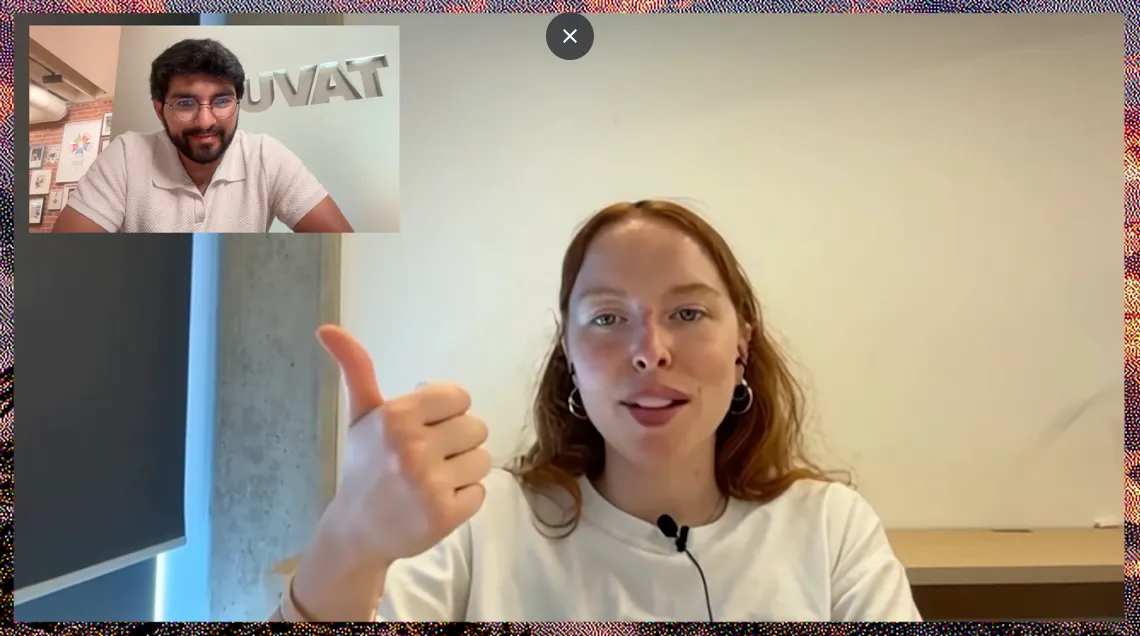
    Garlinghouse said during a KU Hustle podcast interview at the University of Kansas School of Business, published on July 8:

    “We almost decided to shut down the company when the SEC sued us … The company owns a lot of $XRP … We could have shut it down and … just distribute the $XRP to shareholders on a pro rata basis.

    The SEC lawsuit centered on the regulator’s claim that $XRP sales involved unregistered securities. Garlinghouse disputed that position, comparing the crypto token more closely to bitcoin, which he described as a separate digital asset operating on an open network.

    Ripple’s Legal Fight Ended After SEC Appeal Withdrawal and Final Judgment

    Garlinghouse said Ripple spent $150 million on legal bills during the four-year dispute with the SEC, while its U.S. business remained largely stagnant for about five years after the lawsuit began. He said the case created prolonged uncertainty around Ripple’s ability to operate in the domestic market.

    The legal battle began in 2020 when the SEC alleged Ripple sold $1.3 billion of $XRP as an unregistered security. In 2023, U.S. District Judge Analisa Torres issued a mixed ruling, finding that $XRP sales on public exchanges were not securities transactions, while sales to institutional investors were treated differently under securities law.

    Ripple was later ordered to pay a $125 million civil penalty and accept an injunction related to securities law compliance. Both Ripple and the SEC filed appeals challenging different aspects of the ruling before agreeing to dismiss those filings. The case formally concluded in August 2025 after the appeals were withdrawn and the court process ended.

    The regulatory environment surrounding cryptocurrency also changed after SEC leadership shifted under Chairman Paul Atkins and the Trump administration. The agency moved away from a more aggressive regulation-by-enforcement approach toward deregulation, greater engagement with the crypto industry, and a focus on traditional fraud cases rather than broad corporate penalties.

    Garlinghouse said that before the SEC filed its lawsuit, he met with SEC officials four times between 2017 and 2019 to explain how Ripple used blockchain technology and $XRP in its payment system. He said regulators did not indicate during those meetings that $XRP could be considered a security.

    Ripple Continued Operations After Weighing Shutdown Option

    The Ripple chief executive described how the company could have responded to the SEC lawsuit, outlining a scenario in which Ripple might have exited the dispute by distributing its $XRP holdings and dissolving the company.

    “You guys think these are securities. Ripple doesn’t own it anymore. Ripple’s gone now,” he said, describing a hypothetical scenario rather than an action the company took, outlining how Ripple could have responded to the SEC.

    He added that such a move would have come at a high cost to employees and the company’s future, stating:

    “Hundreds of people would have lost their jobs. I think that was a bad outcome, but in some ways it was the easier outcome.”

    After deciding not to shut down, Garlinghouse said the choice to continue operating was not clear at the time. “That was a difficult decision, and obviously I’m glad in retrospect, but that was not obvious at the time,” he stated. Ripple chose to continue operating after weighing the impact on employees and the business.

  • Bitcoin ETFs draw $197M, snap 8-week outflow streak

    Bitcoin ETFs draw $197M, snap 8-week outflow streak

    US-listed spot Bitcoin exchange-traded funds recorded a net inflow of $197.4 million in the week ended Friday, snapping an eight-week streak of weekly outflows dating back to May.

    Data from Farside Investors shows that most of the week’s gains came from the BlackRock iShares Bitcoin Trust ETF, which recorded $291.9 million in inflows. This was offset by outflows from the Grayscale Bitcoin Trust ETF, the Fidelity Wise Origin Bitcoin Fund and the ARK 21 Shares Bitcoin ETF.

    The end of the outflow streak could suggest institutional demand for Bitcoin is recovering after two months of sustained selling pressure. However, one analyst said it’s too early to tell with ETF and stablecoin outflows and seasonality in August and September.

    “There’s also been a pattern over the past few months where Bitcoin performs better in the first half of the month, then consolidates in the latter half,” 10x Research founder and CEO Markus Thielen told Cointelegraph.

    “Without flows still pronounced and ETF flows yet to meaningfully pick up, even after Bitcoin’s 9%+ jump, the headwinds remain in our view.”

    The $197.4 million weekly inflow was modest compared with the $8.26 billion investors withdrew since May 11.

    Total spot Bitcoin ETF net inflow. Source: SoSoValue

    Last week, Real Vision chief crypto analyst Jamie Coutts told Cointelegraph that Bitcoin could be entering the latter stages of the bear market, based on early technical signs suggesting that selling pressure is easing.

    “I think we’re getting through most of the bear market action. It’s still not over, clearly. But you know, I think we’re approaching at least the second half,” Coutts said.

    Other analysts say there could be further downsides ahead.

    Russell Thompson, chief investment officer at asset manager Hilbert Capital told Cointelegraph last week that he believes Bitcoin remains in a downcycle and could hit a low around October this year.

    Ether ETFs also break outflow streak

    Meanwhile, US-listed spot Ether ETFs also broke their eight-week losing streak, with $84.42 million in net inflows for the week ended Friday, led by BlackRock and Fidelity’s Ether funds.

    The inflows paled in comparison with the $1.2 billion in net outflows since May 11.