Category: Business

  • Minnesota Weighs Total Ban on Bitcoin and Crypto ATMs

    Minnesota Weighs Total Ban on Bitcoin and Crypto ATMs

    In brief

    • Lawmakers in Minnesota are considering a total ban on crypto ATMs.
    • The state passed a regulatory framework for the machines in 2024.
    • Countries like New Zealand have recently imposed sweeping bans.

    Lawmakers in Minnesota are considering a total ban on crypto ATMs, with legislation introduced earlier this week in response to a growing number of scams against the elderly.

    Introduced on Monday by Rep. Erin Koegel, who serves as co-chair of the state’s House Finance and Policy Committee, HF 3642 would effectively ban all physical machines in Minnesota that allow users to purchase cryptocurrencies using cash.

    The legislation marks renewed efforts to address risks associated with crypto ATMs, following a state framework passed in 2024 that imposed a $2,000 daily transaction limit for new customers, refund requirements, and a licensing framework for operators.

    Although several states have implemented pauses or strict local bans on crypto ATMs, the measure in Minnesota would likely be the first of its kind in the nation. It would mirror sweeping bans taken up in multiple countries, such as one last year in New Zealand.

    Law enforcement officials testified during a hearing on Thursday that older Minnesotans are continuing to lose tens of thousands dollars from scammers, who direct victims to send them crypto under false pretenses, often while impersonating the government or tech support.

    At the hearing, a local detective recalled how one resident feared she would become homeless after sending Bitcoin to a scammer 10 times within six months. The official said she was losing 50% of her monthly income until she was found at a gas station appearing confused one day, and she required government assistance “due to her dire circumstances.”

    There are around 430 crypto ATMs in Minnesota, which are clustered mostly around the state’s most populous city, Minneapolis, according to Coin ATM Radar. Across the country last year, victims reported $333 million in losses tied to crypto ATMs, according to the FBI.

    CoinFlip General Counsel Larry Lipka said at the hearing that the ATM operator is aware of the prevalence of scams using its machine, but scammers have multiple tools at their disposal.

    In a letter submitted to the committee, the police chief of one city in Minnesota wrote that “law enforcement has an extremely limited ability to recover funds once transferred,” representing one of several challenges from a public safety perspective.

    Rep. Keith Allen noted during the hearing that millions of dollars have likely been siphoned from rural communities that “could have been doing a lot of good.”

    As lawmakers in Minnesota weigh a total ban on crypto ATMs, state prosecutors in other areas are advocating for restrictions against associated companies, including Bitcoin Depot.

    Earlier this week, the largest operator of Bitcoin ATMs in North America signaled that it would begin requiring customers to provide personal identification each time they make a transaction. The move presented a voluntary effort to refine its compliance procedures.

    That decision followed a lawsuit brought by Massachusetts Attorney General Andrea Campbell earlier this month, which alleged that Bitcoin Depot knowingly facilitated crypto scams while “removing safeguards against fraud and misleading investors in order to line their own pockets.”

    Bitcoin Depot has pushed back against the assertion, according to ICIJ, with a spokesperson asserting recently that the firm is built around compliance and consumer protection. The company continues to work with law enforcement to combat illicit activity, they added.

    Daily Debrief Newsletter

    Start every day with the top news stories right now, plus original features, a podcast, videos and more.

  • DCTRL Vancouver: Iconic Bitcoin Hackerspace Closes Downtown Location After 12 Years Due to Zoning Changes

    DCTRL Vancouver: Iconic Bitcoin Hackerspace Closes Downtown Location After 12 Years Due to Zoning Changes

    DCTRL Vancouver: Iconic Bitcoin Hackerspace Closes Downtown Location After 12 Years Due to Zoning Changes

    DCTRL, a Bitcoin hub and hacker space out of Vancouver, the fair-weather Canadian city, has announced the sunset of its downtown basement location, iconic among early adopters for its tinkerer mindset and hardware hacker culture. The community will be migrating to a new location in the coming weeks, and updates to the vision of the hub. The Vancouver Bitcoin community is renowned for having set up the first Bitcoin ATM in History, with DCTRL specifically having hosted a variety of renowned characters that, over the years, gave this industry much of its cultural and innovative flair.

    Visited by some of the most influential people in the Bitcoin and broader Crypto industry in its 12 year run, DCTRL is far from done being a hub of the Canadian Bitcoin and Crypto scene. Preparing to move due to a change in zoning laws, plans to relaunch in a new location are in the works, as active members consolidate the historical moments, relationships, and lessons learnt during perhaps the longest-running Bitcoin hackspace experiment in the young industry’s history.

    It all started at Waves cafe on Howe Street, in Vancouver. The Bitcoiniacs, a group of four OGs that operated a Bitcoin brokerage at the time — still active to this day — decided it was time to get the robots involved. So they rigged up an ATM to sell bitcoin to the public, rallied the local Vancouver tech, finance, and burgeoning crypto scene, and hosted a historical launch party.

    “The first Bitcoin ATM in the world was a massive event,” said Freddie Heartline, a Bitcoin enthusiast and co-founding member of the DCTRL hacker space. In an exclusive interview with Bitcoin Magazine, Heartline went on to recall the event, saying, “Oh man, the vibes were incredible. It literally felt like a really good rave. But it was smarter. Way smarter. That’s how it all came about, actually.” referring to the founding of DCTRL.

    The timing for the Bitcoin ATM event was perfect, it was October 2013 and bitcoin had just gone from a few dollars to almost 150, consolidated for a few weeks around 100 and was getting ready to take a shot at 1,000 a coin. The energy across the Bitcoin community as electric, this was the end of the longest bear market in Bitcoin history, in a way this rise in price was proof that Bitcoin was here to stay.

    The launch of the first Bitcoin ATM, as a result, made national and international news. The idea of a Bitcoin ATM being operational was considered a historical milestone in the adoption of Bitcoin as money.

    Tens of thousands of Canadian dollars worth of bitcoin were sold that day and over the coming weeks, likely creating a few millionaires over the years, spawning copycat ATM projects and even a handful of Bitcoin ATM manufacturing companies to boot. It also inspired the creation of the DCTRL hacker space, called “Decentral Vancouver” at the time.

    Cameron Gray, another Bitcoin enthusiast who was volunteering with the Bitcoiniacs event and a friend of Heartline, was the one who had the idea. “Cam was absolutely an essential part of founding Decentral.” Heartline recalled “He literally turned to me one day – as he was operating the bitcoin ATM at Waves – after I complained about the lighting at the coffee shop – and said ‘we should open a space.’ And that was it.”

    Soon, they had secured a basement location in downtown Vancouver, grimy, humid, but cozy. Over the years, this spot became a hub for Bitcoin engineers, founders, crypto enthusiasts, and eventually legends. The decor got better, the leaks patched, and the walls decorated with Bitcoin art. The empty spaces filled up with hardware of all kinds, modified to operate or somehow interact with the orange coin.

    Heartline and Gray were starting a lifestyle project of sorts, and while Bitcoin may have been doing well at over $1,000, it would soon correct back to $300, another bear market, which had important consequences for the industry. During that time, the bills for DCTRL’s rent had to be paid somehow, and so Heartline moved in. Not into the basement, but onto the rooftop. In order to keep the lights on during that bear market, he literally set up a tent. Not a bad setup either if you have a look.

    DCTRL started hosting meetups, the Vancouver Startup Weekend community got wind of it, and a gentleman known as Greg began to visit the hub. Soon enough, the Startup Weekend events were taking place at DCTRL as well, pulling in the local tech startup scene. Before long, even Vitalik Buterin, founder of Ethereum and former writer for Bitcoin Magazine, showed up.

    Greg had another important contribution to DCTRL; he made a donation that created a symbol for the local community. He donated $500 to the space with one condition: “It has to be used for something creative …” Heartline recalled, “so I found a Pepsi machine on Craigslist. Greg even helped us move the thing in a pickup. Him, me, Cam, and Mike Olaff moved that fucking insanely heavy and awkward thing down the stairs – lol almost killing Cam.” The Pepsi machine would soon get backwards engineered, hacked, and rebranded to the Bepsi, for obvious Bitcoin reasons.

    In the above video, you can see Greg making an on-chain transaction to the pop machine, milliseconds later dropping a soda for him on Q. The satisfying sound of Bitcoin being used as money for the small pleasures of life became a staple of DCTRL. A digital version of the Bepsi was eventually made, which fans from all over the world used to make donations. Many iterations of the underlying software took place over time, rig-wired into the Cold War era pop machine with a Raspberry Pi and some hacker ingenuity. A decade later, even the Mayor of Vancouver Ken Sim, dropped by to pay homage to this staple of Vancouver hacker culture, this time buying a soda from Bepsi with a lightning payment.

    Vancouver Mayor @KenSimCity using the Bepsi machine with @lightning at DCTRL 🙌🏼 pic.twitter.com/bTE2VNiiFK

    — DCTRL (@dctrlvan) November 7, 2025

    Today, the Bepsi supports practically every Bitcoin protocol, a testing ground for the cutting edge of Bitcoin technology, including protocols like Taproot Assets, Spark, and Arcade OS. “We even issued our own Bepsi token. One Bepsi equals one soda from the Bepsi machine… it’s like a stable coin… pegged to the price of the pop can.” said Heartline. The Bepsi, which in a way was inspired by the Bitcoin ATM, also inspired copycats, such as the 21up vending machine hosted in a nearby Blockchain lab known as MintGreen. To this day, funds collected by the Bepsi machine have gone to support the operation of the hacker space and cover costs, serving as a cornerstone of the community. Control over the Bepsi’s underlying wallets and tech stack in a way setting rank among the most active members and hosts.

    Visited by Legends

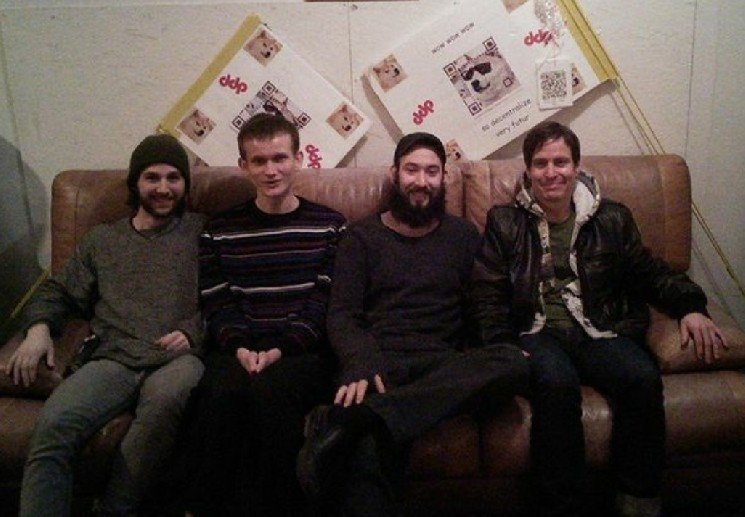
    Throughout the years, big names within the industry visited or engaged with DCTRL in one way or another. Vitalik Buterin personally visited the space and hung out there in the very early days of Ethereum, as demonstrated by this photograph hung on their wall, featuring Gray, Heartline, Vitalik, and another active member referred to as Kyle.

    The founders of CaVirtex, the first Canadian Bitcoin exchange, were also photographed there. This brand is little known now as they were bought out by Kraken years later, but they had a deep influence on the Canadian Bitcoin scene, selling the coin to Canadians since before the first bull run, which peaked at $30 per coin. Without this exchange, many of the big Canadian Bitcoiners may not have gotten in.

    Virtually, Bitcoin celebrities also attended DCTRL events throughout the years, answering questions from the local crowd, such as Roger Ver, before the fork wars, Andreas Antonopoulos, and Willy Woo. Erik Vorhees, who came to fame in Bitcoin for creating the first major instant swap, crypto-to-crypto exchange called ShapeShift, is seen in this video doing a fireside chat at DCTRL during a local meetup.

    Even one famous scammer attended the hub, a man who was a regular in the Canadian Bitcoin scene in the 2014 era, and who to this day remains one of the unsolved mysteries of crypto-related crime, Gerald Cotten of QuadrigaCX. Cotten, whom I personally met multiple times in Toronto at the time, was a charming and smooth-talking entrepreneur in the scene at the time, before his turbulent professional history was revealed and the exchange went down in bankruptcy, leaving millions of dollars of user funds unpaid. Cotten allegedly died suddenly and mysteriously in India just before the exchange went bankrupt, taking the crypto keys with him, but many who were personally affected by this centralized exchange collapse are skeptical of that story.

    Further evidence of DCTRL as a microcosm of the industry as a whole was seen years later during the fork wars, as Gray, the other primary co-founder of the hub, took the ‘big block’ side of the debate, resulting in intense debates and ultimately a falling out with the local community and broader Bitcoin scene. Gray, nevertheless, is highly respected and appreciated by the active members of DCTRL for his contributions to the DCTRL social scene, which would inevitably suffer from the same forks and tensions that the Bitcoin protocol went through at the time.

    During those difficult times, DCTRL served as a forum and debate space for these topics, even hosting Peter Rizun of the alternative implementation Bitcoin Unlimited — a big blocker — who debated Taylor, seen on the right in the photo below.

    Overall, DCTRL enjoyed more than 12 years of continuous operation, boasts hundreds of events hosted, over 1500 registered community members, and 69 recorded talks published on YouTube, which touched many elements of the Bitcoin and crypto industry. Throughout this whole time, the hub was operated entirely by volunteers and sustained through public donations and, of course, the Bepsi.

    As the location of DCTRL gets rezoned by the city government, and a new building will be going up in its place, the active members and hosts of DCTRL, have begun organizing a transition to a new location, alongside an update to the brand and

    According to DJ, one of the active members who prefers to stay pseudonymous, the hub has had record attendance in recent months. And while the location will change, its future is brighter than ever. Those who would like to be a part of the future of DCTRL can learn more at www.DCTRL.wtf.

    This post DCTRL Vancouver: Iconic Bitcoin Hackerspace Closes Downtown Location After 12 Years Due to Zoning Changes first appeared on Bitcoin Magazine and is written by Juan Galt.
  • Suspects Arrested After South Korean Police Mishandle $1.4 Million in Bitcoin: Report

    Suspects Arrested After South Korean Police Mishandle $1.4 Million in Bitcoin: Report

    In brief

    • Police in South Korea’s capital lost access to 22 Bitcoin, or around $1.4 million worth at today’s prices.
    • Officers from the Gangnam Police Station were supposed to take custody of seized BTC in their own cold wallets, but instead allowed a third-party to manage them.
    • Years later, the Bitcoin was identified as stolen, and two suspects were arrested for their alleged role in the incident.

    Police officers from the Gangnam Police Station in Seoul, South Korea didn’t adhere to crypto custody guidelines, leading to the loss of more than $1.4 million in Bitcoin at today’s prices, per a new report from local media outlet Dong-A Ilbo. Now two suspects have been arrested in relation to the swiped Bitcoin.

    After confiscating 22 Bitcoin from a company that was hacked in 2021, police were supposed to securely custody the crypto in an offline or cold wallet that they controlled. Instead, they allowed the funds to sit in a wallet managed by a third-party and didn’t even have the seed phrase to access the funds, the report said.

    “When seizing virtual assets, it is appropriate to transfer them to the investigative agency’s hard wallet and store them in a separately installed safe,” the seized asset guidelines from the National Police Agency recommended, according to the report.

    Without control of the wallet, the police lost the funds in 2022 when the firm with the seed phrase borrowed Bitcoin from an individual identified as “Jeong,” who was also given the wallet’s secret phrase.

    The funds were only discovered to be missing this year after a review by the Gwangju District Prosecutors’ Office found a different case of 320 Bitcoin that were missing—around $21 million worth.

    Now in connection to the 22 BTC missing from the Gangnam Police Station, two individuals have been arrested by the Gyeonggi Northern Provincial Police Agency, which is conducting an investigation. 

    “We are currently investigating the specific circumstances, including how the Bitcoin was leaked out,” a police official said, according to Chosun Daily.

    While the investigation is ongoing, it is known that a member of the original hacking investigation team was “indicted on bribery charges” last year, and the third-party firm in question “reportedly offered bribes in exchange for ensuring the investigation proceeded in their favor,” Dong-A Ilbo’s report says. 

    The ordeal follows increased scrutiny on South Korean financial regulators after they failed to find an internal system flaw which led to $43 billion in erroneous Bitcoin distributions on crypto exchange Bithumb earlier this month.  

    Instead of sending 2,000 South Korean won (around $1.40) to users as part of a promotion, the exchange accidentally sent as much as 2,000 BTC—about $135 million at today’s prices—to hundreds of users.

    Daily Debrief Newsletter

    Start every day with the top news stories right now, plus original features, a podcast, videos and more.

  • Meta’s AI Floods Child Abuse Investigators With ‘Junk’ Tips, Law Enforcement Officials Claim

    Meta’s AI Floods Child Abuse Investigators With ‘Junk’ Tips, Law Enforcement Officials Claim

    In brief

    • ICAC officers say Meta’s AI tips overwhelm investigators with unusable reports.
    • It comes amid allegations via a New Mexico state lawsuit alleging Meta’s AI complicates child exploitation investigations.
    • Meta pushed back stating it cooperates quickly with law enforcement and reviews reports before submission.

    Meta’s use of artificial intelligence to police its platforms is generating large volumes of low-quality reports that are draining resources and slowing child abuse investigations, according to a report by The Guardian.

    The news comes as New Mexico law enforcement officials testified last week that AI-generated reports are overwhelming investigators and slowing child exploitation cases.

    Officers with the Internet Crimes Against Children Task Force program specifically cited Meta’s automated systems, saying they generate thousands of unusable tips each month that are forwarded to law enforcement.

    “We get a lot of tips from Meta that are just kind of junk,” Benjamin Zwiebel, a special agent with the ICAC taskforce in New Mexico, testified during the state’s trial against the company.

    Another ICAC officer, speaking anonymously, told The Guardian the department’s cybertips doubled from 2024 to 2025. 

    “It’s pretty overwhelming because we’re getting so many reports, but the quality of the reports is really lacking in terms of our ability to take serious action,” they said.

    In a statement shared with Decrypt, a Meta spokesperson said the company has long cooperated with law enforcement and noted that the Department of Justice and the National Center for Missing & Exploited Children have praised its reporting process. 

    “In 2024, we received over 9,000 emergency requests from U.S. authorities and resolved them within an average of 67 minutes and even more quickly for cases involving child safety and suicide,” the spokesperson said. 

    “Consistent with applicable law, we also report apparent child sexual exploitation imagery to NCMEC and support them to prioritize reports, from helping build their case management tool to labeling cybertips so they know which are urgent,” they added.

    ICAC officers, however, said some of the reports sent by Meta are not criminal in nature, while others lack credible evidence needed to pursue a case.

    The increase follows the Report Act, which was signed into law in May 2024 and expanded reporting requirements to include planned or imminent abuse, child sex trafficking, and related exploitation, while requiring companies to preserve evidence longer. 

    By the numbers

    Meta remains the largest source of reports to NCMEC’s CyberTipline, accounting for about two-thirds of the 20.5 million tips received in 2024, down from 36.2 million in 2023. The decline has been attributed in part to changes in Meta’s reporting practices.

    In its August 2025 integrity report, Meta said Facebook, Instagram, and Threads sent more than 2 million CyberTip reports to NCMEC in the second quarter of 2025. Of those, more than 528,000 involved inappropriate interactions with children, while more than 1.5 million involved the sharing or re-sharing of child sexual abuse material.

    Despite those figures, JB Branch, a policy advocate at Public Citizen, said the increased reliance on AI has made the Report Act less efficient for investigators reviewing cases, arguing that while algorithms have long helped reduce moderators’ workload, human reviewers were the most effective filter.

    “Part of the problem here is that a lot of these tech companies have laid off content moderators and replaced them with AI security features,” Branch told Decrypt. “As a result, there is an overabundance of false positives being selected out of an overabundance of caution.” 

    In the past, Branch said, there were typically more human reviewers in the review chain who could identify and remove content that did not warrant escalation.

    “Because these companies have removed human content moderators or reviewers from the chain, way more things are getting passed off because they want to err on the side of caution,” he said. “They’re basically dragging a broader net and capturing things that don’t even qualify, and they’re relying heavily on AI tools to do that.”

    Investigators say the impact of faulty AI-generated tips is now being felt inside the task forces reviewing them.

    “It is killing morale. We are drowning in tips, and we want to get out there and do this work,” an ICAC officer reportedly said. “We don’t have the personnel to sustain that. There’s no way that we can keep up with the flood that’s coming in.”

    Daily Debrief Newsletter

    Start every day with the top news stories right now, plus original features, a podcast, videos and more.

  • New Day, New Ethereum Price Warning — But Why Is $1 Billion Still Betting Higher?

    New Day, New Ethereum Price Warning — But Why Is $1 Billion Still Betting Higher?

    Ethereum price is down about 1.4% over the past 24 hours, extending its broader weakness. At first glance, this looks like a routine pullback inside a consolidation phase. But this decline did not appear randomly. It came right after a warning signal flashed on the daily chart, suggesting the recent recovery may already be losing steam.

    What makes this moment unusual is the reaction from traders. Instead of reducing risk, leveraged long positions have surged past $1 billion. This creates a dangerous contradiction. The same conditions that are warning of a deeper drop are also attracting aggressive bullish bets. This disconnect could now decide Ethereum’s next major move.

    Bearish Divergence And Supply Cluster Are Now Pointing To The Same Risk

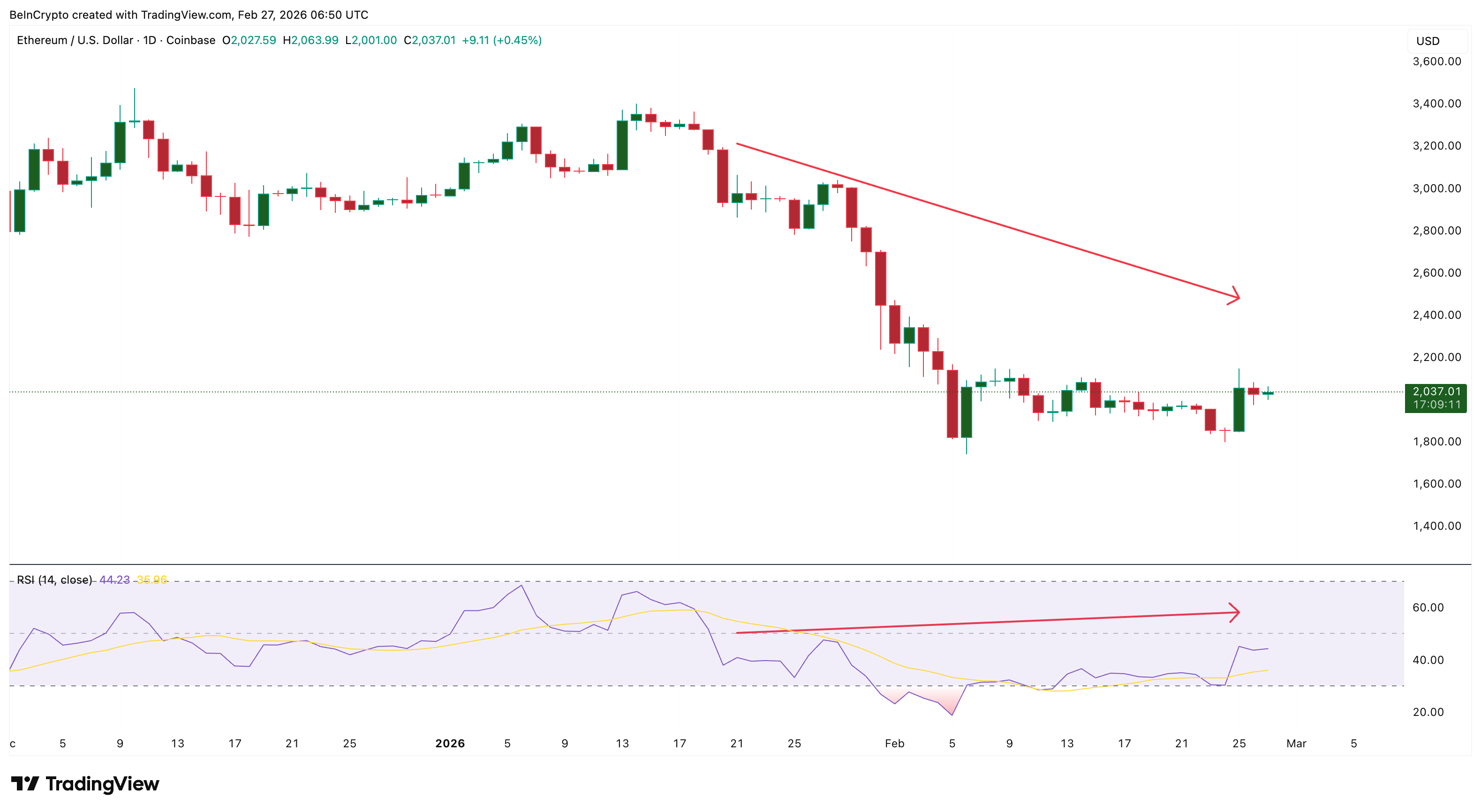
    The first warning sign appeared through a hidden bearish divergence on the daily chart. Between January 21 and February 25, the Ethereum price formed a lower high. This means the recent recovery was weaker than the previous rally, confirming the broader downtrend remains intact.

    At the same time, the Relative Strength Index (RSI), which measures momentum strength, formed a higher high. This creates a hidden bearish divergence. This pattern usually appears during downtrends and signals that the recovery is only temporary, with the larger decline likely to continue.

    Hidden Bearish Divergence

    Hidden Bearish Divergence: TradingView

    Want more token insights like this? Sign up for Editor Harsh Notariya’s Daily Crypto Newsletter here.

    This signal becomes more important because Ethereum is already down about 32% over the past 30 days. That confirms the broader structure remains bearish. Now, on-chain data shows where this pullback could accelerate.

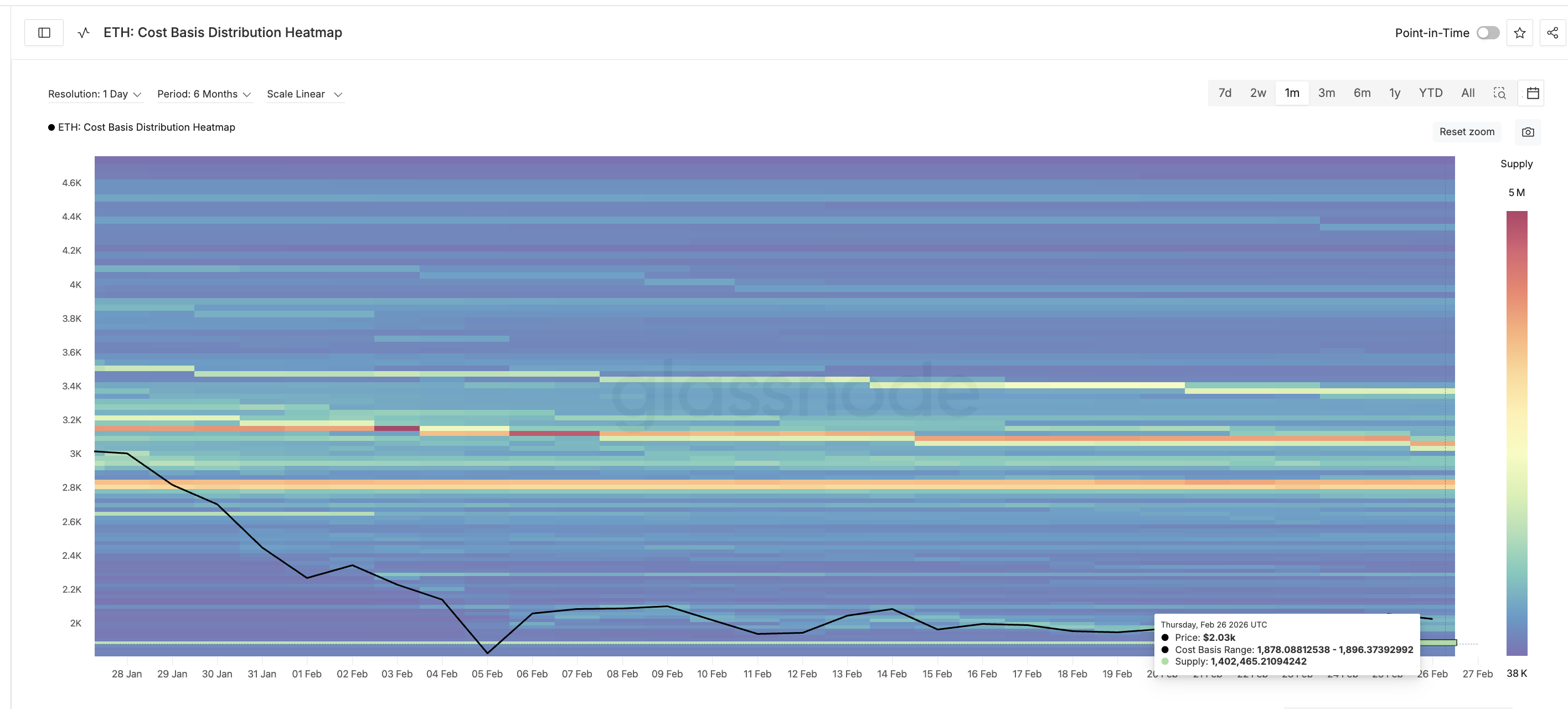
    The Ethereum cost basis heatmap reveals a major support cluster between $1,870 and $1,890. Around 1.40 million $ETH was accumulated in this range. This level is important because it represents the average buying zone for a large group of holders.

    These holders are still in profit at current prices. But if Ethereum falls into this zone while fear increases, many may sell to protect their gains. This could weaken support and allow the pullback to deepen.

    Cost Basis Cluster: Glassnode

    This makes the divergence warning more dangerous as a key support lies nearby.

    Whale Selling And $1 Billion Long Exposure Create A Dangerous Conflict

    At the same time, large holders are starting to show caution.

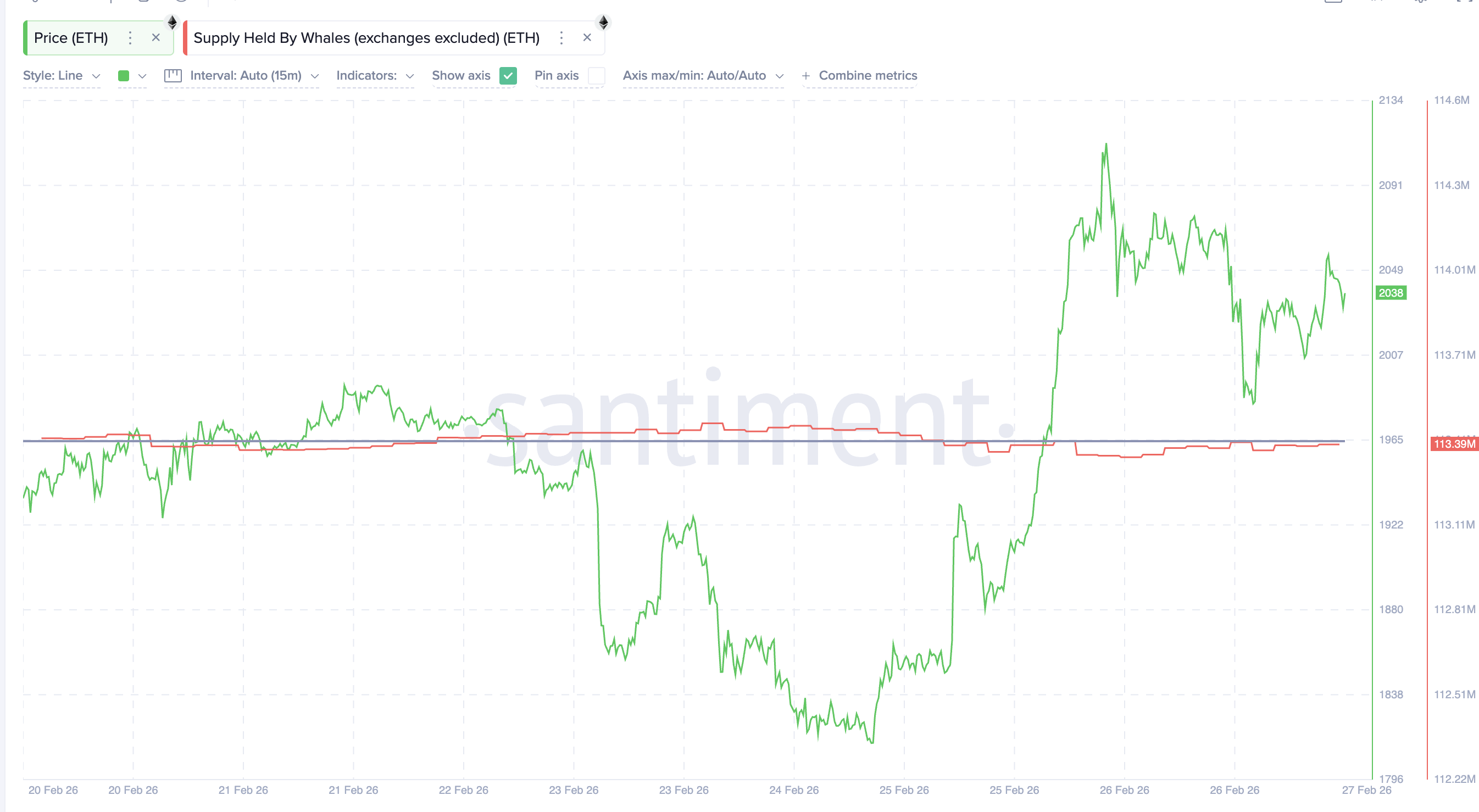
    Ethereum supply held by whales has dropped slightly from 113.41 million $ETH on February 25 to 113.39 million $ETH now. This is not a large drop, somewhere in the $40 million range, but it confirms that whales are no longer aggressively accumulating.

    This matters because whale activity often signals future price direction. When whales stop buying or begin selling, it weakens market confidence. But derivatives traders are reacting in the opposite way.

    <span class=$ETH Whales”>

    $ETH Whales: Santiment

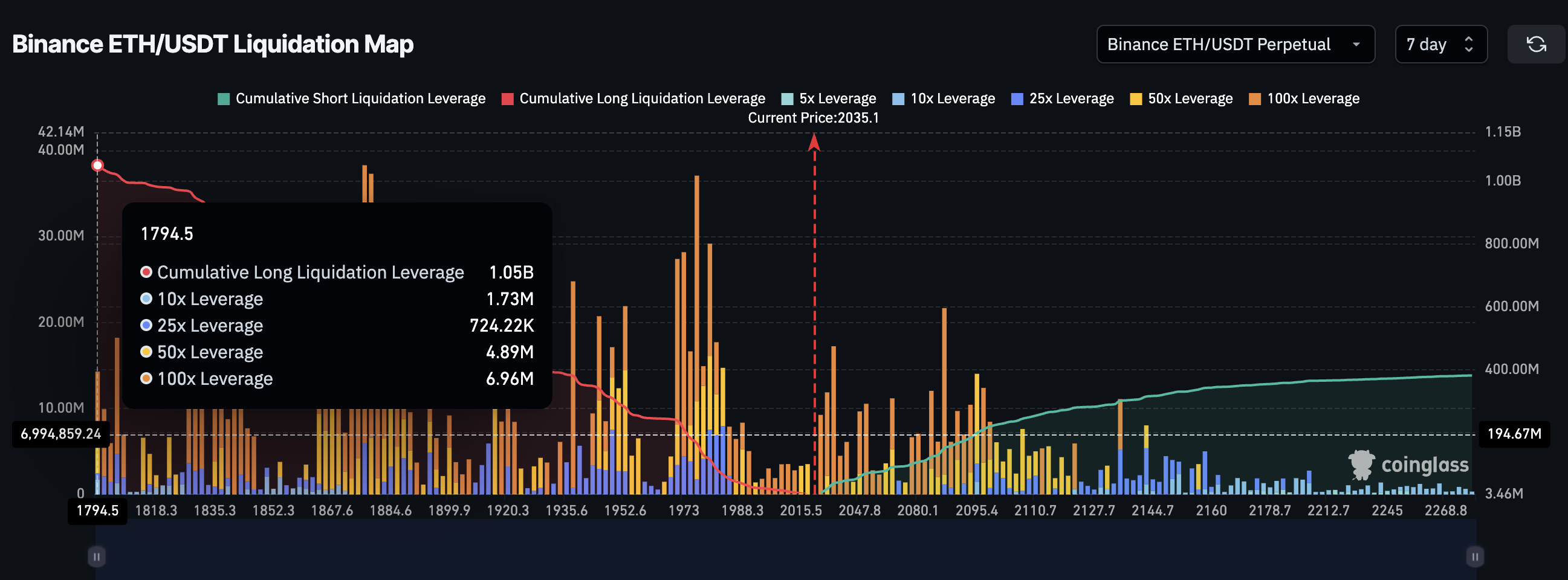
    Binance liquidation data shows cumulative long leverage has crossed $1 billion. Short leverage, in comparison, sits near $382 million. This means long exposure is nearly three times higher. Even more importantly, nearly $697 million of long leverage is concentrated near $1,870. Per the map, the risk starts developing if the $ETH price drops under $2,015.

    Liquidation Map

    Liquidation Map: Coinglass

    This level aligns almost perfectly with the cost basis cluster starting near $1,870. This creates a high-risk situation.

    If Ethereum falls into this zone, holders may begin selling while leveraged long positions are forced to close. These forced liquidations would push the price even lower and accelerate the correction. That risk could be the reason why whales have stepped back, for now.

    But despite these risks, traders are still betting on a breakout. The reason becomes clear in Ethereum’s price structure itself.

    Ethereum Price Structure Explains Both The $2,600 Hope And The Breakdown Risk

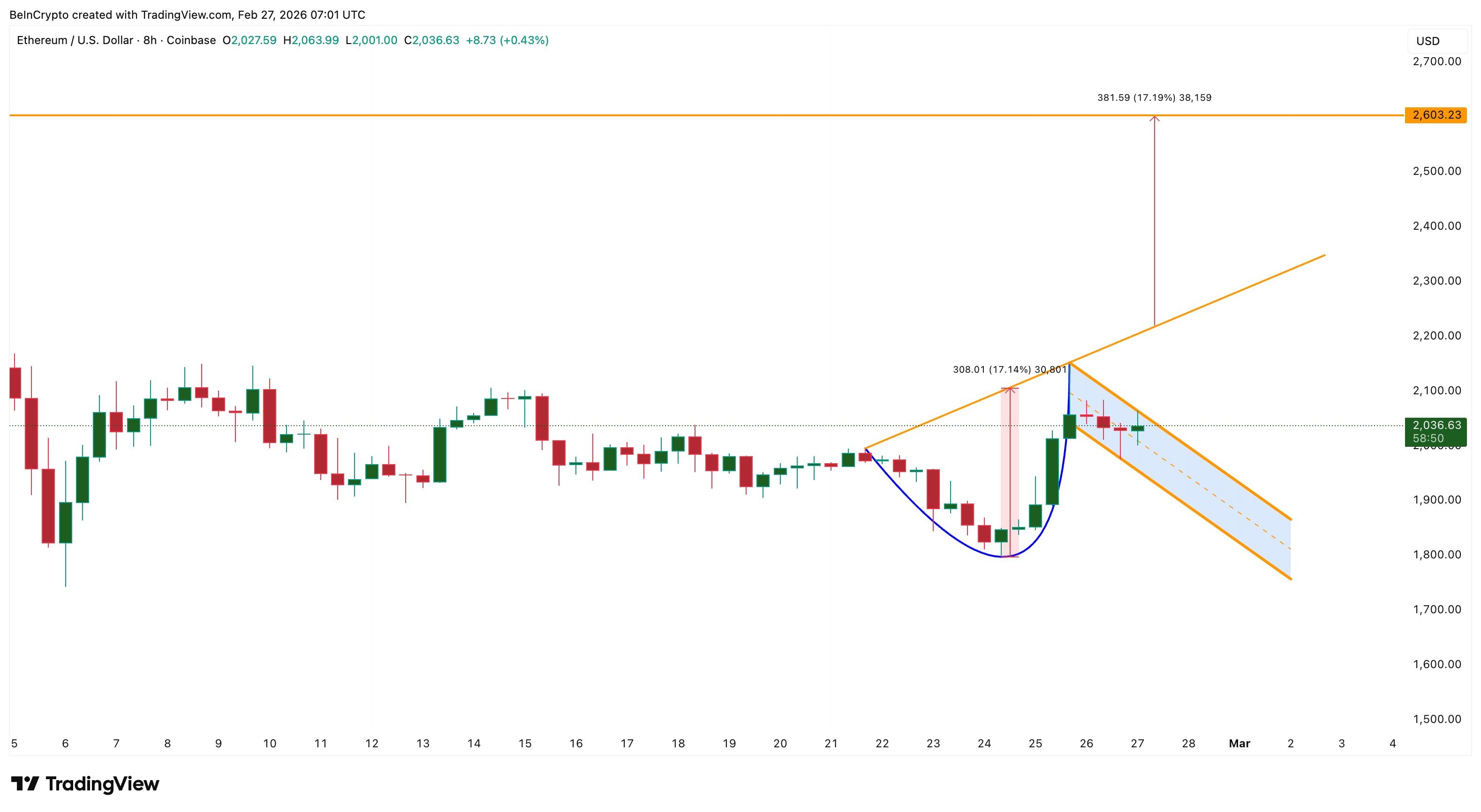
    Ethereum’s recent price structure is creating the optimism that derivatives traders are betting on. On the 8-hour chart, Ethereum is forming a cup and handle pattern. This is a bullish structure that often appears before upward breakouts.

    The handle is forming now as a consolidation phase, something that the traders might be considering as a lull before the breakout.

    The neckline of this pattern is sloping upward. An upward-sloping neckline strengthens breakout expectations, provided the price can break past key resistance levels. The critical ones are now revealed by the technical projections.

    <span class=$ETH Price Structure”>

    $ETH Price Structure: TradingView

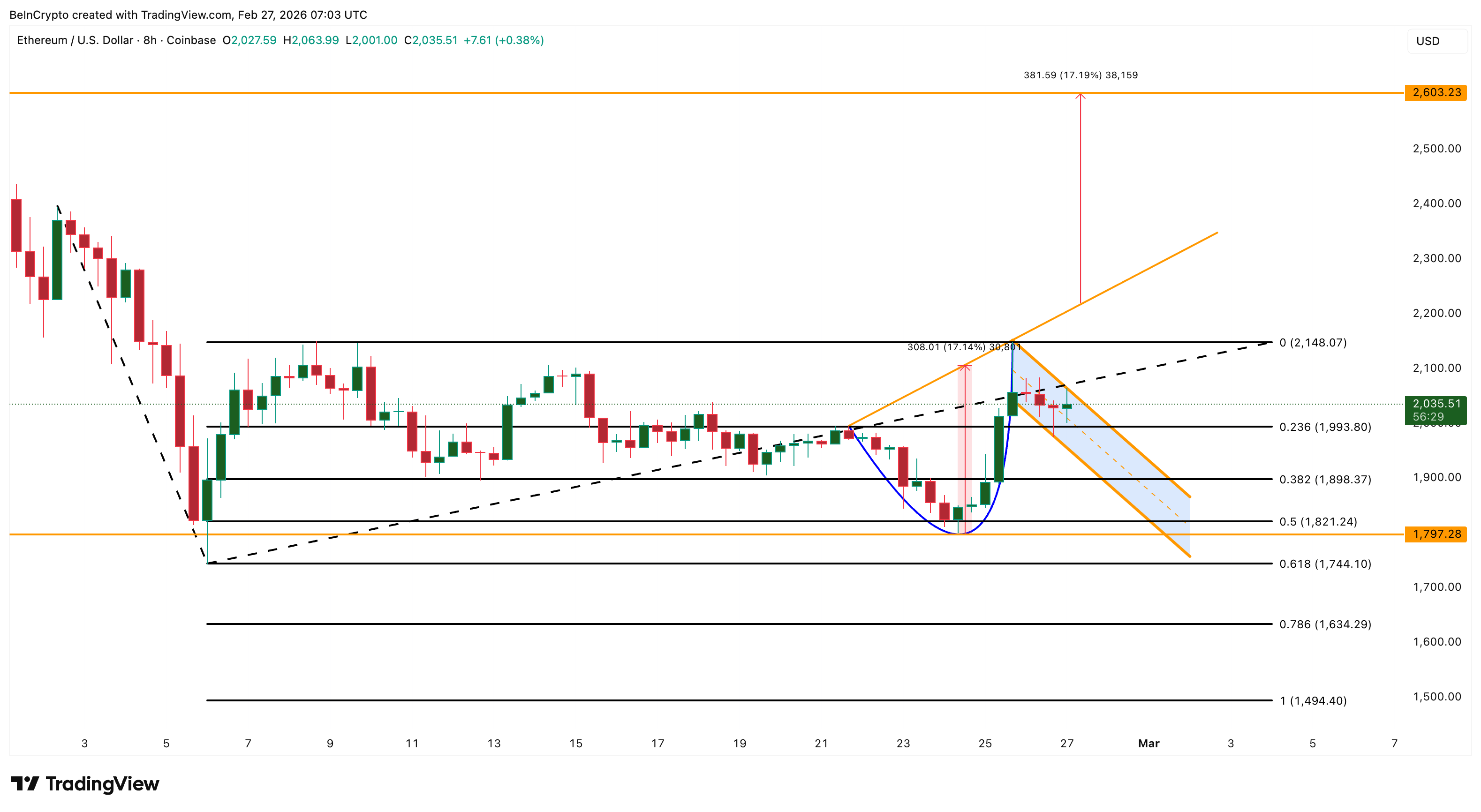
    If Ethereum breaks above $2,140, the pattern breakout hopes rise. While the neckline will still be at a distance, the hopes of a 17% rally toward $2,600 would surface. This upside potential possibly explains why traders continue opening long positions despite growing warning signs.

    But this optimism depends entirely on Ethereum holding its support levels. If Ethereum falls below $1,990, weakness begins increasing, although the pattern still survives.

    A drop below $1,890 would become much more serious. This level sits directly at the top of the cost basis cluster between $1,870 and $1,890. Losing this zone would weaken holder confidence and expose Ethereum to a deeper decline.

    Below $1,820, the bullish structure would begin failing. If Ethereum falls below $1,790, the cup and handle pattern would be invalidated completely. This would remove the bullish setup and could trigger large-scale long liquidations.

    Ethereum Price Analysis

    Ethereum Price Analysis: TradingView

    That is why the same price structure attracting $1 billion in bullish bets is also sitting directly above the most dangerous breakdown zone. Recovery is still possible. But Ethereum must break above $2,140 first. Until then, Ethereum remains stuck between breakout hope and breakdown risk.

    The post New Day, New Ethereum Price Warning — But Why Is $1 Billion Still Betting Higher? appeared first on BeInCrypto.

  • US Judge Rejects Binance’s Arbitration Request in Case Involving 7 Altcoins! Here Are the Details

    US Judge Rejects Binance’s Arbitration Request in Case Involving 7 Altcoins! Here Are the Details

    Binance received bad news from the US. A US judge rejected Binance’s arbitration request.

    District Judge Andrew Carter of the Southern District of New York ruled that Binance does not have the authority to compel U.S. users to arbitrate for damages arising from cryptocurrency purchases made on its platform before February 20, 2019.

    However, the judge ruled that the ongoing class action lawsuit would be heard publicly in federal court.

    Therefore, customers who accuse Binance of selling unregistered tokens will be able to pursue damages claims arising before February 20, 2019, in court.

    The judge, in his review, found that Binance unilaterally updated its Terms of Use in 2019, amending the terms to include a waiver of the right to arbitration and the right to class action, without notifying customers of this change.

    The ruling also stated that there was no evidence that Binance had announced the arbitration order or explained to customers where this order could be found in its terms of use.

    According to the judge, since the terms of use in 2017 did not include arbitration or class action waiver provisions, the changes made in 2019 cannot be applied retroactively to claims relating to periods prior to that date.

    The class-action lawsuit known as Williams v. Binance was filed by five US investors from California, Nevada, and Texas, alleging that Binance and its founder, CZ, illegally sold unregistered securities and failed to register as brokerage firms. The lawsuit was dismissed in 2022, but in 2024 the US Second Circuit Court of Appeals remanded it back to the lower court.

    In the retrial, Judge Carter rejected Binance’s request for arbitration, while Binance stated that the plaintiffs had voluntarily withdrawn claims arising after February 20, 2019, and that the company would continue to defend against the remaining claims.

    This decision allows users to file lawsuits for damages incurred before February 20, 2019, and for the case to be heard publicly. Altcoins named in the lawsuit include ELF, EOS, FUN, ICX, OMG, QSP, and TRX.

    *This is not investment advice.

  • There’s a New DeFi Bill in Congress—What Does That Mean for Crypto Market Structure?

    There’s a New DeFi Bill in Congress—What Does That Mean for Crypto Market Structure?

    In brief

    • A bipartisan group of lawmakers introduced a bill to protect non-custodial crypto developers from criminal prosecution.
    • The bill would amend a criminal code used to convict multiple crypto developers last year.
    • While similar protections may appear in a broader crypto market structure bill, the bill may not pass this year.

    A bipartisan group of lawmakers introduced a bill Thursday that would exempt certain decentralized software developers from criminal liability.

    With crypto’s stalled market structure bill poised to contain similar language, what does the bill’s introduction mean for the state of privacy-focused crypto legislation in Washington?

    The new bill goes further than similar language currently being debated in market structure legislation—but should not be seen as an indication that the market structure bill’s language on developer protections is too weak, nor that the market structure bill itself is doomed, a source familiar with the thinking behind the new bill told Decrypt.

    The new bill, dubbed the Promoting Innovation in Blockchain Development Act, would formally amend the language of a U.S. criminal statute that has been successfully used—by both the Joe Biden administration and the current Donald Trump administration—to prosecute crypto software developers.

    The statue, U.S. code 1960, defines an illegal money transmitting business. Today’s legislation would amend the code to ensure it applies only to individuals who “exercise control over currency.” It was introduced in the House today by Reps. Scott Fitzgerald (R-WI), Ben Cline (R-VA), and Zoe Lofgren (D-CA).

    Last year, an Ethereum software developer was found guilty by a Manhattan jury of violating code 1960 for developing a crypto privacy tool called Tornado Cash. The developer argued that because the software was decentralized, and he did not take custody of user funds, he should not be considered the operator of an illegal money transmitting business.

    Some months later, the Trump Department of Justice secured guilty pleas under code 1960 from two Bitcoin software developers who created a similar platform called Samourai Wallet. The developers are both currently serving sentences in federal prison.

    “This bill is critically important for engineers,” the DeFi Education Fund, an industry advocacy group, said today of the Promoting Innovation in Blockchain Development Act.

    “It makes it clear that software developers who do not take custody of or control other people’s money can build neutral technology, here at home, without worrying about being criminally prosecuted as if they are a financial intermediary,” the group said.

    The crypto market structure bill is likely to include language addressing code 1960—but not language that actually rewrites the statute itself. The language would, instead, order that “non-controlling developer[s]” not be treated as engaged in money transmitting under code 1960. 

    Language in the bill surrounding decentralized finance, or DeFi, is currently in relative flux, however, as lawmakers and industry stakeholders attempt to salvage the legislation after months of delays. DeFi refers to the collection of financial applications that exist natively on blockchain networks, circumventing the need for third-party intermediaries such as banks.

    DeFi language in the bill, though, while not finalized, is unlikely to be the hill the bill dies on, sources familiar with the matter told Decrypt. Industry leaders and the banking lobby are currently locked in another disagreement regarding stablecoin rewards, while Senate Democrats and the White House remain at an impasse on language regarding conflicts of interest and President Trump’s numerous crypto ventures.

    Lawmakers have urged that the bill needs to see significant progress in the coming weeks, or it risks falling by the wayside as Congress grinds to a halt in the spring ahead of November’s midterms.

    Daily Debrief Newsletter

    Start every day with the top news stories right now, plus original features, a podcast, videos and more.

  • Block Stock Pops as Jack Dorsey’s Bitcoin, Payments Company Dumps 4,000 Jobs

    Block Stock Pops as Jack Dorsey’s Bitcoin, Payments Company Dumps 4,000 Jobs

    In brief

    • Block expects most restructuring charges to land in the first quarter, driven by severance and share-based compensation costs.
    • The company employed just over 10,200 workers at the end of 2025, highlighting the scale of the workforce reduction.
    • Block’s business spans consumer and merchant payments through Cash App and Square, alongside a growing Bitcoin operation tied to trading and payments.

    Jack Dorsey’s Block Inc said it will cut more than 4,000 jobs, over 40% of its workforce, as part of a broad restructuring unveiled alongside its fourth-quarter and full-year 2025 earnings.

    Shares of the New York Stock Exchange-listed payments company jumped more than 23% in after-hours trading, Yahoo Finance data shows.

    The scale of the layoffs places Block among the companies carrying out the largest workforce reductions in the fintech sector so far this year, as payments and financial technology firms grapple with slower growth, tighter capital conditions, and increased scrutiny of operating costs.

    In a 8-K filing with the Securities and Exchange Commission on Thursday, Block said the workforce reduction is intended to better align its organizational structure with its “operating model and strategic priorities.”

    Block said it expects to record between $450 million and $500 million in restructuring charges, largely related to severance, notice-period pay, employee benefits, and other cash costs, as well as non-cash expenses tied to the vesting of share-based awards. 

    Most of the charges are expected to be recognized in the first quarter of fiscal 2026, with the restructuring largely completed by the end of the second quarter.

    The company cautioned that the estimates are based on assumptions and that actual costs could differ materially.

    As of the end of 2025, Block employed just over 10,200 full-time workers globally, according to its 10-K annual filing with the regulator, underscoring the scale of the cuts.

    Cash App had 59 million monthly transacting users in the U.S. at year-end, bringing in $316 billion of customer inflows during 2025.

    Block’s core business spans consumer and merchant payments through Cash App and Square, alongside a long-running push into Bitcoin products, including trading, self-custody, and merchant payments.

    Block now reports its business across three revenue categories: commerce enablement, financial services, and its Bitcoin ecosystem, which together generated $10.4 billion in gross profit in 2025, per its annual filing.

    Block said it would hold an earnings conference call and webcast later Thursday to discuss its results for the quarter and year ended December 31, 2025.

    Daily Debrief Newsletter

    Start every day with the top news stories right now, plus original features, a podcast, videos and more.

  • LinkedIn Founder Reid Hoffman’s Cryptocurrency Portfolio Revealed – How Much Does He Hold of Each Asset?

    LinkedIn Founder Reid Hoffman’s Cryptocurrency Portfolio Revealed – How Much Does He Hold of Each Asset?

    LinkedIn founder Reid Hoffman’s cryptocurrency portfolio is back in the spotlight. According to data from the on-chain data platform Arkham, Hoffman holds approximately 3,078 Ethereum ($ETH) in known addresses.

    Considering that Ethereum is priced at $2,028.89, the total value of these assets is approximately $6.25 million.

    Hoffman’s portfolio includes not only $ETH but also a CryptoPunk NFT that he purchased for 150 $ETH late last year.

    Hoffman’s former PayPal colleague, Elon Musk, prefers Bitcoin. Tesla, Inc., where Musk is CEO, and SpaceX have approximately $1.3 billion worth of $BTC on their balance sheets.

    According to the data, SpaceX holds 8,285 $BTC, with a current value of approximately $558 million. Tesla, on the other hand, holds 11,509 $BTC, a position worth around $775 million.

    Assuming Bitcoin is trading at $67,352, the two companies’ total $BTC holdings exceed $1.33 billion.

    *This is not investment advice.